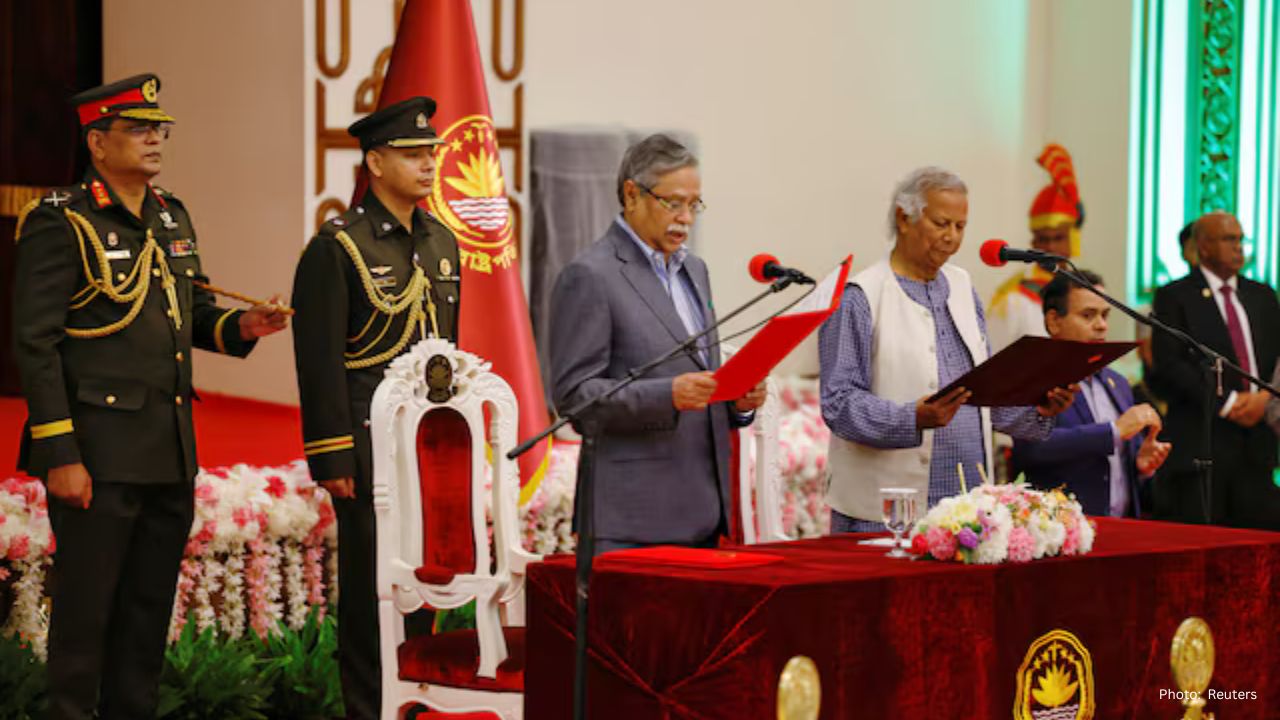
In a significant political development, Bangladesh's President Mohammed Shahabuddin has indicated his intention to resign after the upcoming parliamentary election in February. This unexpected announcement has drawn the attention of many, as it is uncommon for presidents in Bangladesh to depart from their ceremonial roles amidst controversy. Speaking from his residence in Dhaka, the 75-year-old president revealed his sense of disrespect and neglect from the interim government, led by Muhammad Yunus. Shahabuddin expressed that recent actions taken by this temporary administration have made him feel undervalued despite his position as the constitutional leader of the nation.
Since taking office in 2023 as an uncontested candidate backed by the Awami League and former Prime Minister Sheikh Hasina, he initially held a ceremonial role. However, his significance escalated during the major student protests of 2024 against alleged corruption and rising autocracy, which led to the ousting of the parliament. In that upheaval, Shahabuddin found himself as the sole constitutional authority, a situation he had not anticipated.
In his interview, he mentioned his readiness to step down shortly after the February elections, although he acknowledged legal constraints preventing his immediate resignation until a new government is established. While he remains committed to constitutional order, he is deeply pained by the treatment he has endured from the interim administration in recent months.
A key incident contributing to his humiliation was the sudden removal of his official portraits from diplomatic missions and government offices worldwide. Traditionally, the president's portrait is displayed throughout Bangladesh's embassies, and Shahabuddin stated that theirs were taken down overnight without prior notice. This act sent a signal to both the populace and the international community regarding his diminished status, leaving him feeling excluded from his own nation's official identity.
Moreover, he recalled losing access to his press team and having had no communication with Yunus for almost seven months. Such actions have created an unbearable atmosphere for him, reflecting a clear disregard from the interim government for his role. A letter he sent to Yunus seeking clarity went unanswered, compounding his feelings of isolation and disrespect.
The interim government was established following the 2024 unrest against the Awami League, and many anticipated that Yunus would foster collaboration with the presidency to restore stability. Shahabuddin’s remarks, however, underline the fracture in communication and respect between the president and the interim administration.
The absence of response from Yunus's press team has led to speculation about whether this sidelining of the president is intentional or a mere breakdown in coordination. While some observers suggest that the interim government seeks to initiate a fresh political landscape devoid of Awami League influence, others suspect unresolved miscommunications might be at play.
Shahabuddin's desire to resign adds another layer of uncertainty to Bangladesh’s already volatile political climate. The nation has grappled with repetitive protests, allegations of authoritarianism, and growing political divides. Although the interim government was formed to restore calm, the president's revelations highlight ongoing internal tensions.
Should Shahabuddin proceed with his resignation, Bangladesh may face a pivotal transition, with new parliamentary elections and potentially a new president at the helm. Citizens may view these changes with a mix of hope and concern, reflecting the complex nature of Bangladesh’s political evolution. The struggle for balance between democratic stability and political rivalry remains a significant challenge.
Shahabuddin emphasized he will not stay in a role where he feels irrelevant. His heartfelt statements reveal leaders' struggles amid sudden political shifts and showcase how power dynamics can impact those meant to maintain neutrality.
As Bangladesh gears up for the February elections, uncertainties cloud the political horizon. With the challenge of maintaining order and facilitating peaceful campaigning, the situation remains precarious. Shahabuddin's desire to leave his post underscores that the journey toward an effective and respected governance system is far from achieved.