Photo:AP
Federal agents raid California farms in massive immigration sweep
In one of the largest worksite immigration enforcement operations in recent years, federal authorities arrested approximately 200 individuals at two large farms in Southern California. The raids were executed early Thursday morning, targeting sites in Camarillo and Carpinteria, both owned by Glass House Farms. According to immigration officials, the operation stemmed from ongoing investigations into human trafficking, illegal employment practices, and the harboring of undocumented workers. The raids resulted not only in mass detentions but also in heightened community tensions, political backlash, and renewed scrutiny of agricultural labor practices in the United States.
Scope of arrests and affected locations
Agents with the Department of Homeland Security, Immigration and Customs Enforcement, and other federal entities descended on both farm locations before dawn. The operation led to the apprehension of approximately 200 individuals believed to be undocumented immigrants working without legal authorization. Witnesses reported agents arriving in unmarked vehicles and military-style gear, surrounding the properties with drones and patrol teams. Reports indicated that some workers attempted to flee the scene, and at least one man suffered serious injuries after falling from a greenhouse structure. Authorities have not confirmed whether criminal charges will be pursued against all individuals detained.
Discovery of child labor triggers additional investigation
Beyond immigration concerns, one of the most alarming discoveries was the presence of minors working at the sites. Officials revealed that at least ten individuals under the age of 18 were found working or present during the raids. Among them were unaccompanied minors, some as young as 14. This development prompted California’s Department of Cannabis Control to launch a fresh investigation into the operations of Glass House Farms. The presence of children at cannabis-growing sites raises not only labor law issues but potential federal criminal implications, especially if forced or coerced labor is involved. Child advocacy groups have called for immediate protections and social services for the minors found during the raid.
Glass House Farms responds to federal accusations
In a statement following the incident, Glass House Farms maintained that it operates within the bounds of both state and federal law. The company, which produces both legal cannabis and conventional crops like cucumbers and tomatoes, denied any knowledge of child labor and claimed that the state regulator’s previous inspections had revealed no such violations. The firm pledged full cooperation with investigators and said it would assist any workers needing legal support. Executives emphasized that they hire through subcontracted labor agencies and that all employees are expected to provide valid documentation. Nevertheless, critics argue that companies like Glass House must do more to ensure compliance across their supply chains.
Protests erupt in aftermath of operation
Following the raids, tensions in local communities flared. Hundreds of activists, farmworker unions, and immigrant rights advocates descended on the Camarillo farm, demanding the release of detainees and an end to what they described as unjust and militarized enforcement tactics. Protesters carried signs reading “We feed America” and “Immigration is not a crime.” Several confrontations occurred between demonstrators and law enforcement, including the deployment of smoke grenades and tear gas. Four protestors were arrested and multiple individuals required medical attention. Advocacy groups argue that peaceful protestors were targeted and that the scale of force used was excessive given the nature of the demonstration.
Injuries and trauma reported among workers and families
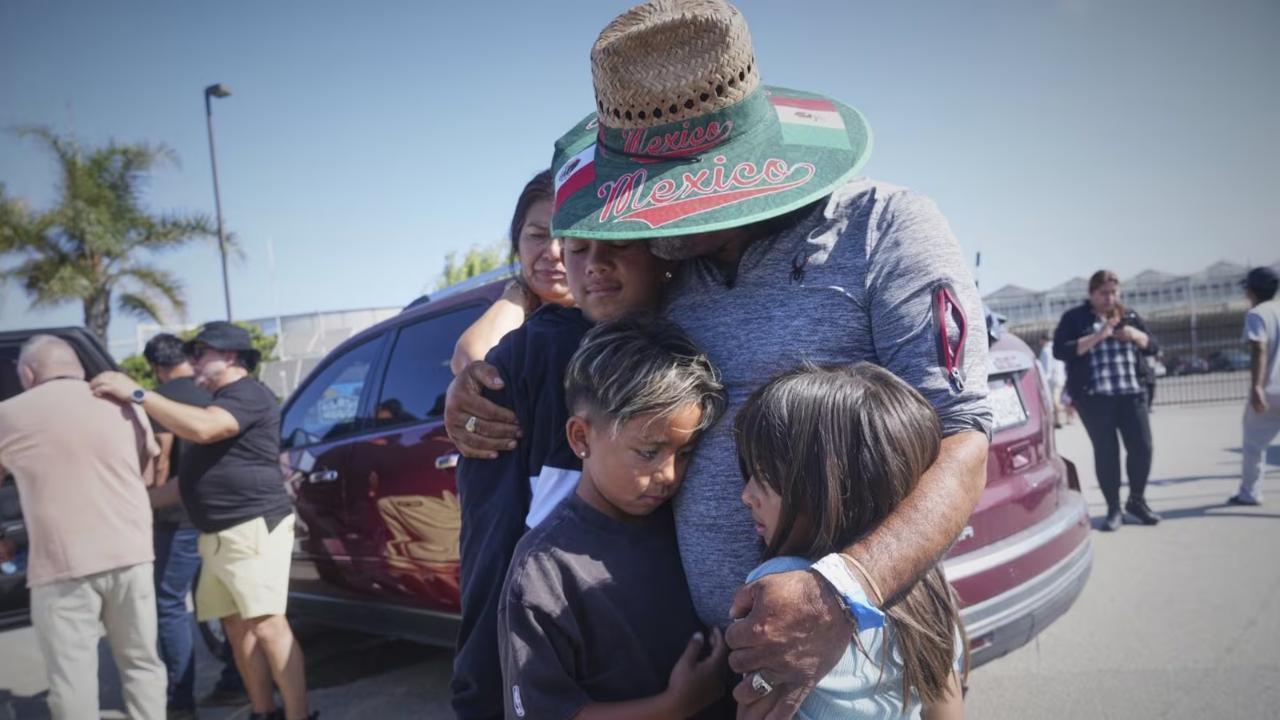
Among the most tragic outcomes of the operation was the severe injury of a worker identified as Jaime Alanis. According to witnesses, Alanis climbed onto a greenhouse roof to escape the raid and fell approximately 30 feet, sustaining life-threatening injuries. He remains hospitalized in critical condition. Family members of other detainees have reported difficulties in locating loved ones, with many being transported to out-of-state ICE facilities without notice. Legal aid organizations have stepped in to assist families, some of whom say they have been denied access to detained relatives or accurate information regarding their status. Mental health counselors have been dispatched to the community as anxiety and trauma ripple across families separated overnight.
Political and legal fallout grows nationally
Politicians across the political spectrum have responded strongly to the events. California Governor Gavin Newsom called the raids “disruptive and disproportionate,” emphasizing that they harm public safety and economic stability more than they help. Democratic lawmakers are urging federal investigations into the conduct of DHS agents during the operation, citing alleged violations of civil rights and potential racial profiling. On the other hand, Republican leaders applauded the action, calling it a necessary step toward enforcing immigration laws and combating illegal labor practices. Legal experts are watching closely as multiple lawsuits have already been filed alleging violations of due process, Fourth Amendment rights, and federal labor protections.
Labor exploitation in the cannabis industry under the microscope
The raids have ignited national debate over labor conditions within the legal cannabis industry, an industry worth billions and growing rapidly across multiple states. While California mandates strict compliance with labor and environmental standards for cannabis operators, enforcement gaps remain. Subcontracted labor, off-the-books hiring, and language barriers often lead to exploitative conditions. Industry insiders argue that without a path to citizenship for the workforce that sustains this economy, abuses are inevitable. Unions and labor rights activists are demanding tighter enforcement of labor laws at cannabis farms, especially when vulnerable populations such as undocumented migrants or minors are involved.
Farmers and operators caught in legal uncertainty
For growers, the raids have introduced new levels of operational uncertainty. Glass House Farms faces the possibility of losing its licenses if found in violation of labor or immigration laws. Its executives are now under investigation, and depending on the outcome, could face fines, suspensions, or criminal charges. Other farmers in the region are worried they might be next. Several have requested legal audits and compliance reviews, fearing that inadvertent labor violations might put them in the federal crosshairs. Trade associations are asking for clearer guidance from regulators, especially when it comes to responsibility for subcontracted labor.
Community groups rally to support affected families
In response to the crisis, grassroots organizations have mobilized to support those affected. Shelters have opened their doors to the children separated from detained parents. Volunteer attorneys are working around the clock to file emergency stays of deportation. Fundraising efforts have been launched to assist families who lost their sole wage earners. Religious groups and immigrant coalitions are coordinating transportation for relatives seeking to visit detained loved ones. The level of coordination reflects a community accustomed to immigration raids but outraged at the scale and intensity of this one. Advocacy leaders say the public response underscores the human cost behind immigration statistics.
Wider implications for immigration enforcement
The operation may signal a broader policy shift under the Trump administration, one that prioritizes high-profile enforcement actions as a form of deterrence. ICE officials confirmed that more workplace raids are planned throughout the summer, focusing on industries believed to employ undocumented labor—including agriculture, construction, hospitality, and meatpacking. Civil liberties groups argue that this enforcement strategy does little to resolve systemic issues and only sows fear among immigrant populations. They call for a focus on comprehensive immigration reform that addresses labor demand, legal pathways, and worker protections.
Calls for regulatory reform and industry accountability
As investigations continue, calls for reform have gained momentum. State regulators are being asked to revisit oversight mechanisms for licensed growers, especially concerning labor contracts and third-party hiring. Lawmakers are also exploring the introduction of mandatory employee verification systems tailored for high-risk sectors. There are discussions about expanding whistleblower protections for undocumented workers and increasing penalties for employers who knowingly violate labor laws. Industry leaders are divided: some support reforms to restore public trust, while others fear overregulation could cripple legal operations already struggling with compliance costs.
The human face of immigration enforcement
Ultimately, behind every statistic lies a personal story. Families have been torn apart, children left without caretakers, and communities traumatized. Workers describe long days in greenhouses with few breaks, language barriers, and constant anxiety about discovery. Some have lived in the U.S. for years, raising children, paying taxes, and contributing to local economies. Others came recently, fleeing violence or poverty. What they share is a hope for stability—and now, a fear of arrest. The aftermath of the raids continues to unfold, with court cases, protests, and investigations expected to dominate headlines in the coming weeks.
Conclusion: a moment of reckoning for immigration and labor policy
The Southern California farm raids mark more than just a flashpoint in immigration enforcement—they represent a convergence of broken systems. From federal labor oversight to immigration reform and industry regulation, every component has come under scrutiny. As legal proceedings advance and the government reviews the actions taken, the event may prompt broader questions: Who bears responsibility when vulnerable workers are exploited? Can agricultural and cannabis industries thrive without undocumented labor? What is the role of enforcement in ensuring accountability without sacrificing humanity? Until these questions are addressed in policy and practice, incidents like the Glass House Farms raids will continue to define the nation’s struggle with immigration, labor, and justice.