Photo:AP
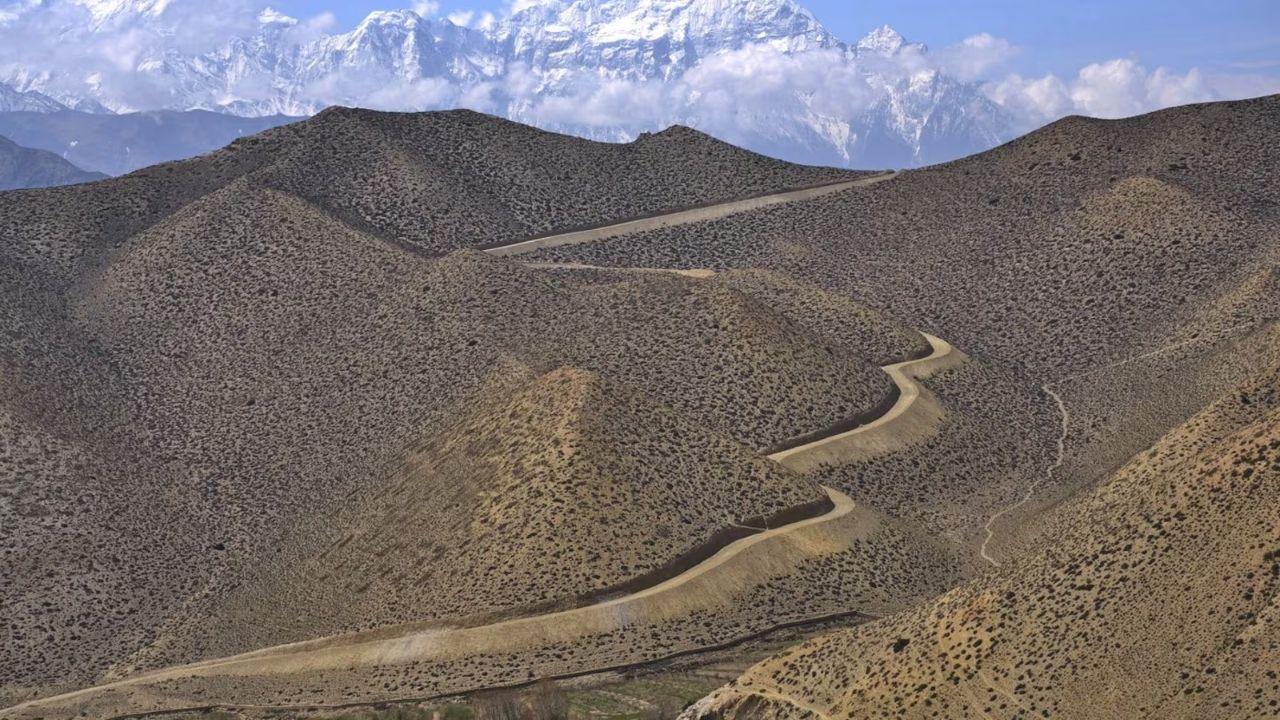
High in the Himalayas, more than 13,000 feet above sea level, lay the ancient village of Samjung in Nepal’s Upper Mustang region. For generations, families lived peacefully, herding yaks, sheep, and growing barley in a dry but steady climate. Nearby cliffs held ancient “sky caves” used for meditation and burials.
Things began to change slowly. Snowfall stopped, glaciers retreated, and streams dried up. When rain finally came, it was too strong—flooding fields and washing away homes built from mud. Villagers found it harder to water their crops and care for their animals. No water meant life became too tough .
By the early 2000s, families started leaving. Between 2014–15, around 85 people moved to a new location near the Kali Gandaki River, about 15 km away. This spot had reliable water from rivers, better access to roads, and new chances for tourism work in nearby Lo Manthang.
Moving and Rebuilding
Moving a whole village was hard. They needed space for houses, animals, and room for fields and water canals. It took years to build. Many worked together to rebuild mud homes with bright tin roofs, livestock shelters, and irrigation systems before moving.
Now, in “New Samjung”, some villagers plant crops and raise livestock. Others earn money through tourism—guiding visitors to Lo Manthang, a medieval city. Sisters Pemba (18) and Toshi (22) Gurung enjoy fetching water easily now, though they miss their old home. Toshi says, “It is the place of our origin … I don’t think it will ever be possible to go back.”
Climate Lessons & Wider Impacts
Daily life in Samjung changed because Himalayan glaciers—and snowfall—are melting fast. The region's glaciers help feed rivers for 240 million in the mountains and 1.65 billion downstream. Losing this ice affects far more than one village.
ICIMOD, a major Himalayan science group, reports that water scarcity is increasing and snowpacks are shrinking. Almost no snowfall has occurred in Upper Mustang for nearly three years . This makes planting and caring for animals very hard.
Experts like Neil Adger from the University of Exeter say climate change is forcing people to rethink where they can live and farm . Amina Maharjan of ICIMOD adds that villages may keep moving as water sources disappear. This trend isn’t just local—it’s happening in mountains and dry places all over the world .
What Happens Next
-
Water access in New Samjung is better, thanks to rivers and canals.
-
Tourism supports new jobs, but also raises questions about preserving local culture.
-
Long-term: more Himalayan communities may relocate as glaciers melt and weather patterns shift.
-
Global connection: Samjung’s move shows how climate change changes lives—even in the world’s tallest mountains.