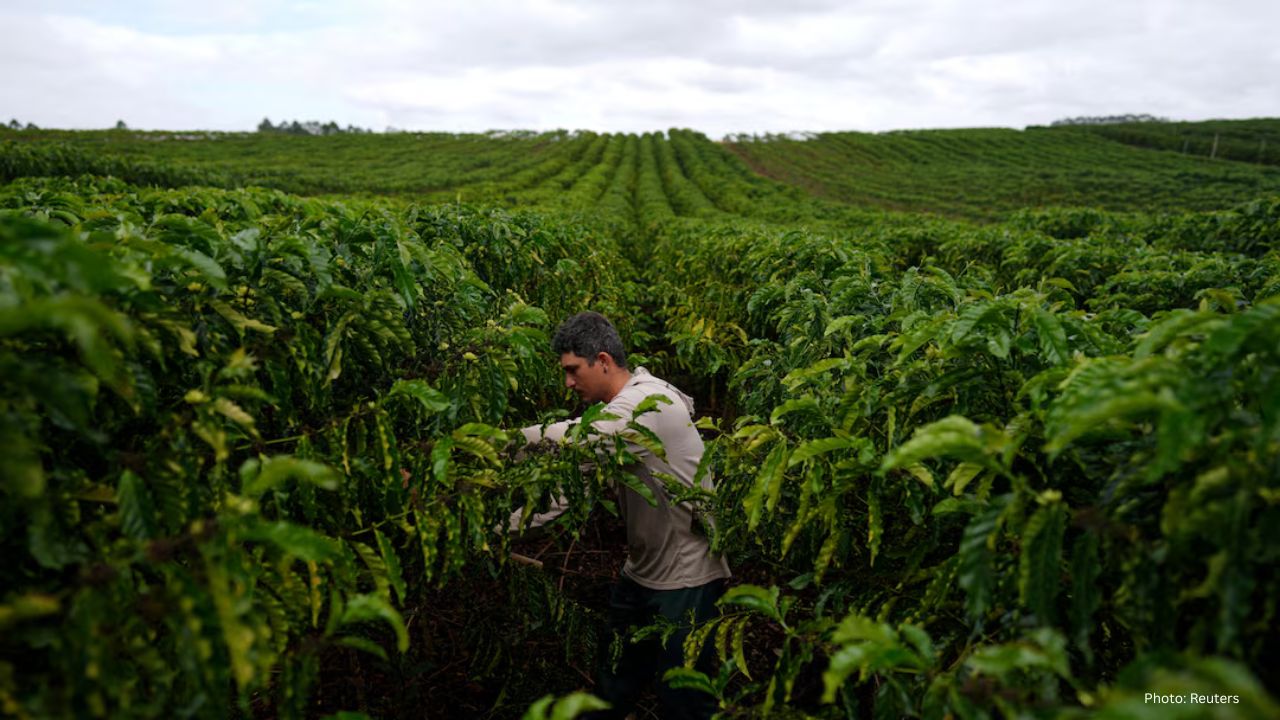
In Brazil, robusta coffee is shifting from its reputation as a lower-quality option to a preferred choice among consumers and producers. Farmers are now dedicating their efforts to cultivating high-quality robusta beans, an initiative spurred by increasing global coffee prices and climate change's impact on the more illustrious arabica crops.
A 100% robusta espresso served in Sao Paulo boasts smooth, chocolatey flavors with a luxurious crema, challenging the long-standing notion that only arabica yields premium coffee. Marco Kerkmeester, co-founder of the Santo Grao coffee chain, highlights the attraction of these robusta espressos for coffee enthusiasts seeking novel tastes.
The effects of climate change are becoming pronounced in the regions known for arabica production. A 2022 report projected that more than 75% of Brazil's prime arabica land could become unfit for cultivation by 2050 due to rising temperatures and droughts. Consequently, hardier and more resilient robusta presents an appealing alternative for farmers and roasters.
Farmers in the Espirito Santo state, the hub of Brazil's robusta output, are adopting advanced harvesting and drying methods. Their goal is to produce 1.5 million bags of specialty robusta each year by 2032, a dramatic rise from the mere 10,000 bags currently categorized as premium. Innovations like modern drying techniques are replacing outdated smoke-based methods that adversely affect the bean's flavor.
The Specialty Coffee Association (SCA) has revised its standards to acknowledge high-quality robusta. This update allows coffee graders to pinpoint and reward top beans, ensuring that excellence is recognized regardless of the bean type. The SCA is updating its flavor profiles to include the aromatic spiciness that high-grade robusta can deliver.
Early signs suggest that this pursuit of quality is yielding benefits, with prices for Brazilian specialty robusta more than doubling since 2021, surpassing $295 per 60-kilogram bag. Over the same period, robusta futures have increased by over 80%, enabling roasters to blend more robusta into espressos without sacrificing flavor quality.
Experts affirm that specialty robusta is not intending to outshine arabica, but rather to be recognized in its own right as a distinctive and valuable coffee variety. Farmers traditionally engaged in arabica cultivation are now delving into robusta farming, leveraging their expertise to enhance bean quality.
Across cafes from Sao Paulo to Berlin, baristas are now highlighting robusta's distinctive tastes, inviting patrons to experience a richer and broader spectrum of coffee. With global demand rising, climate pressures mounting, and prices advancing, Brazil’s robusta coffee industry is transforming—a shift that holds the potential to change the landscape of the global coffee market.
Premium robusta is evolving beyond a mere cost-effective alternative. It is transforming into a coveted selection for coffee lovers who value its unique flavor and aroma, while providing farmers with stability and profitability in an ever-changing climate.