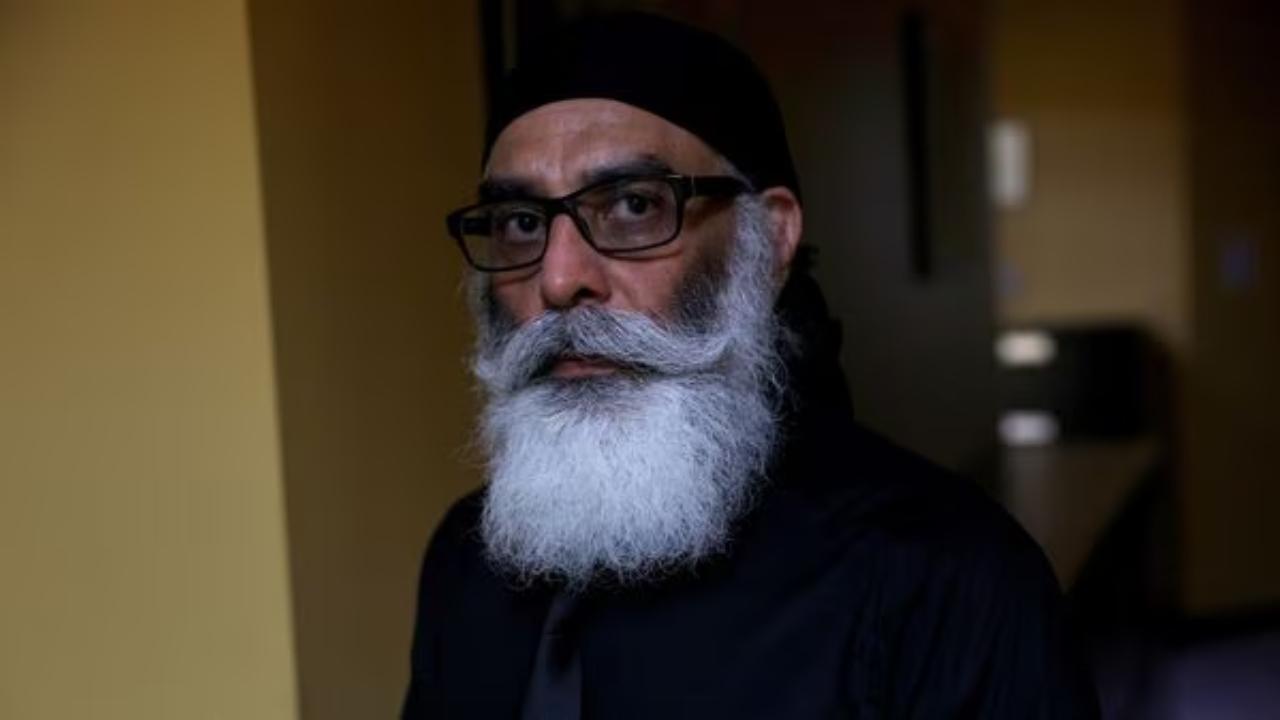
Photo:reuters
Kapil Sharma Faces Threat from SFJ's Gurpatwant Singh Pannun Following Gun Attack on His Canada-Based Café
In an intensifying cross-border conflict that blends global extremism, celebrity, and diaspora politics, Indian comedian Kapil Sharma has found himself at the center of controversy after his newly launched café in Surrey, British Columbia, was attacked by gunfire. Just days after the incident, Gurpatwant Singh Pannun, the chief of the banned pro-Khalistan outfit Sikhs for Justice (SFJ), issued a direct threat to Sharma, stating that Canada "is not your playground." The remarks have alarmed both Canadian authorities and Indo-Canadian communities, highlighting growing concerns around radicalized diaspora movements and the targeting of public figures abroad.
The Attack on Kap’s Café: From Celebration to Shock
On July 10, 2025, the usually peaceful city of Surrey witnessed a disturbing act of violence. Late in the evening, gunshots rang out in front of Kap’s Café, a business recently launched by Kapil Sharma, one of India’s most beloved entertainers. The café had been inaugurated on July 7 and was quickly becoming a hotspot for the Indian community in British Columbia, offering Indian cuisine, live entertainment, and a space for cultural exchange.
The attack occurred during off-hours, and thankfully, no injuries were reported. However, bullets struck the exterior of the café, shattering glass and damaging property. Surveillance footage later identified masked individuals fleeing the scene, and authorities believe the attack was not random but an intentional act aimed at intimidating Sharma and his growing influence in the region.
Gurpatwant Singh Pannun Issues a Direct Threat
Following the attack, a video surfaced on social media in which Gurpatwant Singh Pannun, the self-declared legal advisor of SFJ, addressed Kapil Sharma directly. In the video, Pannun warned the comedian to leave Canada and accused him of using his celebrity status to promote what he described as Hindutva propaganda abroad. His message was sharp and confrontational.
Pannun stated that Sharma's investment in Canada through the launch of Kap’s Café was not welcome and characterized it as part of a broader campaign to import India's political ideologies to foreign soil. He further stated that Sharma’s success was funded by what he called "blood money," referring to alleged state support from Indian agencies. In his words, Canada would not be turned into a playground for such activities.
Kapil Sharma's Café as a Cultural Landmark
The launch of Kap’s Café was intended to be a joyous milestone in Sharma's expanding career beyond television and film. Known globally for his long-running show, "The Kapil Sharma Show," Sharma has built a massive fanbase, including millions of followers across Canada, the United States, and the UK. The café, located in a popular South Asian neighborhood in Surrey, was envisioned as a gathering space for the community—a fusion of food, laughter, and heritage.
The café’s launch drew attention not only from the Indian community but also from Canadian media. Sharma’s move was praised as a smart entrepreneurial step, tapping into both his cultural identity and his business acumen. Within days of opening, the café began attracting large crowds, especially during evening events that featured stand-up performances and live music.
But what was meant to symbolize success and community building has now become a flashpoint for political hostility and security concerns.
Who Is Gurpatwant Singh Pannun?
Gurpatwant Singh Pannun is a controversial figure known for his leadership role in Sikhs for Justice, an organization banned in India for advocating a separate Sikh homeland called Khalistan. Based in North America, Pannun has long operated under the protection of democratic freedoms, using legal mechanisms and social media platforms to promote SFJ’s separatist ideology.
Pannun has been linked to various efforts to internationalize the Khalistan cause, including organizing referendums and staging protests outside Indian consulates. His fiery rhetoric and willingness to name public figures as enemies of the movement have made him a divisive personality both within and outside the Sikh community.
His recent comments on Kapil Sharma mark a significant escalation in SFJ’s activities, signaling a shift from ideological messaging to direct threats against celebrities seen as representatives of the Indian state or culture.
Involvement of Other Extremist Elements
Reports have emerged suggesting the possible involvement of Babbar Khalsa International (BKI), a group banned under Canadian and Indian anti-terror laws. A known BKI operative, Harjeet Singh Laddi, is suspected of being linked to the gunfire at the café. Laddi is already on the radar of Indian intelligence agencies and has previously been implicated in attacks targeting Indian diplomatic missions.
Authorities believe that the café shooting was orchestrated by extremist factions seeking to send a message to both the Indian government and individuals like Sharma, who represent Indian culture abroad. The coordinated nature of the threat video and the attack on the café points to a broader strategy aimed at intimidating the diaspora and silencing moderate voices.
Canadian Law Enforcement Response
The Surrey Royal Canadian Mounted Police (RCMP) has launched a full-scale investigation into the incident. Officers have collected forensic evidence from the scene, reviewed security footage, and begun tracing the origins of the online video. Canadian intelligence services, including the Canadian Security Intelligence Service (CSIS), are also involved in assessing whether the threats to Sharma warrant increased surveillance of known extremist figures in Canada.
So far, no arrests have been made, but authorities have promised transparency and quick action. In a public statement, Surrey RCMP confirmed that they are treating the case as a targeted attack and that all leads are being pursued. They have also increased security around the café and other Indian establishments in the area.
Kapil Sharma’s Response and Public Sentiment
Kapil Sharma has not issued an official statement regarding the threats, but sources close to him have confirmed that he is aware of the situation and is cooperating with Canadian authorities. While visibly shaken, Sharma is determined not to let fear dictate his presence in Canada. Staff at Kap’s Café have expressed their commitment to keeping the business open, noting that shutting down would send the wrong message to those attempting to instill fear.
The Indian diaspora in Canada has largely rallied behind Sharma. Community organizations, including cultural associations and business groups, have issued public statements of support. Many see the attack not only as an attempt to intimidate Sharma but as a broader assault on freedom of expression and multicultural values in Canada.
Social media platforms have exploded with hashtags like #StandWithKapil and #ProtectOurCommunity. Fundraisers have been launched to increase security for the café, and community members have organized vigils to demonstrate unity in the face of division.
Wider Implications for Indo-Canadian Relations
This incident comes at a time of already strained relations between India and Canada. Tensions have been high since allegations surfaced about foreign interference in Canadian elections and debates over religious freedoms and nationalism within diaspora communities.
India has often accused Canada of turning a blind eye to Khalistani extremism. In contrast, Canadian authorities have struggled to balance freedom of speech with national security, especially in immigrant communities that feel torn between loyalty to their roots and the realities of life in a new country.
Kapil Sharma's situation puts Canadian lawmakers in a difficult position. They must now reckon with a scenario where a high-profile public figure has been threatened and targeted, possibly by organizations that exploit Canada's free society to operate with impunity.
Diaspora Politics and Identity Conflicts
The attack on Kap’s Café and subsequent threats also shed light on the growing identity crisis within the Indian diaspora. For many first- and second-generation immigrants, identity is multi-faceted—rooted in Indian culture but shaped by Canadian values of inclusion and tolerance.
However, extremist ideologies on both ends of the spectrum have begun to exploit these identities. On one side are those pushing Hindutva politics and ultra-nationalism, and on the other, Khalistani separatists aiming to destabilize unity among Indians abroad. The result is an increasingly polarized environment where cultural pride is often misinterpreted as political allegiance.
Kapil Sharma, by virtue of his fame and reach, has become a symbol in this tug-of-war—a man whose comedic career now intersects with complex geopolitical tensions.
Security and Legal Considerations Moving Forward
Canadian authorities are considering a range of legal and administrative responses. These may include increasing security at cultural landmarks, freezing financial assets linked to extremist groups, and amending legal frameworks to better define what constitutes a credible threat from non-citizens or permanent residents.
Some lawmakers are calling for tougher laws that allow for faster prosecution of individuals making public threats, even if they reside outside Canadian jurisdiction. Discussions are underway about leveraging international agreements to extradite individuals who use Canadian soil as a base for extremist campaigns.
Meanwhile, legal experts suggest that Kapil Sharma could pursue civil action against Pannun and SFJ for public threats and reputational damage. While the legal path is complex, such actions could set new precedents for how diaspora figures protect their rights abroad.
Conclusion: A Critical Juncture for Democracy and Free Expression
Kapil Sharma’s confrontation with extremist threats in Canada is more than a celebrity scandal—it is a litmus test for how democratic societies manage cultural pluralism, free speech, and security. At the heart of the issue lies a question that Canada and other nations must now answer: Can multiculturalism coexist with the dangers of transnational extremism?
For Sharma, the journey ahead may be fraught with legal battles, security arrangements, and public scrutiny. But his situation also offers an opportunity—to take a stand not only for himself but for the millions who believe in unity over division, and laughter over fear.
Whether he continues expanding his brand in Canada or chooses to return to safer shores, the comedian’s story has already left a mark, igniting vital conversations about the responsibilities of host countries, the role of public figures, and the future of cross-cultural harmony in a volatile world.