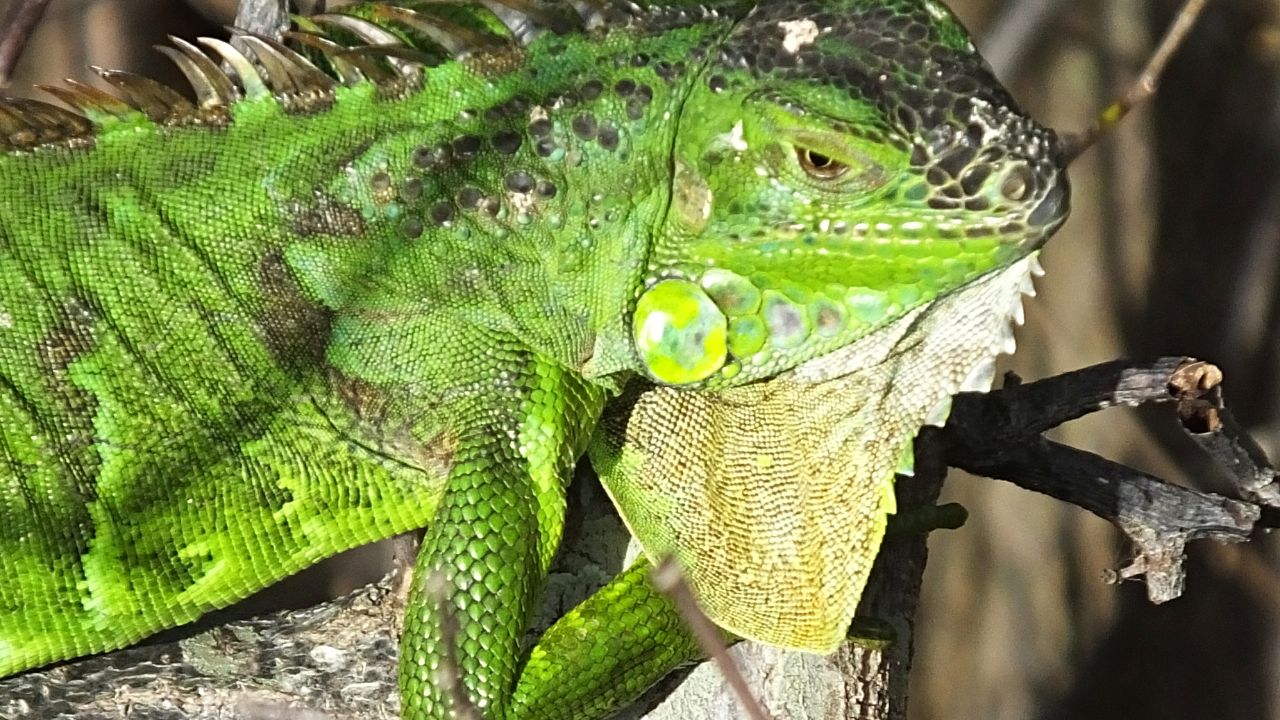
A rare cold snap across Florida has caused thousands of iguanas to become “cold stunned,” leaving the reptiles immobile and, in many cases, falling from trees as temperatures dipped below 50F (10C). The unusual weather pattern slowed their bodily functions to the point where they could no longer cling to branches or move normally, a well-documented response among ectotherms whose body temperature depends on external conditions.
The Florida Fish and Wildlife Conservation Commission said the sudden drop left the state’s sizable iguana population temporarily incapacitated, producing scenes of frozen-rigid reptiles scattered across yards, sidewalks and parks. Officials emphasized that while the animals may appear dead, most recover once temperatures rise. This natural shutdown, known as cold stunning, occurs when reptiles cannot regulate their internal systems and enter a motionless, survival-mode state.
Because iguanas are an invasive, non-native species, the agency has encouraged Floridians to safely capture or report the immobilized reptiles while they are easy to handle. Wildlife officers said more than 2,000 cold-stunned iguanas have already been turned in to authorities as part of ongoing efforts to control a population that damages vegetation, infrastructure and local ecosystems.
Experts note that cold-stun events are becoming increasingly common during sudden winter temperature swings, though mass falls of this scale remain unusual. Officials reminded residents not to place stunned iguanas in warm vehicles or near heaters, as rapid temperature changes can harm the animals further. Instead, they recommend contacting wildlife experts if the animals need to be removed.
As temperatures rise again in the coming days, most of the impacted iguanas are expected to regain mobility and return to their normal behaviour. Wildlife crews continue monitoring the situation while urging the public to take advantage of the temporary immobility to help curb Florida’s invasive iguana population.