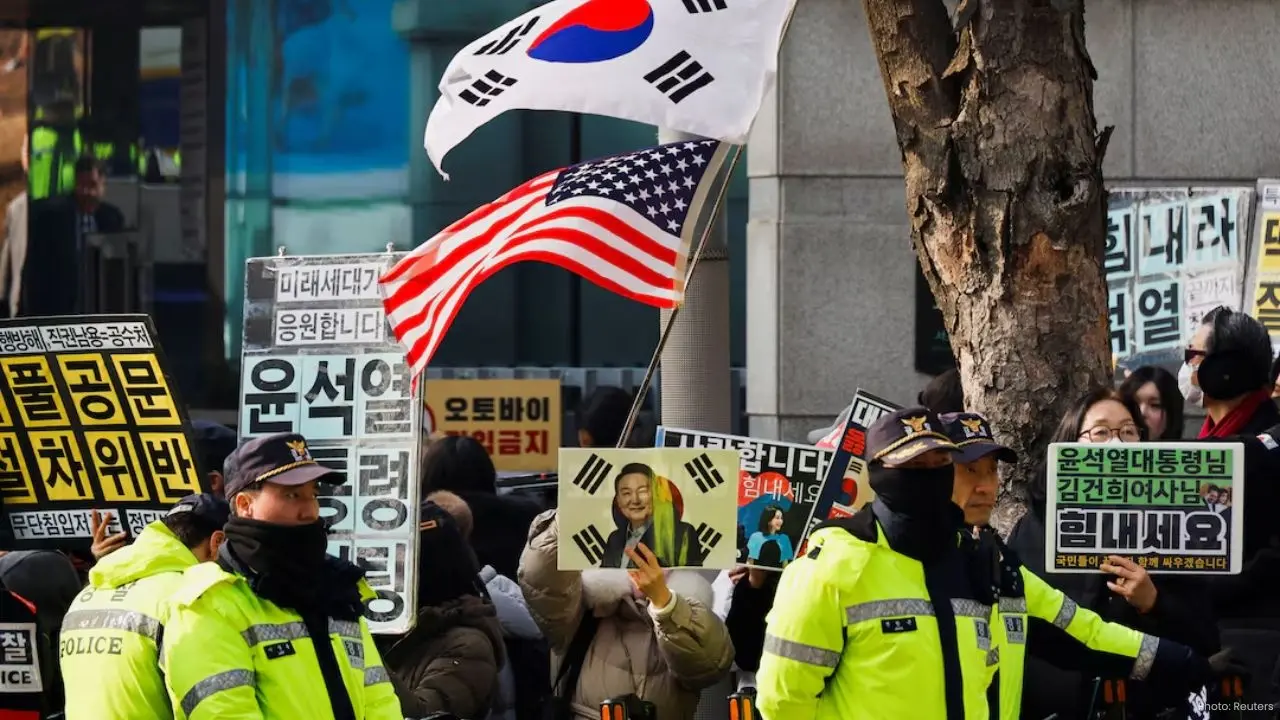
A South Korean court has sentenced ex-president Yoon Suk Yeol to five years in prison, with the verdict stemming from his unsuccessful bid to establish martial law in December 2024, highlighting a significant fall from grace for a once-powerful leader.
The Seoul Central District Court ruled that Yoon abused his power and obstructed justice by using the presidential security team to thwart investigators attempting to arrest him. This overt interference with an arrest warrant was deemed a violation of the constitutional framework.
During the martial law declaration, Yoon directed his security detail to physically block law enforcement from accessing specific sites associated with him. The court characterized this misuse of state security resources as a grave offense that erodes democratic norms and the rule of law.
Moreover, the court determined that Yoon bypassed necessary legal processes for imposing martial law. He neglected to consult the Cabinet adequately, failed to meet the constitutional prerequisites for such an extraordinary measure, and relied on misleading official documents for his declaration. Judges highlighted these acts as a severe abuse of presidential authority.
Yoon's martial law attempt on December 3, 2024, incited a nationwide crisis, prompting widespread protests and swift political fallout. Lawmakers acted rapidly to revoke the order, leading to Yoon's impeachment by the National Assembly. By April 2025, he was formally ousted after a constitutional review.
This recent sentencing represents the first ruling in a series of legal challenges linked to the martial law incident. Yoon is presently confronting additional trials, including weighty accusations of rebellion and threats to constitutional governance. Prosecutors have pledged to pursue these cases further, which could result in much harsher penalties.
Yoon exhibited little emotion during the reading of the verdict. His legal representatives announced plans to appeal, contending that his actions were driven by a unique political crisis and that the verdict does not fully capture the situation's complexities.
This case has profoundly impacted South Korea's political landscape, reigniting discussions on the boundaries of presidential authority. Legal analysts suggest the ruling sends a clear message that no one, including former presidents, is above the law.
With Yoon's conviction marking a pivotal moment in South Korea’s political narrative, it underscores the nation's unwavering dedication to constitutional protections and democratic accountability.