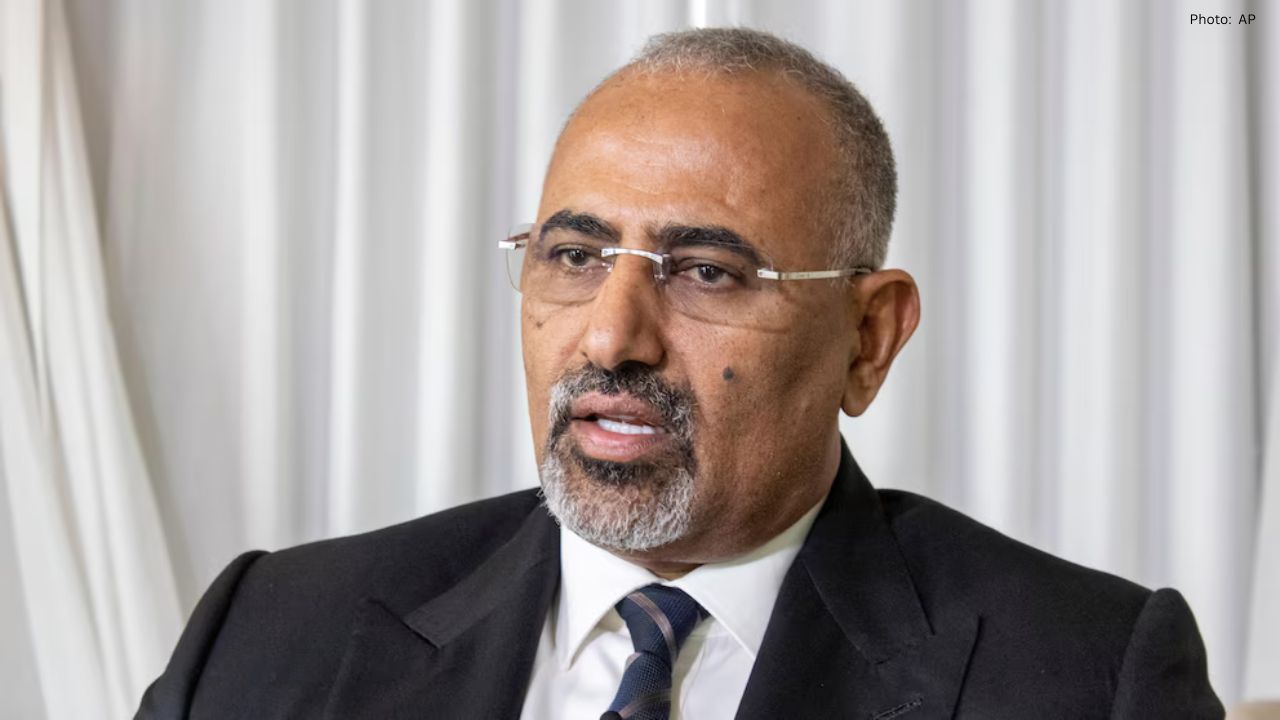
The political landscape of Yemen has shifted dramatically as the anti-Houthi leadership has decided to remove a prominent southern separatist leader from his role. This decision exposes significant fractures within the governing body that oversees territories outside Houthi control, raising alarms about the stability of the already tumultuous nation.
The announcement came from Yemen's Presidential Leadership Council, recognized internationally as the entity meant to unify forces against the Houthis. Officials have accused the ousted leader of undermining national unity through unilateral military actions that compromised cooperation among allied factions. They highlighted his challenge to the central authority at a pivotal moment for unity.
This leader headed the Southern Transitional Council, which commands substantial influence in southern Yemen and has aspirations for regional independence. Despite their opposition to the Houthis, long-standing disagreements with the government regarding Yemen's future have led to ongoing friction, even among allies.
Political observers suggest that this latest development underscores the increasing vulnerability of Yemen's anti-Houthi coalition. While all factions share an opposition to the Houthis, disputes over authority and territory continue to hinder progress. Moreover, regional dynamics add complexity, with Saudi Arabia advocating for a unified Yemen while the UAE fosters close relationships with southern factions.
The implications of this action could hinder negotiations aimed at bringing an end to the protracted conflict, which has persisted for over a decade, resulting in tens of thousands of casualties and vast humanitarian crises. Aid organizations caution that the ongoing political disputes detract from immediate humanitarian priorities such as food scarcity and healthcare needs.
Experts warn that these internal divisions may inadvertently empower the Houthis, who still dominate significant northern territories, including the capital, Sanaa. A potential disintegration of the anti-Houthi groups could ease pressure on the rebels and extend the conflict further.
For average Yemeni citizens, this news only amplifies the prevailing uncertainty. Many report feeling worn down by the incessant power struggles and desire for their leaders to prioritize peace, recovery, and day-to-day survival over political infighting. Without compromise and mutual trust among Yemen's leadership, the prospect for stability and recovery seems increasingly remote.