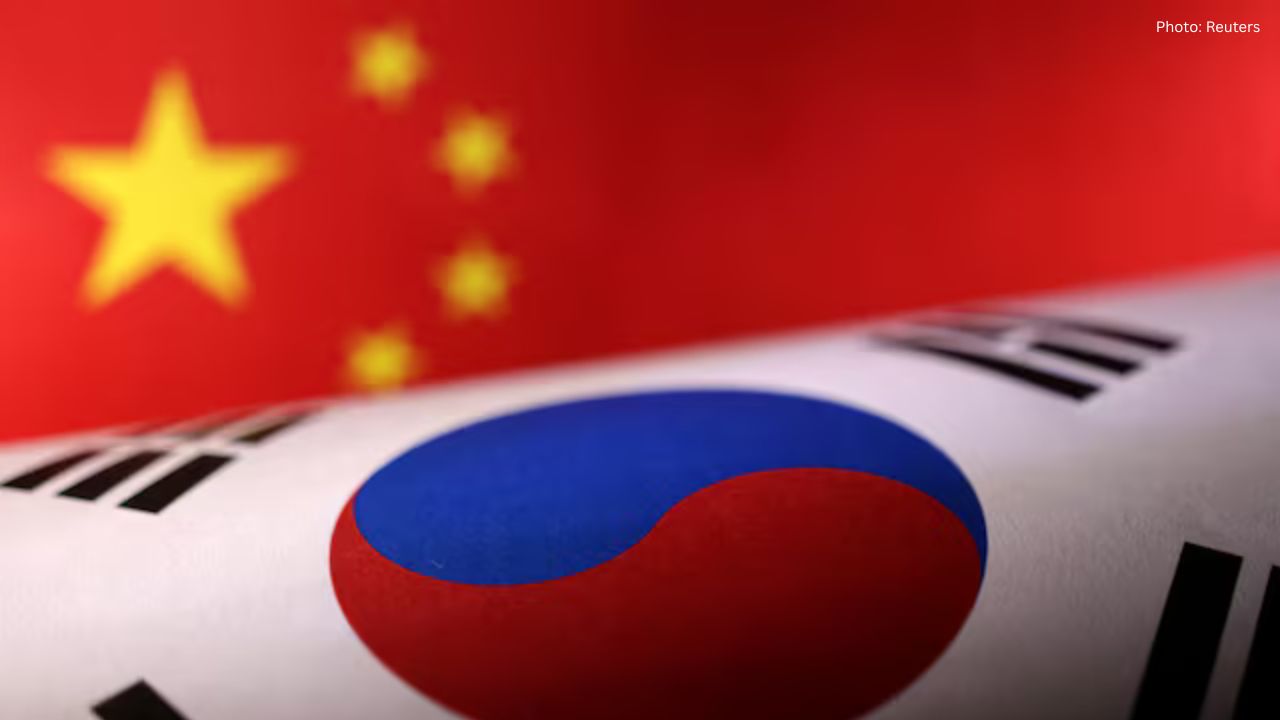
China’s President Xi Jinping is preparing to host South Korean President Lee Jae Myung for a state visit commencing this Sunday. This gathering occurs during a delicate period in East Asia, marked by escalating tensions between China and Japan regarding Taiwan and the increasing rivalry among prominent regional powers.
This meeting is significant as it marks their second engagement within a two-month span, a rarity that underscores Beijing's keen interest in fostering stronger ties with South Korea. Analysts suggest that China aims to bolster political trust and expand economic collaboration before President Lee's upcoming visit to Japan later in the year.
Relations between China and Japan have deteriorated recently, exacerbated by Japan's prime minister's remarks hinting at potential military action should China launch an attack on Taiwan. In this context, China appears eager to cultivate warmer relations with Seoul, emphasizing South Korea's critical role within the region.
On its part, South Korea strives to maintain a delicate balance. Although a close ally of the United States, the nation heavily relies on China for trade. China represents South Korea's largest trading partner, while the U.S. remains pivotal for security matters. Concurrently, North Korea poses a significant threat due to its nuclear weapons program.
The Lee administration has expressed a desire to “restore” relations with China following a phase of strain under the previous government. Relations had chilled as South Korea leaned towards Washington and Tokyo, openly addressing issues such as Taiwan. Lee's approach has been more measured, emphasizing that South Korea will not take sides in the China-Japan disputes.
During the upcoming visit, Xi and Lee are expected to address a variety of topics, including trade, tourism, climate initiatives, and security in the region. South Korean officials reveal that upwards of ten agreements are under preparation, focusing on business collaboration and green strategies. Although a joint statement isn't anticipated, both parties hope to usher in a “new chapter” in their relationship.
Economic matters are likely to dominate discussions, as South Korea depends on China for nearly half of its rare earth mineral supplies, essential for the production of semiconductors and other high-tech goods. China is also the primary market for South Korea's chip exports. Recently, both nations have pledged to ensure stable supply chains, particularly in critical materials.
Cooperation in technology will be a critical agenda point as well, with discussions possibly revolving around artificial intelligence, advanced manufacturing, and sustainable industries. Chinese technology firms, such as Huawei, are looking to broaden their influence in South Korea, providing alternatives in sectors like AI chips.
Security discussions are inevitable. China is North Korea’s main supporter, while South Korea hosts around 28,500 U.S. troops for defense against Northern threats. President Lee is expected to encourage China to assist in resuming dialogue with North Korea. Simultaneously, South Korea will seek to assure Beijing that its military developments, including future naval initiatives, are solely defensive against North Korea.
As regional tensions rise, South Korea finds itself at a crossroads of intricate political and economic dynamics. Lee’s visit to China signifies Seoul's determination to maintain stable interactions with all major stakeholders while safeguarding its national interests.
The upcoming Xi–Lee meeting will attract considerable attention throughout Asia, with implications not just for China–South Korea relations but also for the overall balance of power in Northeast Asia in the future.