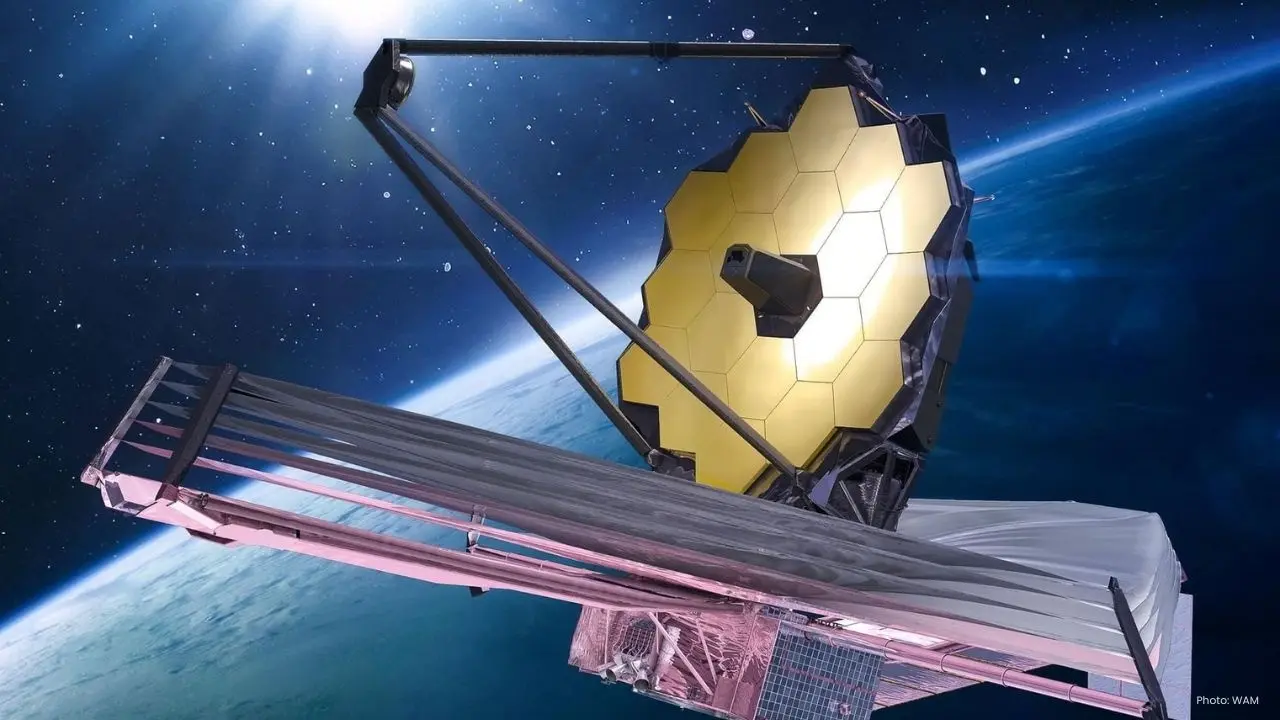
Researchers have unveiled the most intricate map of dark matter, thanks to the James Webb Space Telescope (JWST). This elusive substance forms the majority of the matter in the cosmos yet remains invisible as it neither emits nor reflects light.
The universe's ordinary matter, comprising stars, planets, and human beings, accounts for merely 15 percent of all matter. The vast remainder, 85 percent, is composed of dark matter, which scientists can explore by observing its gravitational influence on galaxies and light.
In constructing this advanced map, scientists examined how light from approximately 250,000 distant galaxies is warped as it traverses space. This curvature, termed gravitational lensing, points to the locations of dark matter.
This newly generated map boasts double the resolution of previous imagery obtained from the Hubble Space Telescope, reaching further back in time to depict the universe as it existed 8 to 10 billion years ago—a pivotal era for galaxy formation.
It intricately illustrates the cosmic web, showcasing galaxy clusters, enormous dark matter filaments, and areas with varying matter density.
The advanced infrared capabilities of James Webb allow it to capture fainter, more distant galaxies, providing clearer visuals than Hubble can achieve. This significantly enhances the precision of dark matter mapping.
The groundbreaking findings were published in Nature Astronomy, spearheaded by NASA scientist Diana Scognamiglio, who described the telescope as “a new pair of glasses for the universe,” aiding scientists in better visualizing concealed structures.
The detailed map surveys the COSMOS region within the Sextans constellation and is poised to facilitate future research into the universe's formation and evolution.