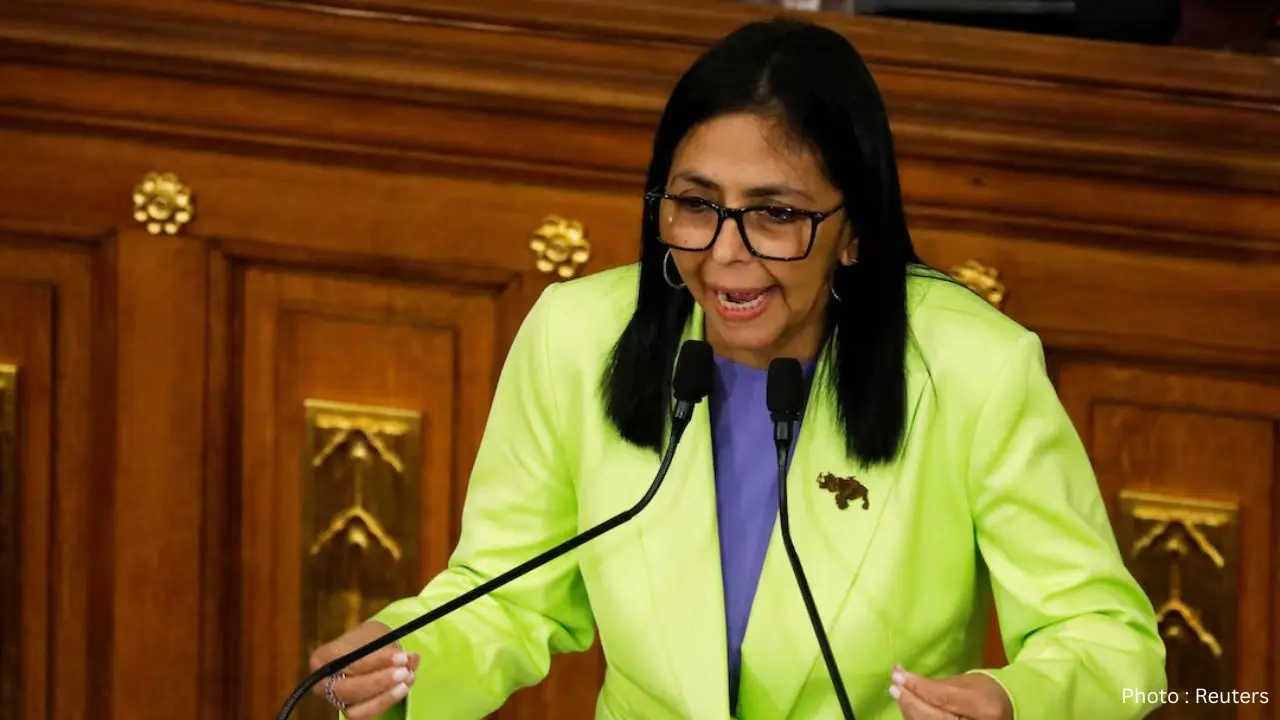
In a pivotal moment for Venezuela, interim president Delcy Rodriguez has unveiled significant proposals to overhaul the nation’s oil legislation. Her aim is to draw foreign investment and revitalize the beleaguered energy sector, coinciding with a major political transformation following the ousting of Nicolas Maduro by U.S. intervention.
During her inaugural speech to the National Assembly, Rodriguez emphasized her intent to revise the long-established hydrocarbon law. This reform is crucial for unlocking investment in underdeveloped oil fields that lack essential infrastructure. Despite possessing some of the largest oil reserves globally, Venezuela's production has plummeted due to years of mismanagement and sanctions.
Under the existing regulation, foreign firms must collaborate with state-owned PDVSA, which maintains a majority stake, a stipulation that many U.S. investors criticize as a barrier to attracting capital and improving operational efficiency. Although Rodriguez didn't detail the changes, her comments indicate a potential loosening of restrictions for international partners.
As the U.S. tightens its grip on Venezuela’s oil landscape, reports reveal that around 500 million dollars have been accrued from Venezuelan oil transactions, now held in U.S.-controlled bank accounts. An industry insider noted that a primary account is based in Qatar. Additionally, the Trump administration has proposed a substantial 100 billion dollar reconstruction initiative for Venezuela, signaling a long-term investment aspiration in the nation’s energy sector.
Rodriguez assured that oil proceeds would benefit public services and workers, aiming to gain public trust amid a backdrop of economic hardships and shortages in food and medicine that Venezuelans have endured despite the nation’s wealth.
Just ten days into her presidency, following the dramatic arrest of Maduro and his spouse on drug-related allegations, Rodriguez has sought to present herself as a stabilizing force, advocating for diplomatic relations with Washington and a more subdued political atmosphere. She expressed willingness to engage with the U.S. respectfully.
Her announcement arrives as U.S. authorities continue to target Venezuela, with the recent confiscation of a sixth oil tanker linked to its government. President Trump has committed to maintaining U.S. oversight of Venezuelan oil resources indefinitely, a declaration that raises significant sovereignty concerns both domestically and internationally.
Meanwhile, opposition leader Maria Corina Machado met with Trump, receiving praise for her collaboration. However, U.S. officials have indicated skepticism about her as a viable leadership alternative, leaving the timeline for future Venezuelan elections uncertain and engendering fears regarding the country's democratic prospects.
Despite Rodriguez’s reform initiatives, Machado cautioned that political repression persists under her governance, highlighting ongoing arrests and the disparity between the number of political prisoners released and official claims. These sentiments are echoed by human rights organizations operating within Venezuela.
The proposed overhaul of the oil law has caught the attention of both local and international observers. For investors, it might imply a shift towards a more receptive and realistic approach for rehabilitating Venezuela’s oil sector. Conversely, for common Venezuelans, it ignites hopes for harnessing oil wealth to enhance daily living conditions. However, this initiative also stirs apprehensions about potential foreign control, particularly from the U.S., which could further erode Venezuela’s autonomy.
Venezuela stands at a critical juncture; effective oil reform may catalyze economic renewal and attract essential investments, provided it is managed transparently and equitably. Absent clear electoral pathways and robust safeguards for national interests, the country risks exchanging one form of dominion for another.
As Delcy Rodriguez envisages a new political trajectory by 2026, global attention is focused on whether these pledges will materialize into genuine recovery or lead to continued strife fueled by external influences rather than national renewal.