The United States has sharply intensified its pressure on Venezuela by seizing two oil tankers in the Atlantic Ocean, one sailing under a Russian flag. This action is part of President Donald Trump’s assertive campaign to regulate oil flow in the Americas and reconfigure Venezuela’s energy landscape to align with US interests. The move has sent ripples through global energy markets, raising significant concerns among major world players.
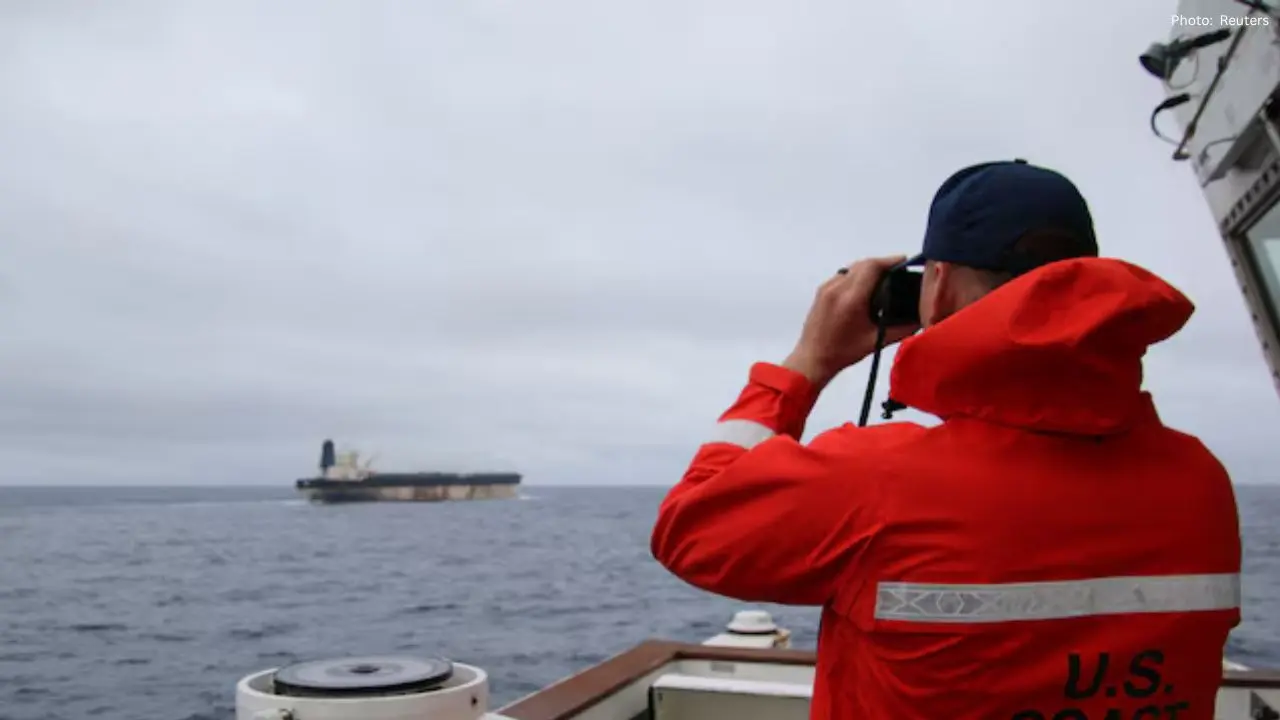
U.S. authorities reported that Coast Guard and military special forces intercepted the tanker Marinera, previously known as Bella-1, after a protracted chase across the Atlantic. The vessel had earlier resisted boarding and subsequently altered its registration to Russia, a tactic US officials believe was intended to circumvent sanctions. Although the tanker was empty at the time of the interception, Washington asserts it was involved in a covert network for transporting sanctioned crude oil.
In tandem, American forces also seized another vessel, the M Sophia, laden with Venezuelan oil and flagged in Panama. This marks the fourth seizure in recent weeks, underscoring the seriousness of the U.S. commitment to enforcing sanctions and governing maritime oil transport related to Venezuela.
These developments follow a dramatic US military operation in Caracas, resulting in the arrest of Venezuelan President Nicolas Maduro, who faces accusations of drug trafficking and collaboration with American adversaries. Maduro has vehemently denied these allegations, but his capture has shifted the political dynamics within Venezuela and sparked international debate.
The Trump administration has announced that Venezuelan oil exports will only be permissible under certain U.S. legal and security conditions. Concurrently, the White House intends to selectively lift some sanctions imposed during Trump’s initial term, with the aim of revitalizing Venezuela’s oil sector in a way that benefits the U.S. and creates opportunities for American businesses.
President Trump has publicly stated that the plan is to refine and sell up to 50 million barrels of Venezuelan oil currently trapped under sanctions, claiming the revenue would be used by Venezuela to procure American products such as food and medicine. Critics contend that this strategy amounts to direct control over another nation's resources.
The capture of a tanker under a Russian flag has heightened fears of broader confrontations. US officials have verified that Russian naval assets were operating nearby during the operation. Russia has condemned the U.S. actions in Venezuela, while China, the largest buyer of Venezuelan oil, has fiercely criticized Washington for its bullying tactics.
Chinese representatives have stated that the US has no jurisdiction over Venezuela’s oil sales, warning that using military force to dominate energy supplies establishes a perilous precedent. China, Russia, and various leftist governments have condemned the U.S. for apprehending a sitting head of state, arguing that it undermines international norms and could destabilize global politics.
In the United States, this policy decision has ignited fervent political discourse. Senior officials have briefed Congress in private, with some lawmakers expressing deep concerns. Democratic leaders have accused the White House of attempting to dominate Venezuela through control of its oil, cautioning that such actions could lead to enduring instability and conflict.
In response to these developments, global oil prices dipped, as markets reacted to the possibility of increased oil supplies entering circulation. Nevertheless, experts warn that Venezuela’s oil infrastructure has been severely compromised due to years of mismanagement and underfunding, suggesting that any significant recovery will require time. US oil corporations are reportedly exercising caution, seeking robust assurances before engaging in projects within the country.
Venezuela remains deeply fractured, with reports indicating that dozens lost their lives during the operation that captured Maduro. His political allies continue to dominate significant portions of the government, while Acting President Delcy Rodriguez is striving to manage public anger while negotiating a potential oil agreement with the United States.
The Venezuelan state oil firm PDVSA has confirmed that discussions with the U.S. are ongoing, asserting that any accord must be legal, transparent, and equitable. Rodriguez has expressed that Venezuela is amenable to energy collaborations if they are mutually beneficial, hinting at a potential new, albeit strained, relationship between the two nations despite ongoing tensions.
This seizure of oil tankers signifies a pivotal shift in global energy dynamics. The United States is no longer solely depending on sanctions and diplomacy but has taken direct measures to determine who is permitted to sell oil and to whom it can be sold. While proponents argue this protects American interests, critics voice concerns that it invites global instability.
One thing remains clear: oil continues to serve as a formidable lever in global politics. The unfolding saga surrounding Venezuela illustrates how energy, military power, and diplomacy are increasingly intertwined. The results of this approach will not only impact Venezuela’s trajectory but may also recalibrate the manner in which power is exerted within the global energy marketplace.