For decades, Greenland remained a strategic afterthought for both the United States and NATO, largely due to fears that increased military attention in the Arctic could provoke Russia. That era is now coming to an end, as rising geopolitical tensions and renewed pressure from U.S. President Donald Trump force the alliance to rethink its Arctic posture.
Discussions are underway among European NATO members, including the United Kingdom and Germany, about establishing a greater military presence in Greenland. The talks are partly driven by concerns over Trump’s repeated threats to assert control over the semi-autonomous Danish territory, even suggesting the use of force if necessary.
NATO Secretary General Mark Rutte acknowledged that Arctic security discussions are taking place but downplayed claims of immediate troop deployments. He said the talks build on consultations that began last year among seven NATO Arctic nations, including the United States, and are aimed at ensuring long-term regional stability.
For years, NATO avoided prioritizing the Arctic, believing that increased military activity in the region could antagonize Russia and distract from the alliance’s core mission of defending Europe. As recently as 2020, proposals for a dedicated NATO Arctic command were dismissed outright.
That thinking began to change after Russia’s invasion of Ukraine and accelerated under Trump’s second presidency. Washington has shifted responsibility for Greenland from U.S. European Command to U.S. Northern Command, signaling that the island is now viewed as a key component of North American homeland defence.
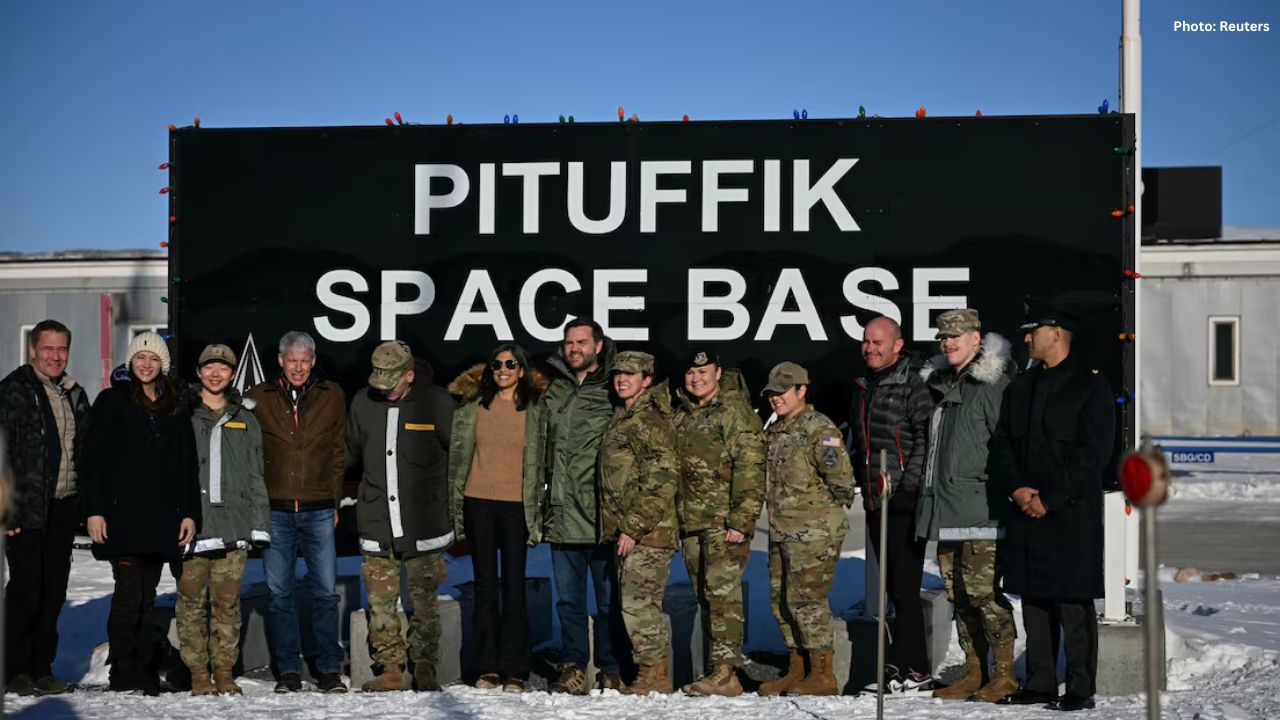
Despite Trump’s criticism of Denmark’s limited military presence in Greenland, experts note that the United States itself has underinvested in critical infrastructure on the island. Early-warning radar systems at the U.S. Pituffik Space Base — once central to detecting Russian intercontinental ballistic missiles — are now considered vulnerable to modern hypersonic weapons.
Security analysts argue Greenland needs a fully integrated air and missile defence system connected to NORAD. Some academics have even suggested Denmark should be allowed to join NORAD to strengthen continental defence.
Greenland’s push for eventual independence also complicates the picture. U.S. defence experts have warned that an independent Greenland may choose neutrality over NATO membership, potentially limiting alliance access to the strategically vital territory.
Trump has also highlighted Greenland’s vast mineral wealth, particularly rare earth elements essential for modern technologies. While Beijing has tried to establish a foothold through infrastructure and mining investments, most Chinese projects have stalled due to environmental concerns and geopolitical pushback from the U.S. and Denmark.
Greenland officials have warned that continued Western hesitation could push the territory toward non-Western partners. With Arctic security, mineral competition and great-power rivalry converging, Greenland has moved from NATO’s sidelines to the centre of strategic planning — a shift likely to shape alliance politics for years to come.