The White House has indicated that employing the U.S. military remains “always an option” regarding Greenland, despite strong objections from European leaders to President Donald Trump’s renewed discussion of acquiring the world’s largest island. This has raised significant concerns in Europe, questioning NATO solidarity, international law, and Arctic security.
Trump's interest in acquiring Greenland has been evident since his first term, gaining fresh scrutiny following U.S. military actions in Venezuela. The White House designates Greenland as a pivotal national security focus, citing escalating competition with China and Russia in the Arctic. According to press secretary Karoline Leavitt, the administration is weighing various means to strengthen its interests, including military intervention.
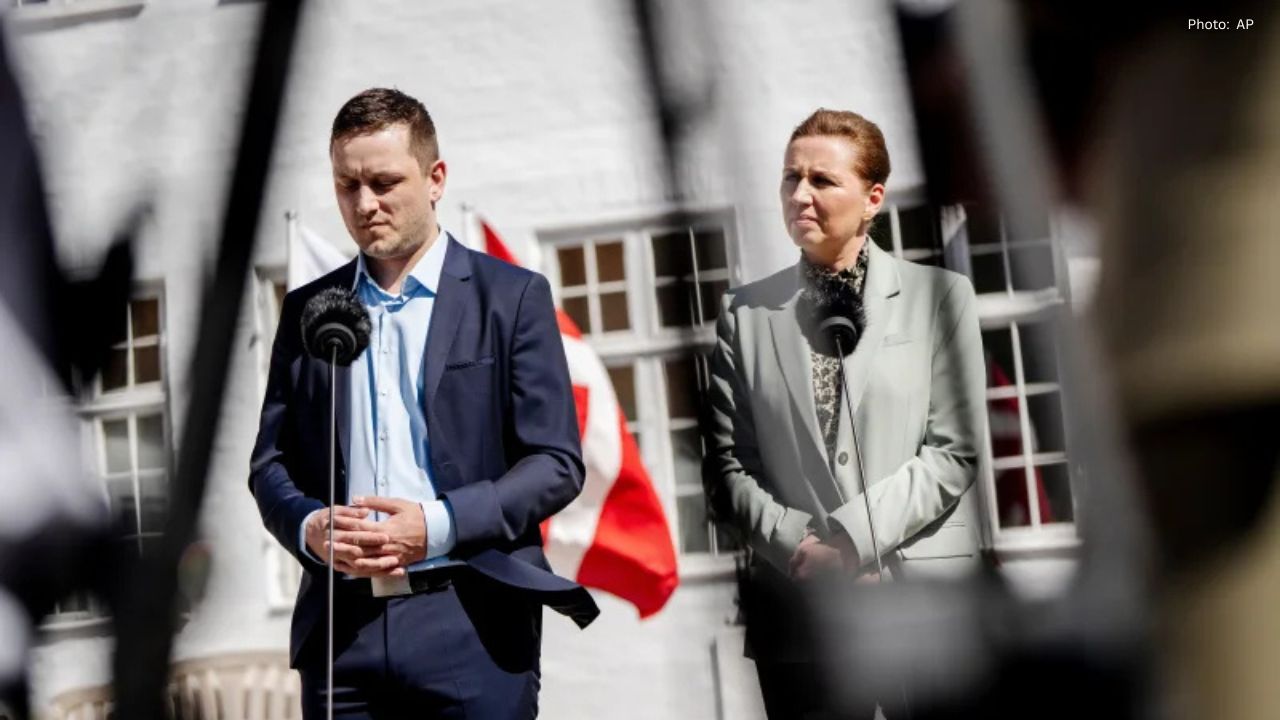
This statement has alarmed U.S. allies, particularly Denmark, which administers Greenland as a self-governing territory. Danish Prime Minister Mette Frederiksen emphasized the seriousness of Trump’s remarks, warning that military action against Greenland would jeopardize NATO’s foundation. Greenland’s Prime Minister Jens-Frederik Nielsen also rejected the notion of U.S. takeover, emphasizing a desire for respectful relations with Washington.
European leaders rallied around Denmark and Greenland swiftly. In a joint statement, leaders from France, Germany, Italy, Spain, Poland, and the U.K. affirmed that Greenland belongs to its inhabitants alone, underscoring that its fate should be dictated only by Denmark and Greenland, not by external powers. Canada echoed this stance, with Prime Minister Mark Carney asserting that Greenland’s destiny is solely for its people to decide. Subsequently, Canada announced an upcoming visit to Greenland by its Governor General and foreign minister to demonstrate solidarity.
The strong remarks from the White House are striking, especially since some U.S. leaders had previously indicated that military options were not considered. Even Republican House Speaker Mike Johnson expressed disbelief that force would be justified in Greenland. Nonetheless, Trump’s advisor Stephen Miller argued for Greenland’s inclusion in the U.S. security architecture, raising historical claims against Denmark’s ownership, which only heightened tensions among Danish officials.
Trump maintains that Greenland is crucial for U.S. national security, citing increased Chinese and Russian activities in the Arctic. The strategic positioning of Greenland is vital for missile defense, surveillance, and controlling Arctic maritime routes. Currently, the U.S. operates the Pituffik Space Base under a longstanding arrangement with Denmark, allowing significant military operations without territorial claims.
Moreover, Greenland boasts rich deposits of rare earth minerals essential for modern technology, sustainable energy, and defense systems, alongside potential offshore hydrocarbons. As climate change unveils new Arctic shipping lanes, the global allure of the island intensifies.
Tensions further escalated when a post by Stephen Miller's wife depicted Greenland styled in the U.S. flag colors, narrating “soon.” Trump later prompted discussions about Greenland in upcoming weeks, igniting fears in Denmark of a possible U.S. maneuver. Danish officials labeled the situation as extremely concerning, emphasizing that any military threats amid NATO allies would be catastrophic.
Despite the rampant rhetoric, Greenland’s prime minister reassured there is no assumption of an immediate takeover. He promoted dialogue and cooperation over confrontation. Lawmakers in the U.S. from both parties also urged restraint, cautioning that discussions of annexation are neither prudent nor necessary, given the established military access to Greenland.
This predicament highlights the perils of combative discourse in international relations. While Greenland's strategic assets are important, so too are the principles of sovereignty and trust within alliances. NATO was built on mutual cooperation, not intimidation among its members. Any endeavor to pressure a partner through coercion or dread could undermine the alliance during crucial times.
The escalating conflict has fostered anxiety in Europe and unpredictability in the Arctic. With rising security issues in the region, resolutions must be derived from diplomacy and respect for global accords. The future of Greenland should be determined by its citizens, not through power plays. How Washington navigates this situation in the upcoming weeks will not only challenge U.S. leadership but also the resilience of its partnerships.