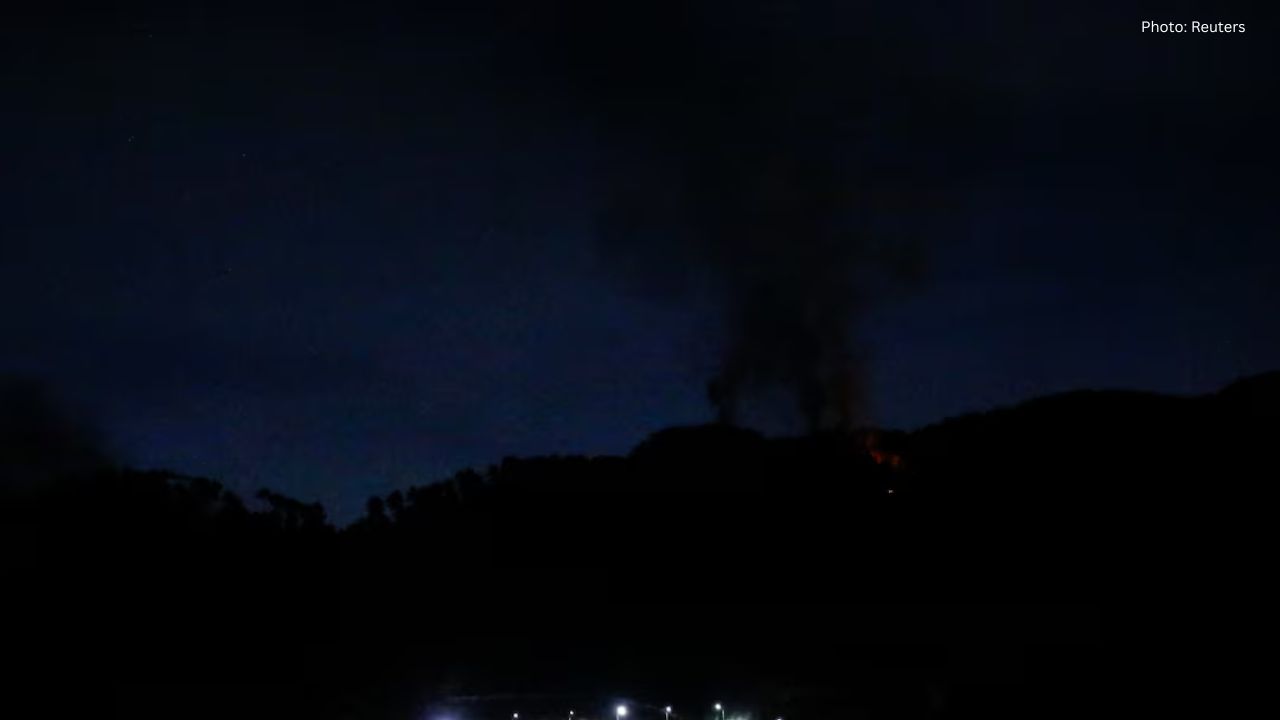
Significant explosions reverberated through Caracas, Venezuela's capital, indicating a dangerous surge in tensions between the United States and President Nicolas Maduro's administration. Confirmation came from a U.S. official stating that military actions were executed inside Venezuela following relentless threats from President Donald Trump.
Residents reported intense blasts, aircraft flying overhead, and thick plumes of black smoke filling the nighttime sky. Social media abounded with videos displaying radiant flashes and substantial smoke clouds near military zones. With explosions persisting for over an hour, many citizens voiced their fears and confusion. Specific areas in southern Caracas, close to a significant military installation, reported blackout conditions.
The Venezuelan administration claimed that the attacks extended beyond Caracas. Officials noted that strikes were also executed in neighboring regions such as Miranda, Aragua, and La Guaira. In a swift response, President Maduro declared a national emergency and directed defense forces to mobilize nationwide. Measures to secure critical sites and maintain control were promptly instated.
This escalation follows a protracted period of intensifying pressure from Washington, with President Trump asserting on multiple occasions that Maduro maintained power through electoral fraud and hinting that it would be “wise” for him to resign. Although Trump has not made his precise objectives clear, reports indicate he has privately aimed for Maduro's ousting.
The U.S. has progressively augmented its military presence near Venezuela in recent months. An aircraft carrier, warships, and advanced fighter jets have been dispatched in the Caribbean. The Trump administration has concurrently expanded economic sanctions and initiated actions to hinder Venezuelan oil exports, tightening the grip on the oil-dependent nation.
The Venezuelan government has vehemently denounced U.S. actions, labelling them as attempts to seize the nation's oil and mineral reserves. An official statement from Caracas proclaimed that the United States would not prevail and vowed to defend Venezuela's sovereignty. Maduro's government has persistently refuted U.S. accusations of supporting drug trafficking, branding them as false and politically charged.
The Pentagon referred inquiries to the White House, which opted not to comment on the strikes, creating further apprehension about what might unfold next. Several nations have previously condemned U.S. actions in the region, cautioning that military intervention could aggravate instability and result in harm to civilians.
As Venezuelans awaken to the aftermath of the explosions, trepidation and uncertainty pervade the atmosphere. With tensions already at a breaking point, many fear that these strikes could escalate into broader conflict. The situation remains fluid, with global observers keenly watching how both parties will navigate in the coming days.