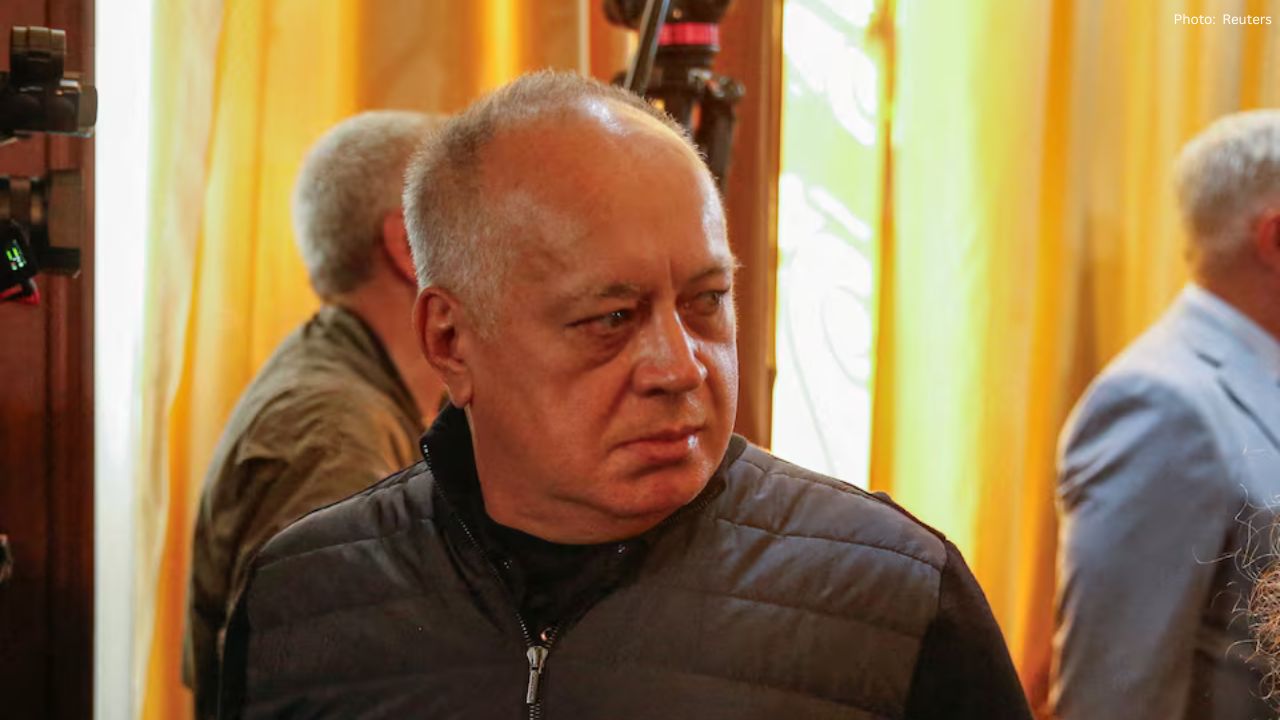
In the wake of President Nicolas Maduro's capture, the United States is turning its attention to the leadership of Venezuela's security forces, as per insiders familiar with the U.S. strategy. The Trump administration has issued warnings to Interior Minister Diosdado Cabello, stressing he may face severe repercussions if he fails to cooperate with Interim President Delcy Rodriguez and the stipulations set forth by Washington.
Cabello, a significant player in Venezuela’s security apparatus, has a notorious background marked by human rights violations and political repression during Maduro's regime. U.S. officials view him as both a challenge and a temporary ally essential for maintaining order and preventing chaos. Likewise, Defense Minister Vladimir Padrino, also implicated in a U.S. drug trafficking indictment, is recognized as a critical figure whose compliance could help avert a power vacuum.
The White House is eager for swift advancements in areas vital to U.S. interests, which encompass securing Venezuela's oil facilities, combating drug trafficking, removing Cuban security personnel, and limiting collaboration with Iran. Sources reveal that the administration is employing a mix of threats and financial incentives, including the possibility of seizing offshore assets, to secure compliance.
Officials in Washington are cautious about sending ground troops, worried about possible backlash from pro-government groups known as colectivos, who could react violently should Cabello or Padrino be ousted suddenly. Thus, Washington is relying on the remaining inner circle to sustain temporary stability in the nation.
Despite the swift ousting of Maduro, Venezuela's situation remains tenuous. Cabello and Rodriguez have historically been rivals within the Socialist Party, casting doubts on their potential for cooperation. The U.S. is banking on Rodriguez, perceived as a technocrat willing to work with the U.S., to serve as a crucial figure during this transition.
Experts caution that this strategy entails risks. While it might offer immediate control and access to Venezuela’s oil reserves, critics suggest it could be interpreted as neo-colonialism and contravenes international law. The United Nations has previously documented human rights abuses committed by Venezuelan security forces, underscoring the difficulties of relying on figures like Cabello to restore order.
Currently, the U.S. approach focuses on leverage and negotiation rather than direct military action, aiming to stabilize Venezuela whilst safeguarding its strategic interests. How effectively Washington navigates the intricate balance of coercion, collaboration, and oil access remains to be seen, but the administration has made it clear that it perceives Rodriguez and key security figures as pivotal to realizing its objectives.