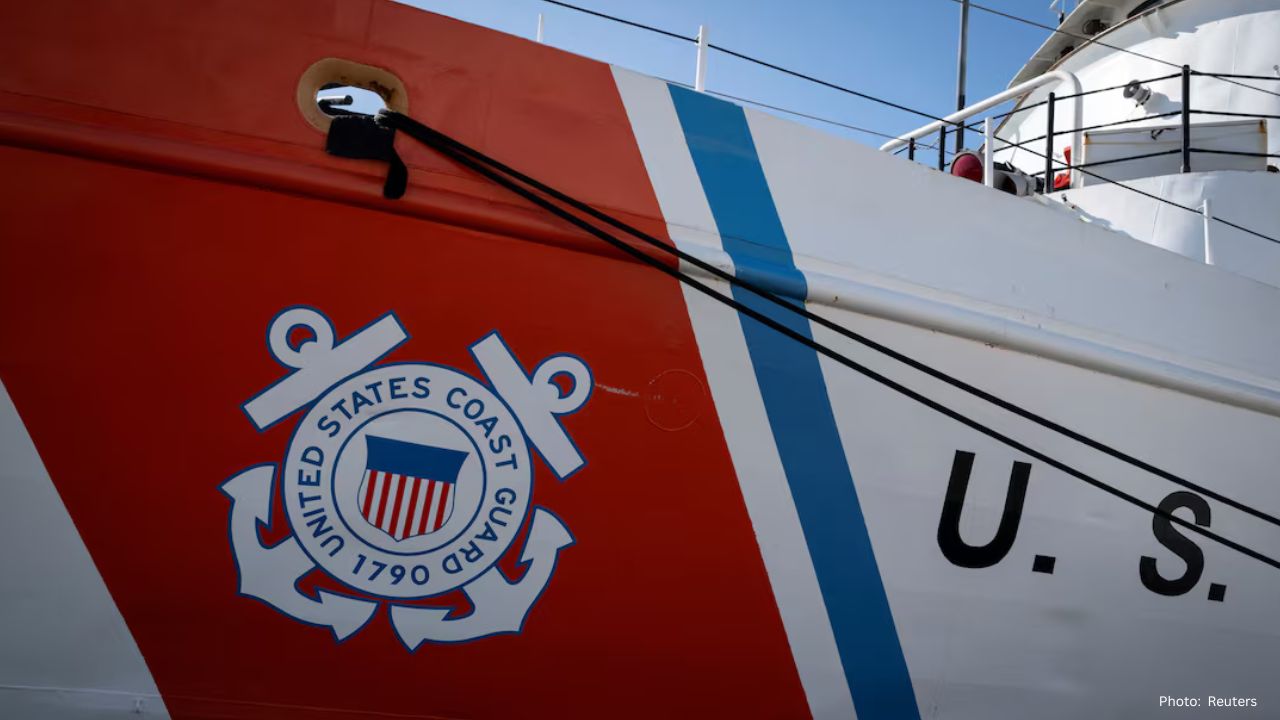
The U.S. is gearing up to enhance Coast Guard operations to intercept an oil tanker associated with Venezuela that has not complied with U.S. directives. The vessel, known as Bella 1, has eluded capture for several days and is suspected of facilitating Venezuela's evasion of U.S. sanctions.
Officials indicate that the tanker has consistently rebuffed Coast Guard attempts to board. This ongoing resistance may necessitate the involvement of elite forces, specifically the Maritime Security Response Teams, trained for high-risk operations including airborne entries onto moving vessels.
This confrontation has underscored a growing dilemma. While the previous administration had urged aggressive actions against sanctioned oil tankers approaching Venezuela, the Coast Guard is grappling with limited resources to undertake such perilous operations. In contrast to the U.S. Navy, the Coast Guard has authority to enforce maritime laws, which includes boarding and confiscating ships that breach sanctions.
Earlier this month, President Trump implemented a “blockade” on oil tankers engaged in illegal trade with Venezuela, aiming to pressure Venezuelan President Nicolas Maduro by cutting off illegal oil sales. Recently, the Coast Guard successfully captured two other tankers in the vicinity using specialized teams and airborne operations, details of which were subsequently disclosed.
However, experts have cautioned that these operations place substantial pressure on the Coast Guard. The agency handles a multitude of responsibilities including drug enforcement, search and rescue missions, and border security. Admiral Kevin Lunday, the head of the Coast Guard, has alerted legislators to a significant readiness crisis that has been intensifying over years.
While U.S. military assets including aircraft carriers and fighter jets have been deployed to the Caribbean region, the Coast Guard is burdened with a considerably smaller fleet, fewer aircraft, and limited trained personnel. This disparity raises serious concerns about the organization's capacity to manage escalating missions without endangering safety or operational effectiveness.
The government has approved increased budgets for the Coast Guard in the coming years, yet officials concede that funding alone won't swiftly resolve existing shortages in workforce and training. The pursuit of Bella 1 illustrates the complexities involved in contemporary maritime law enforcement.
Currently, the tanker remains under surveillance, and it is uncertain whether U.S. forces will proceed to board and seize it. This situation clearly illustrates the essential need for aligning political aspirations with the operational capacities of the agencies tasked with meeting them.