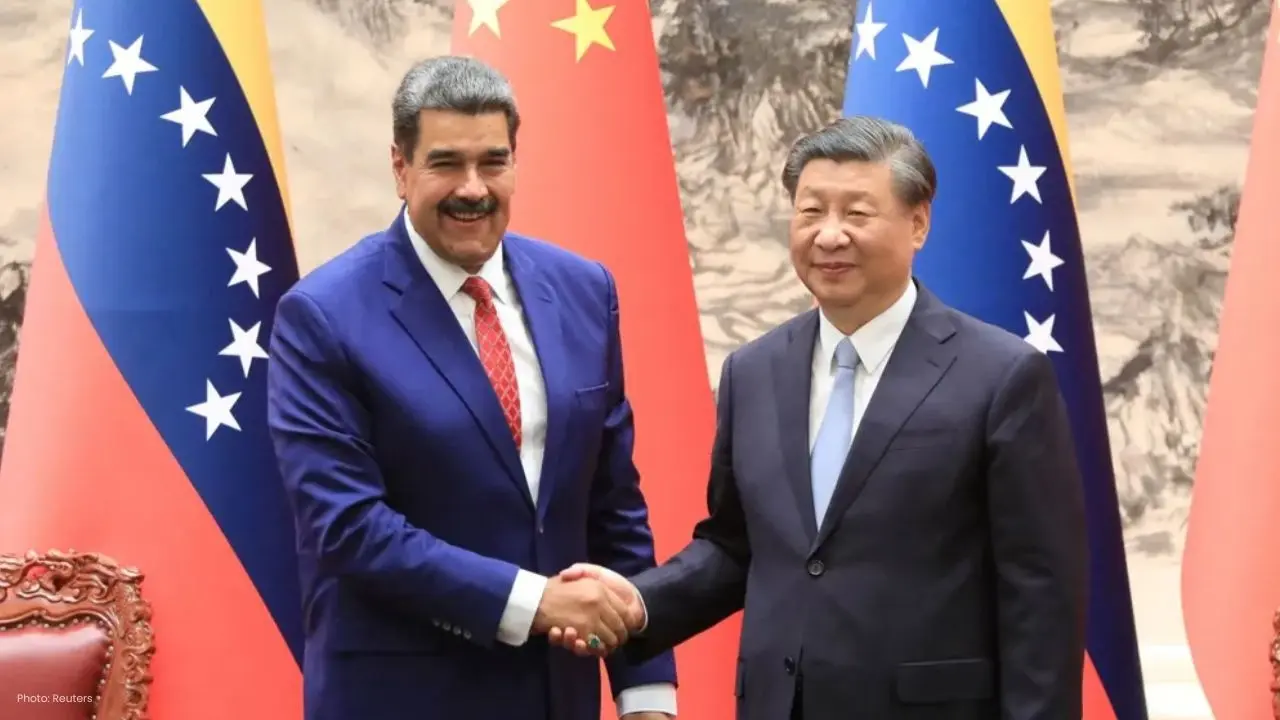
The recent U.S. arrest of Venezuelan President Nicolás Maduro has sent shockwaves through China’s longstanding alliance with Venezuela, prompting a review of Beijing's strategic approach in South America. Hours after the arrest, years of diplomatic relations and economic agreements found themselves in jeopardy.
In a prior statement, Maduro lauded Chinese President Xi Jinping as an elder brother, underscoring the deep bonds between the two nations. Their meeting, which featured key officials, exemplified the robust partnership rooted in China’s extensive investments in Venezuela's oil industry and infrastructure.
Over time, China has invested over $100 billion in loans and projects like railways and power plants in Venezuela, while the South American nation has redirected nearly 80% of its oil exports to China just last year.
The partnership faced an abrupt shift following Maduro's capture in a U.S. operation, leaving many around the globe pondering the duality of prior diplomatic discussions and his current imprisonment.
China decried the U.S. actions as a breach of international law and a challenge to sovereignty. Officials emphasized the importance of mutual respect for security and political autonomy.
With these developments, Beijing encounters fresh obstacles. The incident could jeopardize Chinese deployments and influence in Latin America, yet it may also reinforce its image as a reliable partner compared to the volatility exhibited by U.S. policies. Analysts suggest that China will maintain a prudent approach, balancing its vested interests in South America with its related ties to Washington.
U.S. representatives have explicitly cautioned against the burgeoning sway of Chinese and Russian power in the Western Hemisphere, cautioning against allowing the region to serve as a foothold for rivals. China firmly rejected efforts to compel Venezuela to cut ties, warning that such pressure could adversely impact the Venezuelan populace.
This incident has also ignited discussions about wider consequences, including Taiwan, although experts assert that China is likely to stay focused on long-term objectives rather than reacting impulsively to U.S. initiatives.
China's financial commitment to Venezuela is considerable but remains manageable. Chinese companies maintain significant energy endeavors, and Venezuela is indebted to Chinese lenders to the tune of approximately $10 billion. Still, future investments may encounter challenges should U.S. pressure mount across the region.
Amid these uncertainties, China continues to position itself as a steadfast partner. It has successfully encouraged several nations in the region to switch diplomatic allegiances from Taiwan to China, further solidifying its influence within the Global South.
As the political scenery in Venezuela becomes more ambiguous, Beijing must adeptly steer through an evolving geopolitical environment, protecting its financial interests and regional relations while adapting to unanticipated global changes.