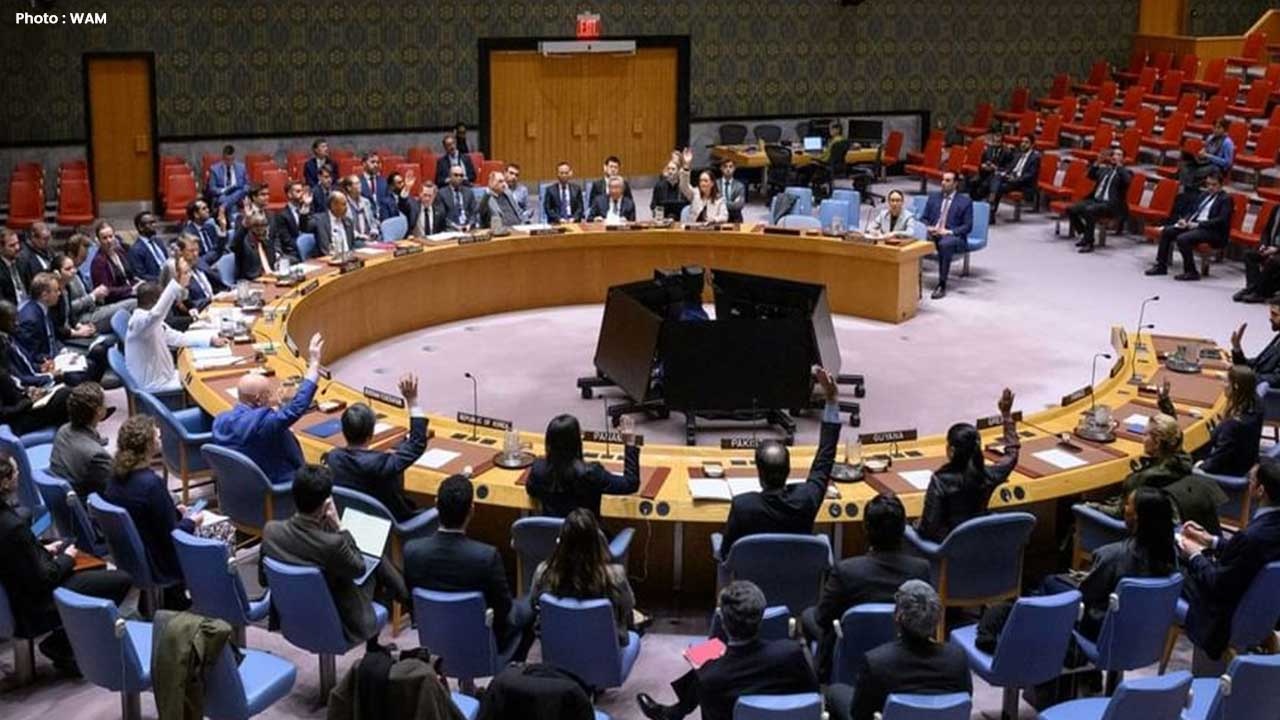
In a noteworthy diplomatic shift, the United Nations Security Council ratified Resolution 2799 on Thursday, effectively lifting sanctions imposed on Syria’s President Ahmed al-Sharaa and Interior Minister Anas Khattab. This resolution signifies a major alteration in global relations with Syria, promoting dialogue and reducing restrictions on its leadership.
Drafted by the United States, the resolution gained approval with 14 votes in favor, while China chose to abstain. This demonstrates considerable international backing aimed at fostering peace and stability in Syria, despite persistent concerns among certain world powers.
By adopting Resolution 2799, both al-Sharaa and Khattab have been removed from the list of individuals previously sanctioned for alleged associations with entities linked to “Daesh” and “Al-Qaida.” This decision is part of broader initiatives aimed at reevaluating the application of targeted sanctions while encouraging constructive political and humanitarian progress within Syria.
The Security Council reiterated its steadfast commitment to preserving Syria’s sovereignty, independence, territorial integrity, and national unity. Additionally, the resolution reaffirmed the Council’s ongoing support for the Syrian populace amid the nation’s persistent economic hardships and humanitarian crisis.
The resolution also acknowledged Syria’s recent pledges to ensure unimpeded humanitarian access throughout its territory, enhance counter-terrorism efforts, and uphold human rights protections. These commitments are viewed as positive developments toward stabilizing the nation and rebuilding trust globally.
Analysts believe that Resolution 2799 may open doors for enhanced relations between Syria and certain Western countries, possibly impacting future discussions regarding reconstruction assistance and regional security. This decision is seen as part of a broader geopolitical shift in the Middle East, as major powers reevaluate their strategies in post-conflict Syria.
While the UN Security Council’s decision has been received as a step towards reconciliation and renewed diplomacy, concerns linger about the necessity for actual advancements in human rights, political reforms, and accountability within Syria.
As Resolution 2799 takes effect, the next few months will determine how Syria’s leadership responds to its obligations for humanitarian collaboration and peacebuilding. The global community will be attentively monitoring to ensure that the resolution's spirit translates into genuine benefits for the Syrian citizens.