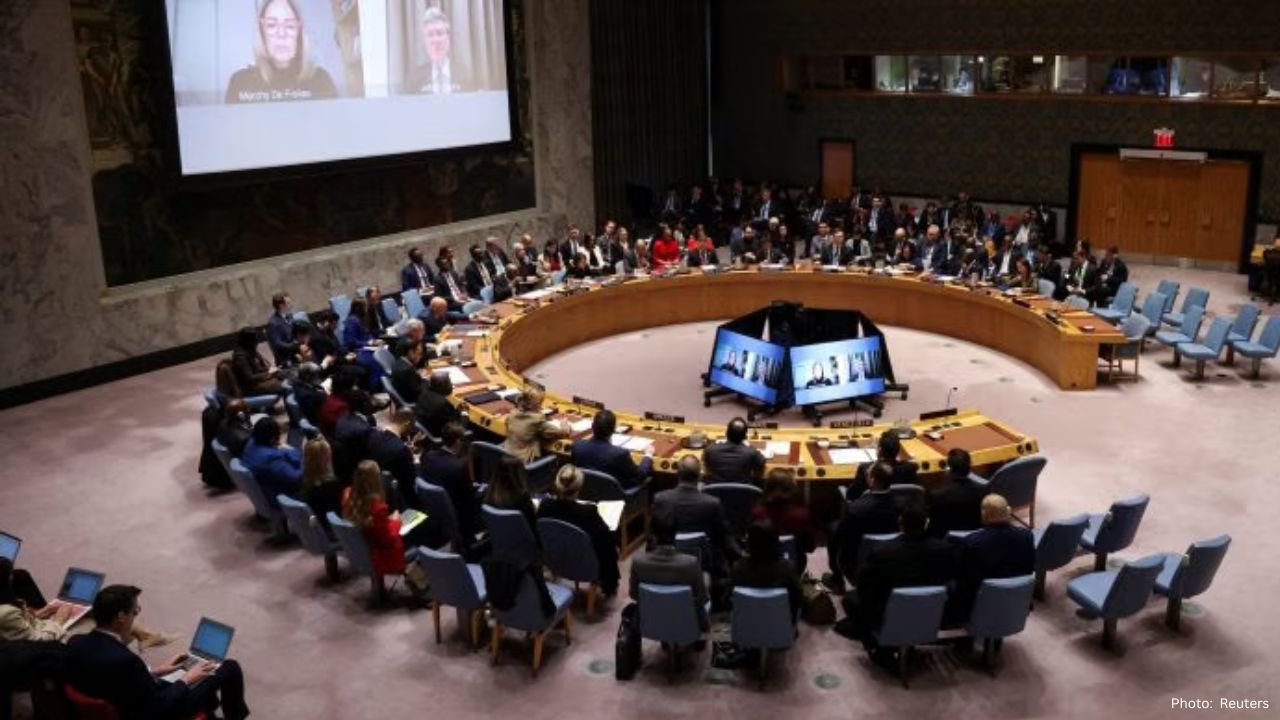
The United Nations has expressed grave concerns regarding the recent capture of Venezuelan President Nicolas Maduro by U.S. forces, highlighting the potential for increased instability both within the country and throughout the region. In remarks made to the Security Council, UN Secretary-General Antonio Guterres emphasized pressing legal and diplomatic issues.
As the Security Council convened at U.N. headquarters in New York, Maduro’s court appearance in Manhattan was imminent. He is contending with drug trafficking and narco-terrorism allegations, which he continues to deny.
“I am genuinely worried about the possible escalation of instability within Venezuela, its potential effects on neighboring countries, and the implications it may have on global diplomatic relations,” Guterres conveyed through U.N. political affairs chief Rosemary DiCarlo.
The U.S. has labeled its operation as a “surgical law enforcement action” targeting two fugitives sought by American authorities. U.S. Ambassador to the U.N. Mike Waltz clarified that the U.S. does not aim to occupy Venezuela. “There is no war with the Venezuelan people or the country itself,” he reiterated, underscoring that the initiative aims to thwart outside forces from seizing control of Venezuela’s extensive energy resources.
The Venezuelan government has vehemently denounced the actions taken by the U.S. U.N. Ambassador Samuel Moncada condemned the capture as “an unlawful armed intrusion without any legal basis,” affirming that Venezuelan institutions remain operational and its territorial sovereignty must be respected.
Guterres urged all parties in Venezuela to pursue “inclusive and democratic discussions” in hopes of reaching a tranquil resolution. He stated that the U.N. is prepared to assist in any initiatives geared toward advancing peace for Venezuelans.
International law emerged as a key topic during the Security Council session. Guterres observed that U.S. actions seemed contradictory to guidelines stipulated in the U.N. Charter, which prohibits force against the political independence or territorial integrity of states. Although the U.S. referenced its right to self-defense under Article 51, such claims were disputed by other nations.
Russia, China, and Colombia have all decried the U.S. operation as unlawful. Russian Ambassador Vassily Nebenzia pointed out the inconsistency of those demanding adherence to international law selectively. China likened this operation to previous conflicts and cautioned that military interventions tend to exacerbate crises. Colombia, which called for the Security Council meeting, also characterized the U.S. action as a breach of Venezuela’s sovereignty.
Despite facing international backlash, the United States remains shielded from accountability in the U.N. Security Council, thanks to its veto power, which grants it the capability to hinder any formal measures against its actions.
This scenario highlights the difficulties in enforcing international law in a landscape dominated by powerful nations. The U.N. is urging moderation, open communication, and a focus on peaceful resolutions to prevent further destabilization of Venezuela and the wider Latin American region.