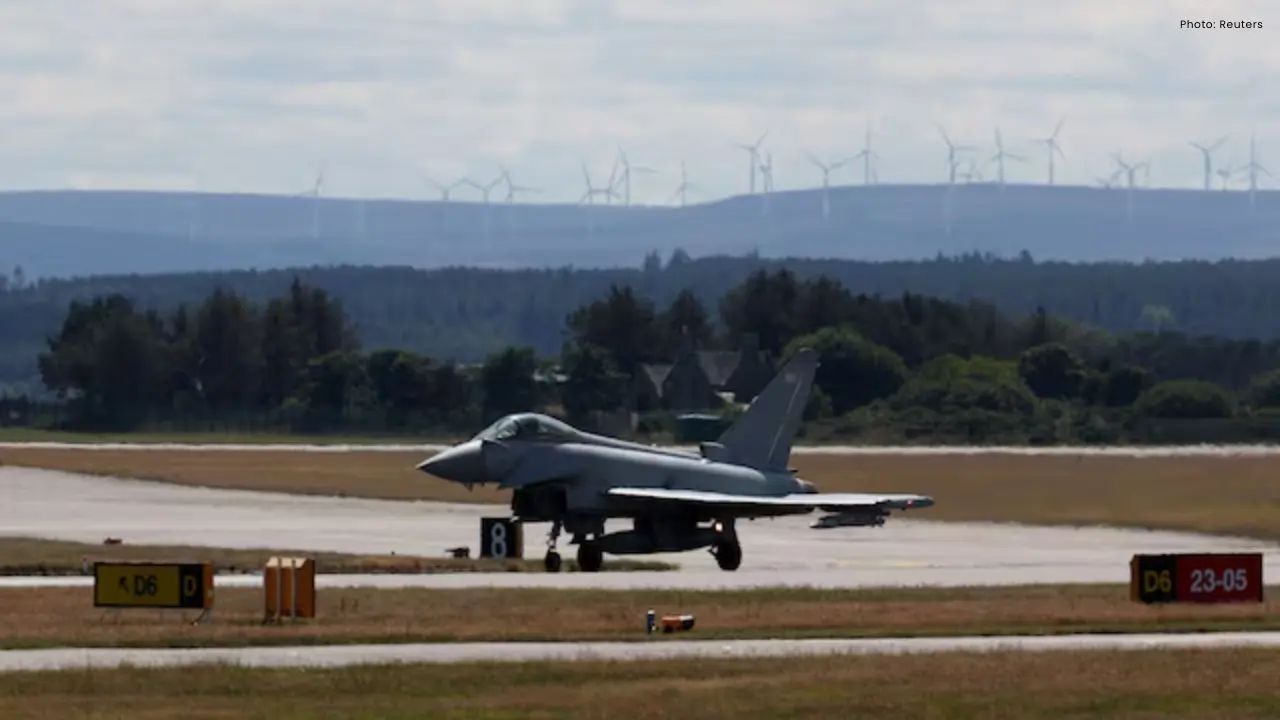
The UK government has given the green light to a significant defence initiative valued at 453 million pounds, roughly translating to 608 million US dollars, aimed at upgrading the radar systems of its Typhoon fighter jets. Officials assert that this investment will increase the country's safety and readiness against escalating security threats, particularly those associated with Russia.
The contract has been awarded to top defence contractors including BAE Systems and Leonardo. The focus is on equipping the Typhoon fleet with the state-of-the-art ECRS Mk2 radar. This advanced technology will enhance pilots' abilities to detect threats clearly, engage multiple targets, and function more effectively in contemporary combat scenarios.
The Typhoon fighter jet stands as the cornerstone of the UK’s aerial defence mechanism, routinely surveilling British airspace and responding to any suspicious activities along the nation’s borders. Maintaining their modernity and efficacy is critical for national security.
Defence Secretary John Healey emphasized the importance of this upgrade in light of the rising global threats. He cited Russian drone operations in Ukraine and recurring incidents near NATO airspace as urgent alerts. According to him, the incorporation of this new radar technology will not only bolster domestic security but also enhance cooperation with international allies.
Moreover, the government anticipates that this investment will serve as an economic stimulus, aiming to safeguard over 1,500 skilled jobs throughout the nation. This move follows a recent agreement valued at 205 million pounds for engineering support for the Typhoon fleet, illustrating ongoing investment in the defence sector.
With an eye on the international market, the government hopes that the Typhoon's upgrade will attract potential buyers. A modernized and well-supported fighter jet is more likely to entice other nations, paving the way for substantial export agreements. Last year, the UK secured an 8 billion pound deal to sell Typhoon jets to Turkey, and there’s optimism about similar prospects with countries such as Qatar and Saudi Arabia.
As part of its comprehensive defence strategy, the UK has declared an intention to boost military expenditure to 2.6 percent of its GDP by 2027, indicating a long-term pledge to defense preparedness amid escalating global tensions.
Meanwhile, defence contractor Leonardo is awaiting a crucial decision regarding a separate helicopter contract worth about 1 billion pounds. The firm has cautioned that without this contract, it may have to shut down a facility in southwestern England, risking 3,000 jobs. The government has stated that this decision will be made in alignment with its broader defence investment agenda, which is currently pending.
Overall, the Typhoon radar upgrade reflects the UK’s commitment to bolster its defensive capabilities while simultaneously supporting job retention and enhancing export opportunities. As security concerns intensify across Europe, the government views such investments as essential for both safety and economic resilience.