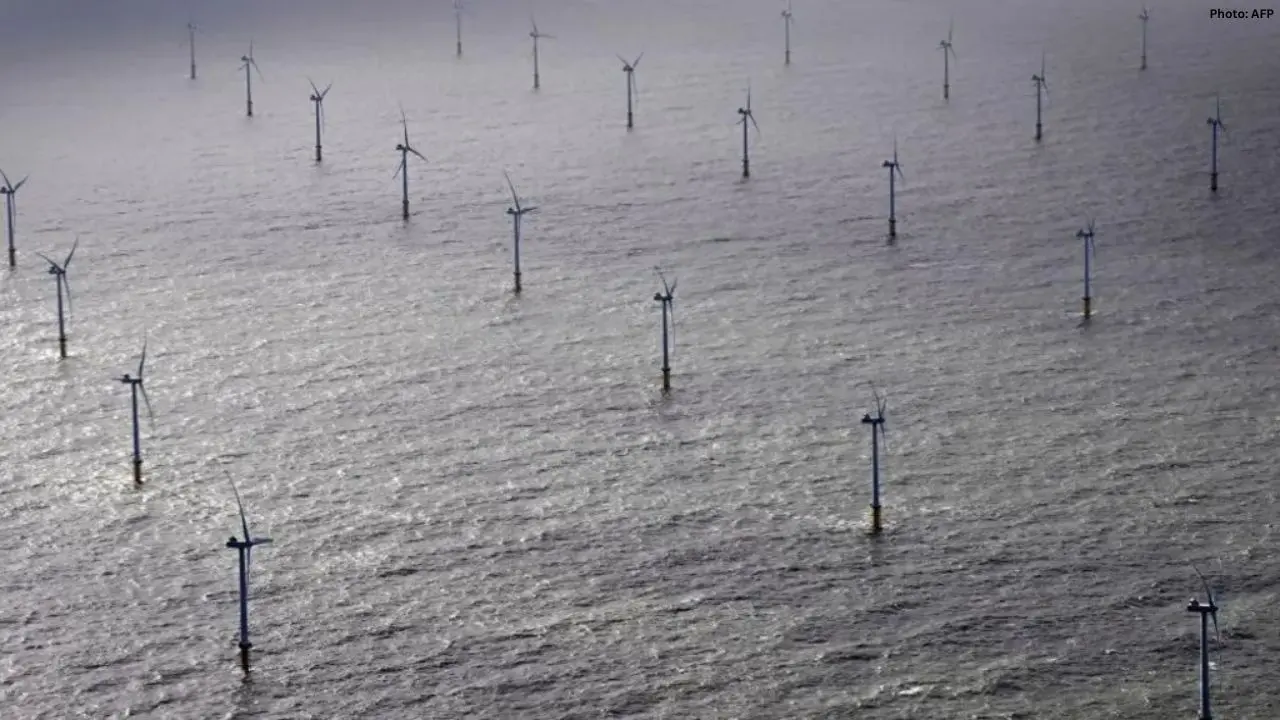
The UK is set to join a vast new offshore wind initiative in the North Sea, partnering with eight European countries including Germany, Norway and the Netherlands. The project will develop a major fleet of interconnected wind farms, aiming to strengthen regional energy security and reduce reliance on volatile fossil fuel markets. Ministers say the collaboration marks a critical step toward a cleaner, more resilient energy system.
For the first time, some wind farms will be built to supply multiple countries simultaneously, connected through undersea cables known as interconnectors. These cables will allow electricity to flow between national grids, potentially smoothing supply fluctuations and lowering costs across Europe. However, the system could prove contentious, as operators may sell electricity to whichever country offers the highest market price, raising concerns about higher domestic costs when energy supplies are tight.
Energy Secretary Ed Miliband will sign the agreement on Monday in Hamburg, committing the UK to help deliver the project by 2050. Industry groups have welcomed the move, with RenewableUK saying it will “drive down costs for billpayers” and improve regional security. But critics, including Conservative shadow energy secretary Claire Coutinho, warn that rapid wind expansion could push up consumer bills if not properly managed.
Interconnectors are already a crucial part of the UK’s energy infrastructure. The country has 10 existing cables linking its grid with neighbouring markets, and National Grid estimates that these connections have saved UK consumers £1.6 billion since 2023. Interconnectors also reduce so-called constraint payments, which are made when wind farms must shut down because the national grid cannot absorb the electricity being generated. By connecting wind farms directly to multiple countries, officials believe congestion could be reduced and output used more efficiently.
However, the technology has sparked political debate elsewhere. In Norway, where public concern has grown over rising domestic electricity prices, regulations restrict export levels to prevent shortfalls at home. Norwegian authorities have also blocked a proposed new cable connecting the country to Scotland, citing fears it could lead to higher local energy prices.
The summit in Hamburg will include representatives from Nato and the European Commission, reflecting increasing geopolitical concern over energy infrastructure security in the North Sea. Countries have grown more vigilant following reports of sabotage risks and unsafe maritime activity near critical offshore assets.
The agreement reinforces Europe’s commitment to renewable energy despite criticism from U.S. President Donald Trump, who again disparaged “windmills” during a speech at the World Economic Forum in Davos. North Sea nations previously pledged to build 300 gigawatts (GW) of offshore wind capacity; under the new deal, 100GW of that total will be jointly developed, with 20GW expected to be underway by 2030.
Globally, China remains the leader in offshore wind with 43GW of installed capacity. The UK ranks second at 16GW, with an additional 20GW approved and contracts awarded — including 8.4GW in a record-breaking auction earlier this month. While Conservatives have criticized the government for “locking in” high wind prices, parties such as the Lib Dems, Greens, SNP, and Plaid Cymru support the acceleration of offshore wind to tackle climate change and create green jobs.