The United Arab Emirates has reaffirmed its backing for Saudi Arabia’s endeavors to reinforce security and stability in Yemen, particularly as tensions intensify in the southern parts of the country. An official statement from the UAE’s foreign ministry on Friday highlighted its commitment to supporting all measures that promote peace, progress, and stability within Yemen.
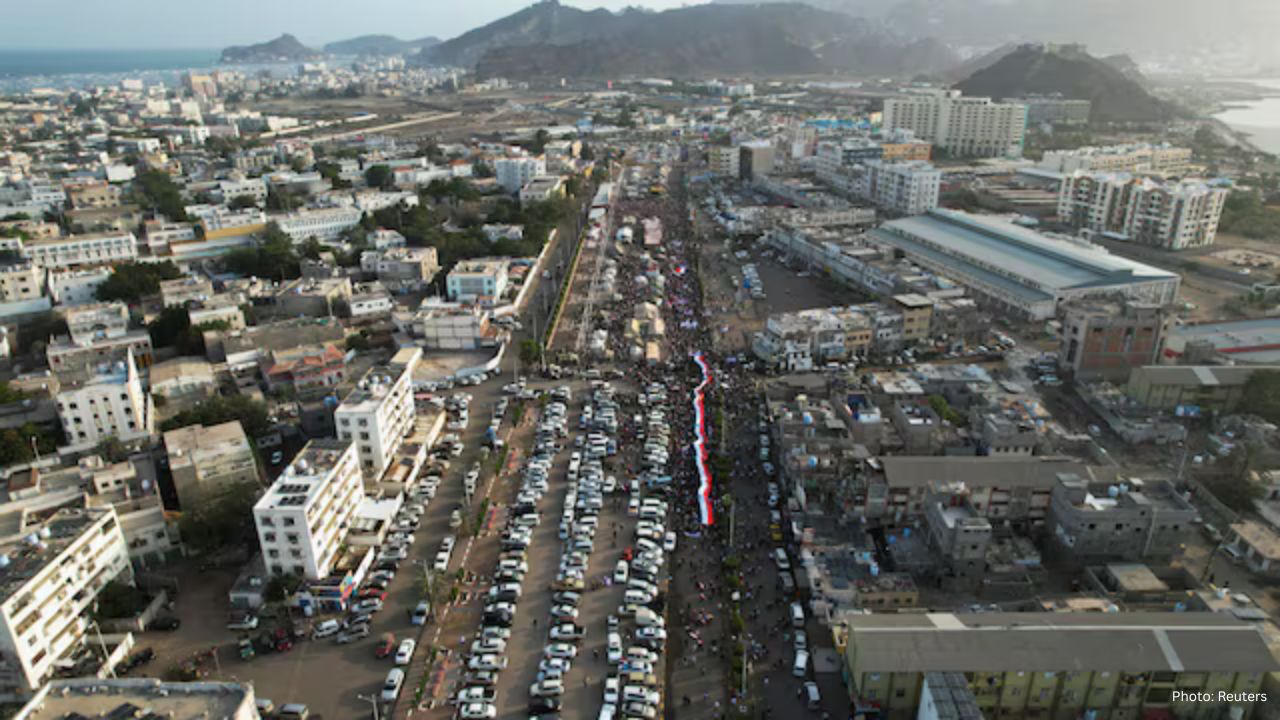
This statement arrives amid critical developments, as Yemen's leading southern separatist faction, the Southern Transitional Council (STC), has extended its authority over various southern regions. Recently, the STC displaced the Saudi-supported, internationally recognized Yemeni government from its base in Aden. The STC's assertion of control throughout the south has raised alarms about the possibility of renewed conflict.
With backing from the UAE, the STC has long pursued greater autonomy or ultimate independence for southern Yemen. Initially, a participant in the Saudi-led coalition against the Iran-aligned Houthi movement, the STC has shifted its stance, now opposing the central government while advocating for self-rule in the southern region.
On Thursday, Saudi Arabia, the leader of the coalition that backs Yemen's internationally recognized government, expressed hopes that the STC would refrain from escalating tensions further. Riyadh urged the group to withdraw its forces from the strategically vital eastern provinces of Hadramout and Mahra, crucial for Yemen’s unity and stability.
To mitigate the rising conflicts, a Saudi-Emirati military delegation reached Aden on December 12. This delegation is collaborating with local entities to minimize the risks of armed confrontations and seek a peaceful resolution. Saudi officials indicated that arrangements were being made to enable STC forces to retreat to their prior locations outside the contested provinces, with these initiatives still in progress.
Yemen has been engulfed in a devastating civil war since 2014, triggered when the Houthi movement took control of the capital, Sanaa, forcing the Saudi-aligned government to retreat southward. Since that time, Yemen has been fractured, with the Houthis dominating the north and the government along with its allies governing parts of the south.
This conflict has led to one of the most severe humanitarian crises globally, with millions facing food insecurity, displacement, and restricted access to essential services. Ongoing political rifts, foreign interventions, and persistent hostilities have complicated efforts to secure lasting peace.
Geographically, Yemen is of significant importance, located between Saudi Arabia and a key maritime lane in the Red Sea, rendering its stability vital for both regional security and international trade. Historically, the nation was divided into separate northern and southern states until their unification in 1990, a background that continues to shape current political tensions.
By publicly endorsing Saudi Arabia's initiatives, the UAE has indicated its endorsement of a collaborative regional approach to soothe the situation. Both nations assert that their objective is to avert further violence, facilitate dialogue among Yemeni factions, and support the country's journey toward enduring stability.
Although formidable challenges persist, the combined Saudi-Emirati efforts underscore the necessity for cooperation in navigating Yemen’s multifaceted conflict. The ultimate success of these efforts will rely on the willingness of all parties to de-escalate and actively pursue a political solution to bring peace to this beleaguered nation.