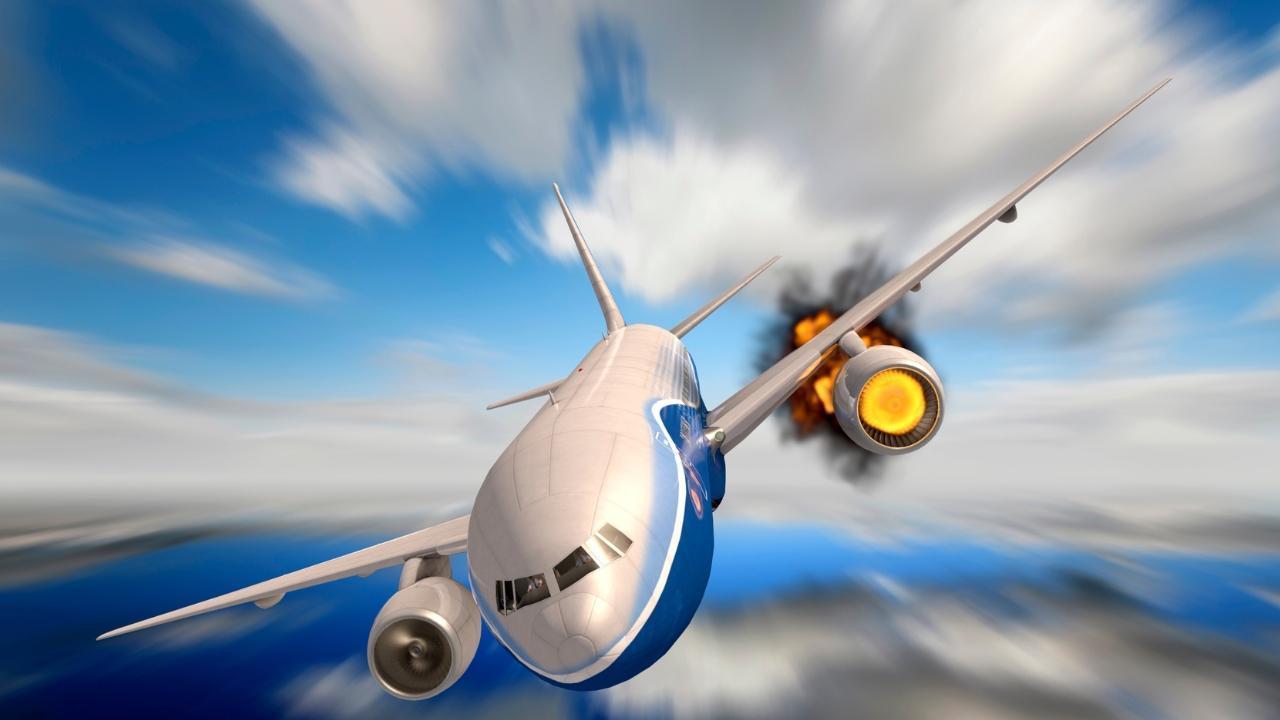
Engine Fire Triggers Emergency Evacuation at YVR On the night of July 12, 2025, Vancouver International Airport (YVR) witnessed a serious aviation incident that tested emergency response systems, airport infrastructure, and passenger resilience. A WestJet flight originating from Tampa, Florida, arrived at YVR with more than 50 passengers onboard. As the plane taxied to the gate, one of its engines caught fire, prompting immediate action by the flight crew. The fire was detected at the rear engine compartment, and although onboard extinguishers quickly suppressed the flames, the crew made the decision to conduct a full-scale evacuation via emergency slides.
Rapid Evacuation Under High Stress Evacuations using inflatable slides are rare and often occur under extreme conditions. In this case, crew members followed established safety protocols, instructing passengers to leave behind personal belongings and exit swiftly. Several passengers later described the scene as calm but urgent. Some expressed panic, especially as smoke was initially visible near the engine housing, but the well-rehearsed crew managed the situation with professionalism.
Emergency slides deployed successfully, allowing passengers to descend from the aircraft in under five minutes. Airport medical personnel conducted evaluations and reported no physical injuries. Passengers were then transported to a holding area where they received water, emotional support, and flight rebooking information. WestJet also provided access to on-call medical and counseling services.
Transportation Safety Board Launches Investigation In the aftermath of the incident, the Transportation Safety Board of Canada (TSB) quickly mobilized a team to investigate. Their mandate includes retrieving the flight data recorder (FDR) and cockpit voice recorder (CVR), interviewing flight and cabin crew, and examining the engine and maintenance logs. The TSB's early analysis will focus on what triggered the fire, whether mechanical failure or maintenance oversight played a role, and how future occurrences might be prevented.
Investigators are also reviewing air traffic control audio and airport surveillance footage to assess the coordination between the crew, tower controllers, and ground emergency response units. Any findings that indicate procedural lapses, equipment malfunction, or manufacturer defect will be followed by formal recommendations.
Fire Suppression Systems and Redundancy Protocols Modern aircraft are equipped with multiple fire detection and suppression systems designed to contain fires before they escalate. These include fireproof insulation, chemical extinguishers in engine bays, and cockpit alarm systems. The pilot’s swift activation of the suppression system—likely halon-based—appears to have neutralized the threat quickly. However, as with any fire, a conservative approach was taken to evacuate all passengers regardless of visible danger.
The fact that the flames were visible during taxiing increased the urgency, as fires that occur on the ground pose significant risk due to fuel vapor proximity, high oxygen environments, and potential passenger movement in aisles. Investigators are also analyzing fuel system valves, heat shielding, and engine turbine integrity.
Airport Emergency Response Deemed Effective Vancouver International Airport operates a dedicated fire and rescue department trained for aircraft-specific emergencies. Response times are typically under three minutes. Upon receiving the alert from the control tower, multiple crash tenders deployed to the scene. Their readiness helped ensure a safe perimeter and containment of any residual risk.
This incident triggered a Level 2 alert, meaning full-scale emergency resources were deployed, including airside medical teams, incident command personnel, and liaison officers for passenger assistance. Within one hour, the area had been cleared and passengers were re-routed to YVR’s support centers.
Passenger Perspective: A Frightening Close Call Several passengers recounted the experience in media interviews. One traveler, a 36-year-old business consultant, stated: “You don’t expect to see fire when you land. But the crew were amazing—everyone stayed mostly calm, and we got down the slides fast.”
Another passenger shared that her child was crying and scared but was calmed by a flight attendant who personally helped them off the plane. WestJet representatives were commended for their efforts to prioritize families and those with mobility limitations during the descent.
Implications for Airline Operations WestJet issued a statement confirming the aircraft was removed from service for inspection. All passengers received meal vouchers, accommodation where necessary, and complimentary rescheduling. The airline has launched its own internal review to parallel the TSB investigation.
From a procedural standpoint, airlines often simulate emergencies in flight attendant training, including smoke-filled cabins and fire drills. The positive outcome here may lead to enhancements in cabin crew training, including updated evacuation decision matrices and reinforcement of calm under pressure.
Lessons from Past Incidents Aviation history is replete with examples of engine fires and evacuations. One notable case is British Airways Flight 2276 in 2015, which experienced an engine failure and fire on takeoff in Las Vegas. That incident led to over a dozen safety recommendations regarding slide deployment timing, carry-on baggage risks, and emergency command language.
The TSB and Transport Canada will likely compare Sunday’s YVR incident to such benchmarks. They may issue advisory bulletins to operators of similar aircraft to check for potential weaknesses or recommend improved inspection schedules.
Engineering and Mechanical Concerns The aircraft involved is part of a widely used narrow-body fleet. Technicians will examine turbine blades, ignition systems, and fuel injection sensors. Maintenance logs will be scrutinized to determine if any recent part replacements or unusual readings occurred.
Environmental conditions such as extreme humidity or salt exposure during its Florida departure could also be considered, though modern engines are generally well protected. Analysts expect Boeing and other original equipment manufacturers (OEMs) to participate in the technical analysis.
Aviation Industry Eyes Outcomes Closely Globally, aviation safety agencies—from the FAA in the United States to EASA in Europe—will monitor the TSB’s findings. Though rare, engine fires erode public confidence when poorly handled. Fortunately, this incident demonstrated operational excellence. However, incremental safety improvements often stem from events that seem minor but reveal systemic vulnerabilities.
Passenger Rights and Airline Liability Under the Canadian Air Passenger Protection Regulations (APPR), passengers involved in emergency landings or cancellations due to safety incidents are eligible for compensation, rerouting, or refunds. While WestJet acted preemptively to offer care, its full legal obligations may depend on TSB results. Legal experts suggest that as long as the airline acted in good faith, liability is unlikely, though class-action discussions sometimes arise from mass incidents.
Public Response and Media Coverage Coverage of the YVR fire was widespread, though overshadowed by other international news. Nonetheless, passenger smartphone videos, uploaded in real-time, captured smoke trails and slide descents. Social media response was largely positive, with many praising the crew and the airline. The term “miracle at YVR” trended briefly in Vancouver.
Aviation bloggers and analysts are using the incident to revisit topics like flight crew professionalism, passenger compliance with safety instructions, and the psychological factors of mass evacuations. One Canadian commentator noted, “This is what training is for. These moments prove why routine drills matter.”
Looking Forward: Strengthening Prevention and Preparedness The aviation industry thrives on continuous improvement. Following the YVR incident, stakeholders are likely to consider the following:
-
Enhanced pre-flight engine diagnostics
-
Upgrades to fire-resistant engine linings
-
Expanded use of predictive maintenance AI to detect anomalies
-
Policy changes regarding ground emergency declarations
Moreover, passengers are encouraged to heed safety briefings. Investigators routinely find that injuries during evacuations often result from passengers retrieving personal items or hesitating during exits. Airlines may consider digital reinforcement of safety messages prior to descent.
Conclusion: A System That Performed Under Pressure What unfolded at Vancouver International Airport on July 12 serves as a case study in how aviation infrastructure, emergency services, and airline personnel can work together under high-stress conditions. Thanks to training, protocol adherence, and rapid response, over 50 lives were safeguarded without serious injury.
The TSB investigation will no doubt yield insights and possibly reveal small gaps to be addressed. Still, the overall result was a safe and successful outcome from what could have been a tragic scenario. Public trust in air travel is built not only on the rarity of accidents but on how well the system performs when challenges arise. In this case, it performed exceptionally well.