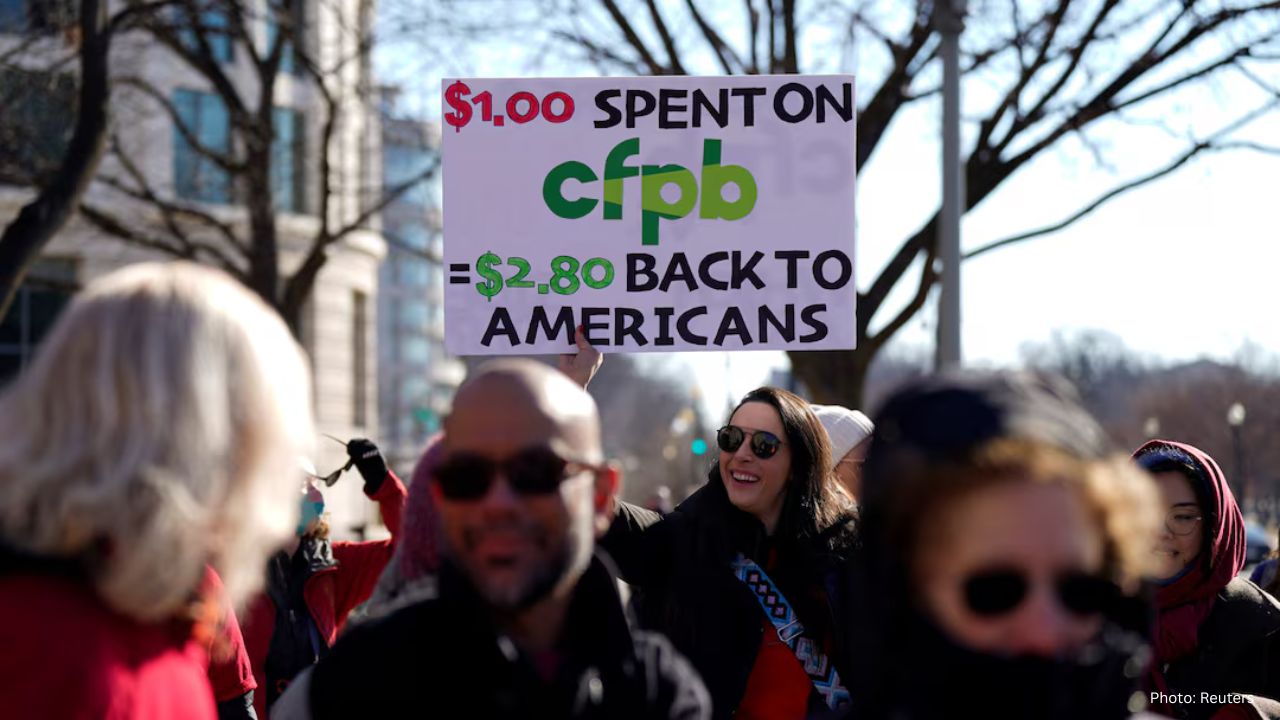
America's primary consumer protection agency is facing dire challenges, with funding reductions imposed by President Donald Trump's administration potentially leading to its closure by early 2026. The Consumer Financial Protection Bureau (CFPB) has significantly assisted millions in tackling credit issues, fraud, and unfair lending practices. A fierce debate has emerged among supporters and critics regarding the agency's future.
Established by Congress in 2010 in the wake of the global financial crisis, the CFPB's mission was clear: to safeguard consumers from unfair, deceptive, and abusive practices in the banking and financial sectors. For countless individuals, the agency has been a lifeline when private institutions failed to address serious issues.
Take the case of Bianca Jones, a special education teacher from Tennessee, who discovered double counting of her student loan debt while purchasing a home. This error misrepresented her actual debt. After numerous unsuccessful attempts to resolve this with a credit bureau, she sought help from the CFPB. Thanks to the agency's involvement, she won a lawsuit that corrected her credit report, enabling her to successfully buy her home. For her, the CFPB was transformative.
Such narratives are not uncommon. Each year, millions turn to the CFPB with grievances regarding credit card fees, debt collection, student loans, mortgage issues, and identity theft. The agency reviews these complaints, prompting companies to take action. To date, the CFPB reports having returned approximately $21 billion to consumers.
Despite its achievements, the CFPB has faced substantial opposition. President Trump has voiced strong support for dismantling the agency, claiming it serves as a political instrument for Democrats and burdens businesses. His administration aims to slash its funding and workforce, with plans to transfer ongoing investigations to the Justice Department.
The agency's funding model is also under scrutiny. Unlike many federal bodies, it does not require annual budget approval from Congress; instead, it receives funding from the Federal Reserve. Critics argue this arrangement is unconstitutional, endowing the CFPB with excessive autonomy. However, supporters contend that this model protects the agency from political influence, enabling it to prioritize consumer welfare.
Senator Elizabeth Warren, a key architect of the CFPB, has staunchly defended its existence, warning that without it, vulnerable families would have no recourse against deceitful financial entities.
On the other hand, detractors assert that the CFPB has overreached, suggesting other regulators already fulfill consumer protection roles, and that stringent CFPB regulations hinder smaller banks and businesses. While some former officials have critiqued aspects of the agency's operations, many still voice concern that its complete dismantling would exacerbate consumer abuse rather than mitigate it.
If the CFPB were to dissolve, consumers would revert to relying on a fragmented array of state agencies and federal offices, many of which lack the agency's focused authority. Financial advisers warn that this shift could complicate individuals’ understanding of their rights and their ability to combat unfair practices.
The potential disbandment of the CFPB raises significant editorial concerns. While no agency is without flaws, dismantling the singular watchdog devoted solely to consumer finance could tip the scales in favor of major financial institutions. As many Americans grapple with financial challenges, diminished consumer protection could lead to further hardships.
The fate of the CFPB now hinges on legal rulings, political confrontations, and funding decisions. For millions who have leaned on this agency, its absence would create a void that no other organization is poised to fill. The implications extend beyond budgets and politics; they touch upon whether everyday citizens will continue to have a robust advocate in a complex financial landscape.