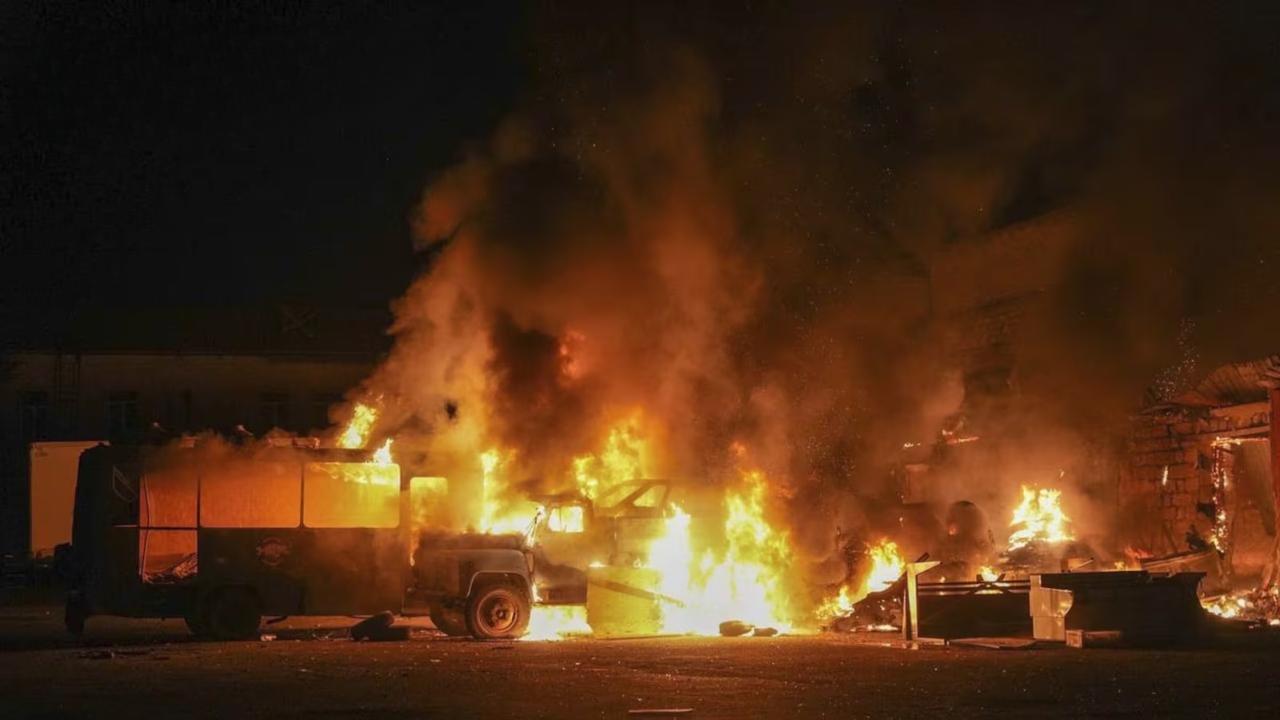
Photo:AP
A pivotal reversal in American defense policy for Ukraine
President Donald Trump has ordered the immediate resumption of U.S. weapons shipments to Ukraine, just days after the Pentagon abruptly paused deliveries of crucial munitions. This decision marks a notable shift in U.S. engagement in the Russia-Ukraine conflict, reaffirming Washington’s commitment to defending Ukrainian sovereignty. During a high-profile meeting with Israeli Prime Minister Benjamin Netanyahu, Trump announced the new directive and confirmed that “more weapons, defensive weapons primarily,” would be sent. The president’s remarks reflect both a political recalibration and a strategic response to criticism over the temporary suspension, which risked weakening Ukraine’s battlefield posture as Russian drone and missile attacks intensified.
The Pentagon’s pause: confusion, criticism, and consequence
The temporary halt originated with Secretary of Defense Pete Hegseth, who cited concerns over depleted U.S. stockpiles and the need for internal assessment of logistics. Munitions including 155mm howitzer shells, GPS-guided GMLRS rockets, and Patriot missile system components were placed on hold, causing confusion within the defense community and frustration in Kyiv. Notably, President Trump claimed he was unaware of the decision at the time it was made and expressed dissatisfaction that such a critical call had been executed without proper coordination with the White House. The pause triggered bipartisan criticism in Washington and deep concern among NATO allies who worried it signaled wavering American resolve.
Trump’s emphatic return to supporting Ukraine militarily
Responding to mounting pressure and real-time developments on the battlefield, Trump quickly reversed the Pentagon’s decision. In his public remarks, the president stated that Ukraine “has to be able to defend itself,” and called Russia’s tactics inhumane and destructive. Emphasizing the civilian toll inflicted by Russian bombardments, he declared the resumption of deliveries a necessary humanitarian and strategic imperative. The resumption includes high-demand items like artillery rounds and guided munitions, which Ukraine relies on heavily for defensive operations in contested regions like Donetsk and Kharkiv. Trump also left open the possibility of further augmenting the package with air defense systems such as Patriots, should the situation escalate.
Ukrainian battlefield reality: the impact of support gaps
For Ukrainian forces, even a short disruption in weapons supply creates dangerous vulnerabilities. Military commanders in Ukraine warned that the sudden pause placed immediate strain on frontline operations, particularly in the eastern and southern theaters where artillery exchanges with Russian forces are constant. With the resumption now greenlit, Kyiv has expressed renewed confidence. President Volodymyr Zelenskyy welcomed Trump’s move, calling it a “critical correction” that ensures Ukraine can maintain defensive pressure. Ukrainian civilians, enduring near-daily strikes on energy infrastructure and residential areas, have also expressed gratitude, viewing the aid as a lifeline against an aggressive and well-armed adversary.
The broader diplomatic backdrop and allied concerns
NATO partners and European leaders had been closely monitoring the U.S. decision, with some fearing that the pause could be interpreted by the Kremlin as a sign of faltering Western unity. Germany, Poland, and France publicly voiced concerns, calling for uninterrupted aid and increased logistical coordination. Following Trump’s reversal, NATO Secretary-General Jens Stoltenberg issued a statement of support, praising the U.S. for its continued leadership. European Union foreign policy chief Josep Borrell similarly welcomed the shift and emphasized the importance of reliability in long-term military partnerships. The episode has prompted fresh dialogue about creating multinational arms depots and coordinated logistics hubs to reduce dependence on single-country flows.
Internal White House response and chain of command issues
Behind the scenes, the Pentagon’s unsanctioned pause has exposed fault lines in the chain of command. Trump expressed frustration that such a decision was made without his direct involvement, criticizing Defense Secretary Hegseth for what he described as “unilateral thinking” in a moment that demanded collaboration. The president also reportedly called for a full review of Department of Defense procedures related to foreign military assistance. According to White House insiders, Trump is considering structural changes that would increase executive oversight over future weapons programs to avoid similar policy misalignments. The episode raises broader questions about civilian-military relations and whether key national security decisions should be more closely tethered to presidential authority.
Domestic political implications: pressure and pivot
Trump’s decision comes amid an increasingly tense domestic political climate. While his “America First” platform often emphasizes reduced foreign entanglements, a growing faction of his own party has advocated for robust support to Ukraine. Leading Republicans and Democrats alike warned that the Pentagon’s halt sent the wrong signal to both Russia and U.S. allies. Prominent voices in Congress, including members of the Senate Armed Services Committee, had urged immediate restoration of support. Trump’s pivot appears calibrated to preserve his national security credentials while also avoiding alienation of key moderates ahead of upcoming elections. His comments linking the aid to moral and strategic values—rather than ideological commitments—suggest an attempt to reframe the issue in broader bipartisan terms.
The military and operational importance of resumed aid
From a tactical perspective, the newly resumed shipments will likely have a significant impact on the ground. Ukrainian troops have repeatedly emphasized the importance of consistent supply lines in sustaining operations, particularly in contested urban zones and open terrain. The resumption of 155mm shells allows Ukraine to continue suppressive fire and counter-battery operations, while GMLRS rockets extend its reach and precision. If Patriot missile systems are added, it could dramatically bolster Ukraine’s air defense capabilities and reduce the devastating toll of Russian air raids. Experts say that these deliveries could enable Ukraine to recapture lost territory and fortify defensive positions ahead of winter, when supply logistics become increasingly difficult.
Russia’s response: propaganda and positioning
Unsurprisingly, Moscow has condemned Trump’s decision, framing it as further proof of Washington’s alleged desire to prolong the war. Kremlin spokespersons warned that new shipments would “escalate the conflict” and claimed, without evidence, that U.S. weapons are being used to target civilians. State-backed Russian media has launched a new wave of disinformation campaigns aimed at discrediting U.S. aid and painting Ukraine as a proxy aggressor. At the same time, Russian military movements near the Zaporizhzhia front and along the Belarus border suggest that Moscow is preparing for possible escalations. The renewed flow of American arms could force the Kremlin to reassess its timeline and resource allocation.
Public opinion and media coverage in the U.S.
U.S. public reaction has been mixed. Some Americans, particularly those skeptical of foreign military engagements, have criticized the reversal as a waste of resources. However, national polls suggest that a majority of Americans still support providing defensive aid to Ukraine, especially if framed as preventing genocide and preserving European stability. Major media outlets have emphasized the humanitarian justification for the renewed aid, showing harrowing images of civilian devastation in Ukrainian cities. Conservative commentators are divided, with some praising Trump’s decisiveness and others accusing the administration of lacking consistency. Across the board, the importance of maintaining U.S. credibility has emerged as a unifying theme.
The economic dimension and arms industry implications
Resuming aid to Ukraine also has implications for the U.S. defense industrial base. The Pentagon has already issued new contracts to replenish depleted stockpiles, and Trump has reportedly instructed defense companies to accelerate production schedules. Companies like Raytheon and Lockheed Martin are expected to benefit from the increased demand. This has sparked debate about the long-term sustainability of supporting Ukraine, with some economists warning that extended conflict could strain domestic supply chains. Trump has downplayed these concerns, arguing that “America can do both”—defend its allies and maintain its own readiness. Meanwhile, discussions have begun within NATO about creating a joint production initiative to streamline arms manufacturing and sharing.
Strategic recalibration in a changing global context
Trump’s decision also reflects a broader recalibration of U.S. grand strategy in an increasingly unstable world. With Russia growing more aggressive, China expanding its regional influence, and Iran stirring unrest in the Middle East, American policymakers are realizing that selective disengagement is no longer viable. By resuming aid to Ukraine, Trump is reinforcing America’s position as a guarantor of democratic security, even as he balances internal demands for fiscal responsibility. This approach may herald a new form of “strategic realism” that accepts global commitments while insisting on cost-effective execution.
Conclusion: recalibrated resolve at a critical time
The resumption of U.S. weapons shipments to Ukraine is more than a tactical adjustment—it is a signal of recalibrated resolve in the face of autocratic aggression. Trump’s decision reflects a careful balancing of strategic necessity, allied trust, and domestic political survival. The pause may have caused brief disruption, but the strong rebound sends a message to Moscow, Kyiv, and NATO alike: the United States is not abandoning its commitments. As Ukraine prepares for potentially decisive confrontations in the months ahead, the role of consistent and credible U.S. support will be vital—not only for the fate of Ukraine but for the future of the rules-based global order. Whether this marks the beginning of a more stable U.S. policy posture or a temporary correction remains to be seen. For now, Ukraine can breathe easier knowing that the arsenal of democracy is back in motion.