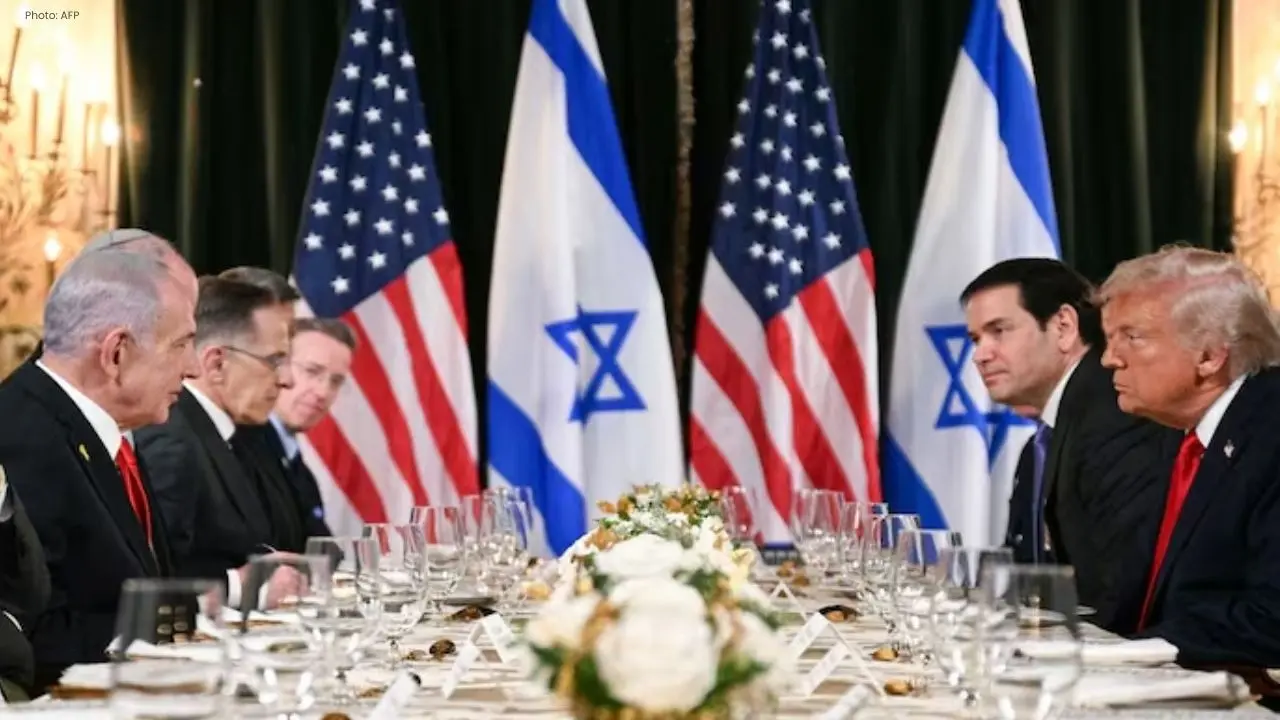
In a recent meeting with Israeli Prime Minister Benjamin Netanyahu at Mar-a-Lago, US President Donald Trump reiterated his claim of having ended eight wars, which he included the recent hostilities between India and Pakistan. Frustrated by the lack of a Nobel Peace Prize, he lauded his diplomatic feats.
During the discussion, Trump asserted that he halted the Armenia-Azerbaijan war by imposing stringent trade tariffs, a move that he claims pushed the adversaries to seek peace after decades of conflict - a point even noted by Russian President Vladimir Putin.
He specifically called out the India-Pakistan ceasefire earlier this year attributed to US facilitation, indicating that his trade deals were crucial in bringing about the truce. "Do I get credit for it? No. I did eight of them. India. How about India and Pakistan..." Trump remarked.
Nevertheless, the Indian government has categorically dismissed any notion of third-party mediation. Official statements from New Delhi emphasize that the ceasefire was reached solely through direct communications between military officials of both nations, without foreign interference. Prime Minister Narendra Modi clarified in Parliament that no foreign figure prompted India to retract Operation Sindoor, directed against terror elements in Pakistan-occupied Kashmir.
This operation commenced on May 7 after a terrorist attack in Pahalgam that resulted in the deaths of 26 civilians. Following several days of escalating missile exchanges, India and Pakistan ultimately agreed on a ceasefire on May 10.
Despite Trump's assertions, made over 70 times since May, India maintains its position: the understood peace was reached via direct military negotiations, not informed by American intervention.
This contention on credit exposes the intricate nature of South Asian geopolitics, underscoring India's commitment to resolving its conflicts autonomously.