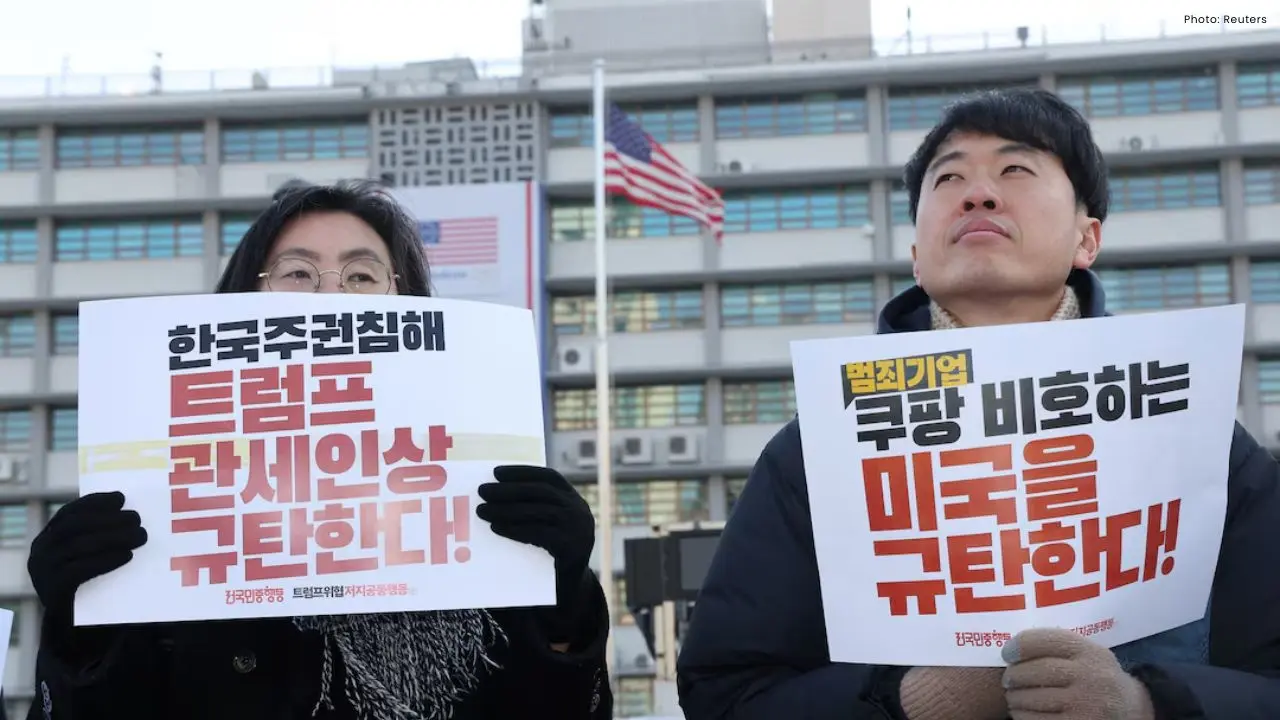
U.S. President Donald Trump has unveiled a significant rise in tariffs on imports from South Korea, escalating tensions within a crucial trade and security alliance. This decision stems from delays in the ratification of a trade agreement forged last year, which Trump attributed to inaction by South Korea's legislature.
Effective immediately, tariffs on South Korean vehicles, lumber, pharmaceuticals, and various other imports will surge from 15% to 25%. Trump emphasized that this escalation was imperative due to the South Korean parliament's failure to endorse the agreement negotiated in July 2025 and reiterated during his subsequent visit to South Korea. He characterized the deal as equitable for both nations, yet lamented the stagnation that compelled him to take such action.
The announcement reportedly blindsided officials in Seoul, as South Korea’s presidential office stated it had not received any formal notification from Washington and is now urgently assessing the circumstances. This development arrives at a precarious moment for South Korea, which is grappling with a weakening currency, declining exports, and rising uncertainty regarding global trade regulations amid Trump's second term.
The 2025 agreement was designed to mitigate trade frictions between these allies. In return for lower U.S. tariffs on South Korean exports, Seoul pledged to invest $350 billion in the United States, targeting key industries. Out of this total, $200 billion was meant to be disbursed in cash over an extended period, with yearly limits put in place to protect South Korea's currency. However, mounting economic pressures and political gridlock have hampered progress, frustrating Washington.
Trump’s action may also be tied to recent regulatory measures in South Korea against Coupang, a U.S.-based e-commerce platform. U.S. officials have raised alarms regarding South Korean regulations that seem to adversely affect American tech companies. Ongoing trade negotiations have included conversations about these non-tariff barriers, which remain a critical concern.
Market responses indicate growing apprehension. Initially, South Korea's primary stock index plummeted before recovering, while the won depreciated against the U.S. dollar. Shares of leading automakers Hyundai and Kia experienced a sharp decline before rebounding slightly. These firms are heavily reliant on the U.S. market, where auto exports constitute about 25% of South Korea's total shipments. A sustained increase in tariffs could considerably dent profits and employment levels.
The United States stands as South Korea’s second-largest export destination, coming after China. In 2025, South Korean exports to the U.S. decreased by nearly 4%, despite overall exports hitting a record high. Auto exports to the U.S. fell by over 13%, indicating that the industry was already under strain before the tariff escalation.
South Korean officials now confront a challenging task. They need to move swiftly to stabilize markets, collaborate with parliament to revive the investment strategy, and nurture strong ties with the U.S., which are crucial for trade and national security. The government has announced that its industry minister will soon visit the U.S. for discussions with American authorities.
From an editorial viewpoint, Trump’s approach illustrates his typical strategy of leveraging tariffs to expedite action from trading partners. While this tactic can elicit short-term outcomes, it simultaneously generates uncertainty and strain among allies. Abrupt tariff shifts can disrupt markets, erode trust, and complicate long-term business strategies on both fronts.
For South Korea, the message is apparent: delays come with repercussions in today’s aggressive trade climate. For the United States, the task lies in balancing assertive negotiations with maintaining stability and consistency. Robust alliances rely not only on pressure but also on clear communication and mutual respect.
As global markets keep a keen watch, the resolution of this situation will indicate whether 2026 ushers in deeper trade conflicts or a shift back to collaborative efforts. One thing is certain: tariffs, once more, are redefining economic and political relationships far beyond mere trade statistics.