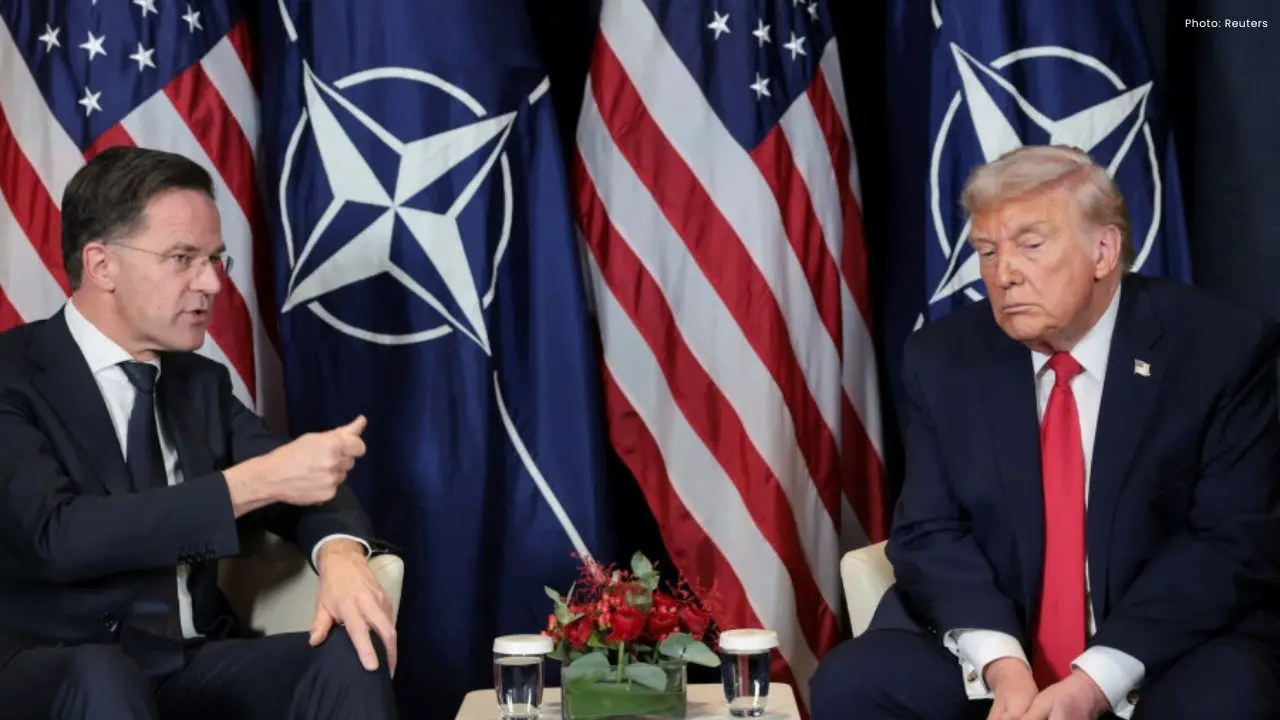
President Donald Trump has declared that the U.S. has obtained “total and permanent access” to Greenland, aligning this under a new framework discussion with NATO, even as leaders underline the importance of maintaining sovereignty and enhancing defenses in the Arctic against threats from Russia and China. These statements came during meetings at the World Economic Forum in Davos, alleviating some immediate concerns, but leaving many uncertainties unanswered among European nations and Greenland itself.
According to Trump, this agreement would afford lasting access to Greenland, which he emphasized is crucial for national security. In conversations with reporters, he characterized the deal as unlimited in duration, allowing the U.S. to operate freely. He noted that the proposed arrangement would be “more generous to the United States,” though he did not clarify if this impacted sovereignty.
Trump’s comments followed anxiety among European leaders after he mentioned a desire to acquire Greenland, a territory governed by Denmark. His remarks sparked fears of a potential breakdown in transatlantic relations, but the tension lessened when he ruled out military force and retracted threats of new tariffs on Europe, helping to stabilize the markets and boost European stocks along with U.S. indices.
Nonetheless, Denmark and Greenland reacted promptly, delineating their positions. Danish Prime Minister Mette Frederiksen asserted that there had been no discussions regarding Greenland’s sovereignty, emphasizing it was not subject to negotiation. Concurrently, Greenland’s Prime Minister Jens-Frederik Nielsen expressed openness to dialogue on partnerships while firmly stating that sovereignty is a “red line,” stressing the importance of maintaining territorial integrity and adherence to international law.
NATO Secretary General Mark Rutte confirmed that negotiations with Trump were focused on reinforcing Arctic security, rather than altering borders. Sources familiar with these discussions indicated that Trump and Rutte intend to advance dialogues among the U.S., Denmark, and Greenland to revise a 1951 accord that already regulates U.S. military access to the island; this agreement permits U.S. operations provided Danish and Greenlandic authorities are kept informed.
The new framework under consideration is expected to concentrate on security collaboration aimed at preventing Russian and Chinese economic or military encroachment in Greenland. Rutte noted that military leadership in NATO would now work on finalizing the details of enhancing Arctic security, hoping to establish concrete measures by early 2026.
Greenland’s significance has escalated as melting ice unveils new shipping routes and global powers are increasingly looking north for security and resource acquisition. The U.S. already maintains a military installation at Pituffik in northern Greenland, yet experts observe that American military activity on the island has diminished since the Cold War.
European leaders continue to exercise caution. EU foreign policy chief Kaja Kallas remarked that relations with the U.S. have soured recently, cautioning that public disputes among allies merely benefit rival nations. Leaders from Finland, Britain, and other NATO states are advocating for a heightened NATO presence in the Arctic, urging the formation of a clear strategy prior to the alliance's next summit.
In Greenland, public sentiment is mixed and often anxious. Demonstrations were organized outside the U.S. consulate in Nuuk, and residents shared feelings of confusion and unease regarding the swift changes in Washington’s posture. Many voiced worries about being trapped between major powers while lacking clarity about decisions impacting their future.
While Trump’s recent statements have lowered the immediate risk of a crisis, they underscore significant underlying concerns in Europe regarding trust and stability in transatlantic relations. As negotiations progress, NATO and its member states face the challenge of fortifying Arctic security without transgressing political boundaries regarding sovereignty, while ensuring reassurance for both allies and local communities that cooperation does not equate to control.