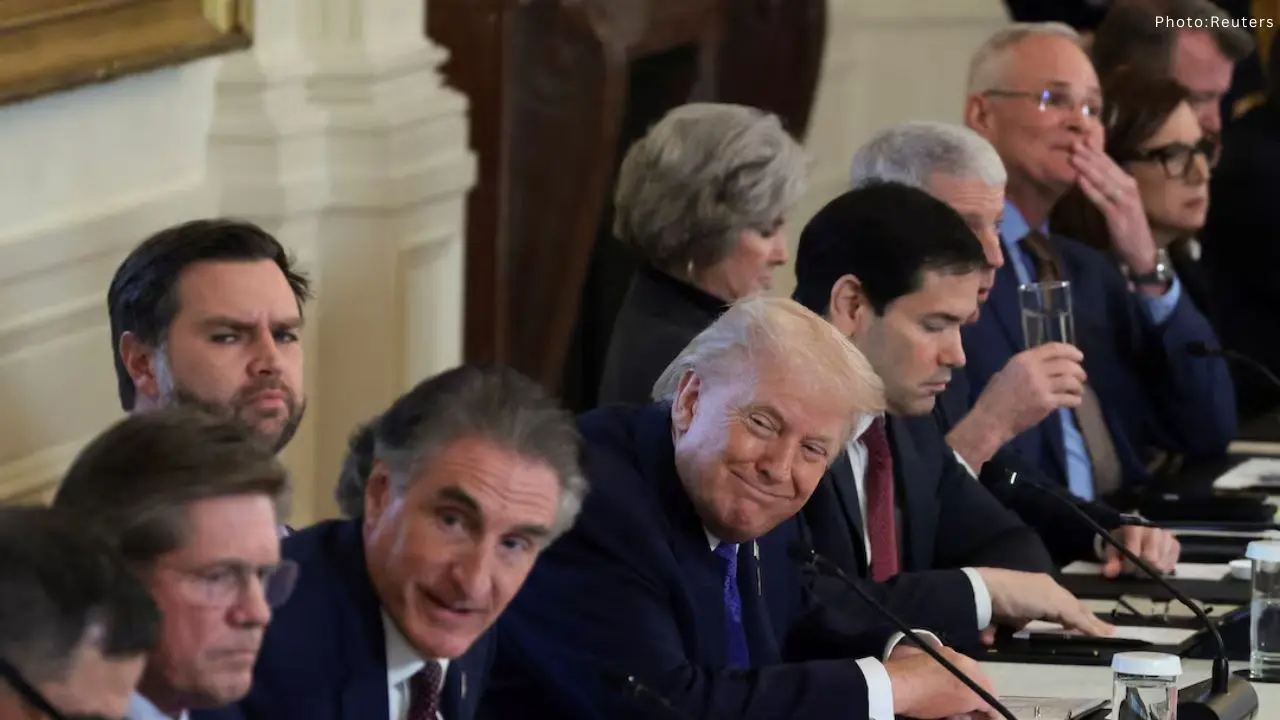
U.S. President Donald Trump has called upon major oil companies to significantly invest in Venezuela to rejuvenate its ailing energy sector, which he characterized as “decaying.” This request was made during a White House meeting with executives from key U.S. firms such as Exxon Mobil, Chevron, and ConocoPhillips.
Trump expressed his desire for American oil majors to invest as much as $100 billion in Venezuela in order to dramatically boost oil production levels. This initiative is part of his broader strategy following the U.S. military's recent actions against Venezuela's leader, Nicolas Maduro.
The President highlighted that U.S. companies could be pivotal in restoring Venezuela’s deteriorating oil infrastructure, which has been crippled by years of neglect and undercapitalization. He contended that increased oil output would be mutually beneficial, particularly in reducing energy costs in the U.S.
Venezuela boasts the world's largest confirmed oil reserves; however, its output has plummeted in recent decades. While the country produced over 3.5 million barrels per day in the 1970s, today it contributes a mere 1% to the global oil market. Factors like inadequate maintenance and political turmoil have severely impacted its energy sector.
Trump also lauded an arrangement allowing Venezuela to send 50 million barrels of crude oil to the U.S. He noted that this type of oil is compatible with numerous U.S. refineries and stated that these shipments could provide long-term benefits, helping to keep fuel prices low for American consumers.
However, despite Trump's encouragement, many oil companies are exercising caution. Executives have expressed concerns regarding Venezuela's volatile political landscape and the associated risks of large investments. The CEO of Exxon Mobil mentioned that Venezuela is currently deemed “uninvestable,” citing prior asset seizures as a significant concern.
Chevron, the lone major U.S. oil corporation still operating in Venezuela, affirmed its commitment but emphasized a measured approach to new investments. ConocoPhillips, which exited Venezuela years prior following asset confiscation, is also exercising caution in its strategy.
Trump assured that the U.S. government would secure the safety and financial interests of companies investing in Venezuela. However, he did not elaborate on the mechanisms for this assurance. U.S. officials hinted at utilizing government-backed financial approaches to alleviate the risks for prospective investors.
Meanwhile, the U.S. maintains an embargo on Venezuelan oil, having intercepted several Venezuelan oil carriers recently. Trump administration representatives assert that controlling Venezuela's oil revenues is essential to curtail corruption and criminal activities.
Some legislators and analysts have criticized this approach, warning that it could exacerbate instability. They argue that without clear and enduring political reforms, companies may hesitate to invest significant capital.
Trump’s ambition is to secure solid commitments from oil firms swiftly. He proposed a profit-sharing model among Venezuela, the U.S., and involved companies.
The discussions illustrate both the potential and peril associated with Venezuela’s oil industry. While the country's substantial reserves are enticing, long-term viability hinges on political stability, well-defined regulations, and a trustworthy environment for global investors.