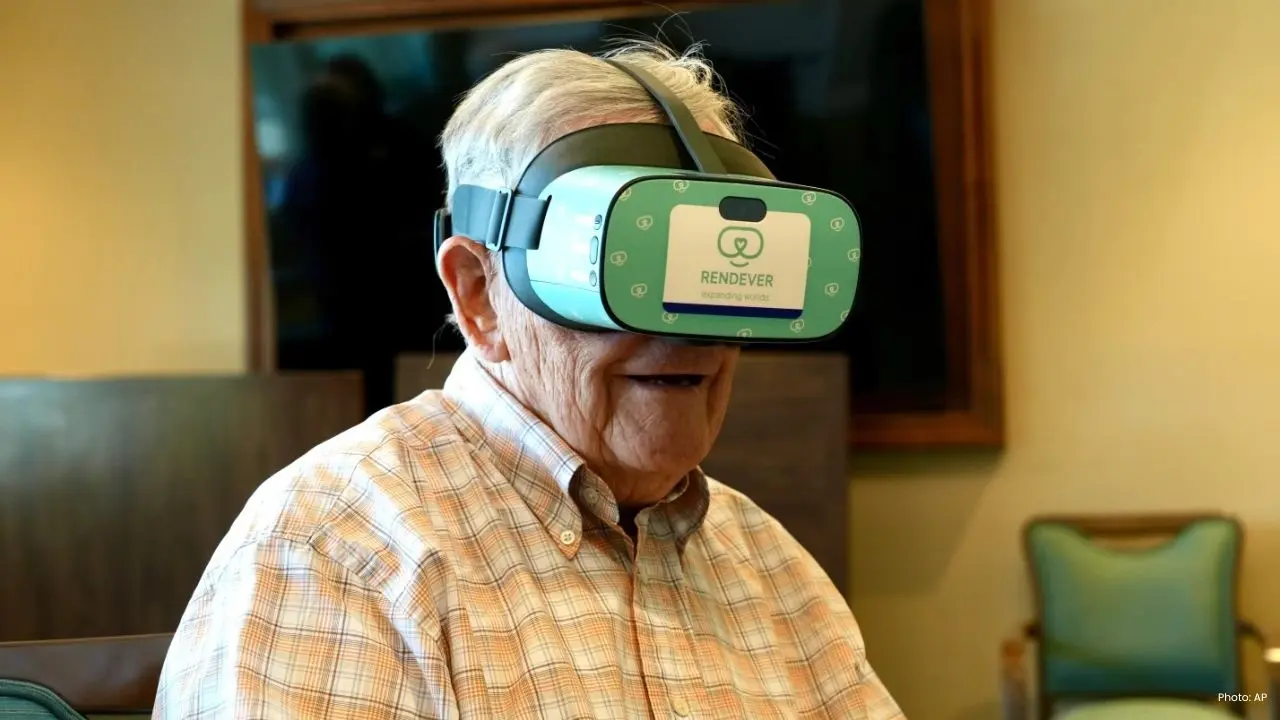
At first glance, The Terraces in Los Gatos, California, may appear like many typical retirement communities — serene, welcoming, and tailored for the daily needs of seniors. However, for many residents aged 80 and above, physically traveling far and engaging in active pursuits is no longer feasible. Yet, thanks to virtual reality (VR), these constraints are alleviated, allowing them to explore the globe anew.
On chosen days, staff at The Terraces equip seniors with VR headsets, providing an opportunity to revisit places and experiences they believed were lost to time. In mere moments, seniors are whisked away to European landmarks, vibrant marine life, or exhilarating hang-gliding scenes — all while comfortably seated with companions.
The VR experiences are facilitated by Rendever, an innovative company that leverages immersive tech to address a compassionate aim: enhancing mental wellness and social ties among older adults. Their platform is currently in use at nearly 800 senior living facilities throughout the U.S. and Canada.
From Tranquil Rooms to Underwater Adventures
Recently, during one engaging session, participants appeared to paddle their arms synchronously as they “swam” alongside dolphins in a 3D underwater simulation. The atmosphere was filled with laughter and awe. “We got to go underwater without even needing to hold our breath,” exclaimed 81-year-old Ginny Baird, beaming after their simulated dive.
Other virtual experiences elicit equally vivid reactions. A ride in a hot-air balloon provokes gasps of amazement, while some participants grip their seats as if resisting a gusty wind. The emotional engagement is authentic, despite the journeys being virtual.
Rediscovering Childhood Memories
Beyond thrilling escapades, VR has shown significant potential in helping seniors reconnect with their past. This technology enables residents to revisit their childhood neighborhoods, familiar streets, and significant landmarks — sometimes for the first time in several decades.
Sue Livingstone, 84, reflected on her virtual exploration of her childhood area in Queens, New York, affirming VR’s transformative nature. “It’s not merely about seeing it again,” she shared. “It’s the flood of memories that accompany the experience.”
Livingstone also believes that such experiences could entice residents who usually prefer their comfort zones. With a spark of curiosity, many are more willing to give the headset a try.
A Social Catalyst in Senior Communities
As noted by Adrian Marshall, life director at The Terraces, VR gatherings often ignite conversations. Residents discuss their views, share memories, and bond over collective experiences — occasionally forgoing popular pastimes, like the classic Mexican Train dominoes game, to dive into a VR session.
“It cultivates connections,” Marshall mentioned. “Individuals discover shared interests and life stories. The virtual world becomes intensely real for them.”
Research and Broadening Endorsement
Rendever recently secured close to $4.5 million in funding from the National Institutes of Health to examine how VR can alleviate social isolation among seniors at home and assist caregivers. Preliminary findings indicate that, used thoughtfully, VR may enhance cognitive function, bolster memory recall, and stimulate meaningful interactions.
Specialists emphasize that while VR holds promise, it should supplement, rather than replace, conventional activities. “There’s always a concern about excessive screen time,” remarked neuropsychologist Katherine “Kate” Dupuis. “However, when employed mindfully, it can greatly engage older adults, facilitating connections and instilling a sense of wonder.”
More Accessible than Smartphones
For many seniors, VR can be less complicated than using smartphones or tablets. Researchers observe that headsets eliminate the complexity of tiny buttons or intricate menus, making technology more manageable.
Pallabi Bhowmick, a researcher investigating VR adoption among older adults, states that outdated perceptions must evolve. “Seniors are open to technology when it enriches their lives,” she noted. “It can also enhance relationships across generations — grandchildren cherish discovering that their grandparents are engaging with VR.”
A Personal Journey to Company Creation
Rendever began from a personal mission. CEO Kyle Rand co-founded the enterprise in 2016 with a desire to aid his grandmother in navigating the emotional trials of aging. With expertise in neuroengineering, Rand recognized that shared virtual moments have the potential to forge connections.
“When seniors engage in VR experiences together, there’s a transformation,” he remarked. “They may commence as strangers but often end up sharing lunch, continuing the dialogue.”
Assisting Those with Dementia
VR is being evaluated as a potential tool for those living with dementia. At another Silicon Valley retirement center, the Forum, seniors utilize VR experiences to stimulate memory and emotional engagement.
Bob Rogallo, 83, battling dementia and unable to speak, was visibly engaged during a virtual trek through Glacier National Park. His wife, Sallie, noted that the experience rekindled memories from their long journeys across the U.S. in their RV. “It made me wish I was 30 years younger,” she remarked.
During another session, 93-year-old Almut Schultz expressed joy while attending a virtual classical concert at Colorado’s Red Rocks Amphitheatre, reaching out as though to caress a playful puppy in her virtual realm.
“That was truly an exceptional session,” she remarked afterward, radiating happiness.
A Transformed Approach to Experiencing Life
For countless seniors, virtual reality surpasses mere amusement. It grants them freedom, nostalgia, connection, and delight — all within an accessible framework. Although the destinations may be digital, the emotions they ignite are profoundly real.