Photo:AP
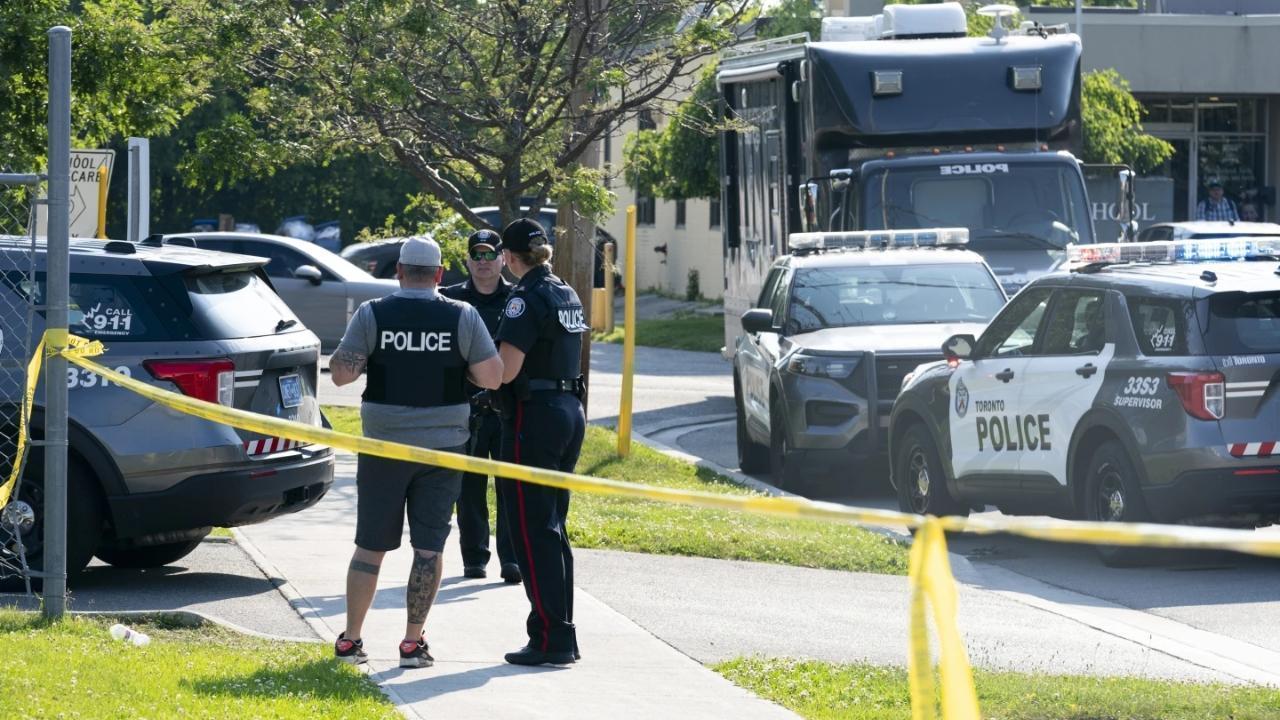
A peaceful summer evening in Toronto's east end was shattered by a tragic act of violence when a teenage boy was fatally stabbed near Woodbine Park. The incident took place late Saturday, July 5, around 10:10 p.m., in an area that had been alive with families, joggers, and park visitors. Now, as the sun rises on a community stunned by loss, Toronto police are calling on the “hundreds” of people who were in the area at the time to come forward and assist with the investigation. In the absence of immediate suspect information, the plea for witnesses has become central to uncovering truth in this sudden and devastating event.
Toronto police received an emergency call just after 10 p.m. on Saturday, directing officers to Eastern Avenue near Coxwell Avenue in the Beach community. When paramedics arrived, they found a teenage victim inside a McDonald’s restaurant adjacent to Woodbine Park, suffering from a stab wound. Despite urgent medical intervention and transport to hospital by emergency run, the boy succumbed to his injuries and was later pronounced dead.
Investigators from the Toronto Police Homicide and Missing Persons Unit are leading the active inquiry. Detective Sergeant Alan Bartlett emphasized that the investigation remains in early stages and that limited details are available. However, he confirmed the victim was a male youth, and that the complexity of the situation is compounded by the fact that “hundreds of people” were present near the restaurant and park at that time.
That evening, Woodbine Park and surrounding areas were crowded with casual visitors, families enjoying the summer onset, and neighbours taking advantage of extended daylight for walks and outings. Others were out for snacks at the McDonald’s drive-thru or patio. Residents described a festive, almost block-party atmosphere before the stabbing. One local recalled the scene: “It looked like a block party in the McDonald’s,” she said, underscoring just how many witnesses may have been within eyeshot or earshot of the incident.
Despite witness numbers, police report no arrests, no released suspect descriptions, and no official motive confirmed. They are urging residents and visitors to think back: did they see someone acting suspiciously near those intersections? Did they observe loud voices, a struggle, or someone leaving quickly after the call went out? Did anyone catch part of the attack on camera? With surveillance cameras covering adjacent storefronts, traffic signal cams, and private home cameras, police hope combined evidence will help create a clearer picture of events .
Investigators are appealing not just to those who witnessed the act itself, but to individuals whose presence that evening may have provided important peripheral observations. Anyone who saw someone fleeing the scene, who looked injured, or who heard a distinctive noise like a shout or crash—even if seemingly unrelated at the time—is asked to come forward. Even incremental pieces can help build a timeline. Police suggest reviewing phone footage taken that night and reaching out if it might include the crime scene.
Late on Sunday morning, CSOs established a temporary command post near the intersection to collect tips and provide a visible presence. Civilian outreach workers are supporting the homicide team with door-to-door canvassing to speak with area residents—some of whom may not yet have heard official appeals or may have cultural or language barriers that discourage contact .
The location—a popular local hub—amplifies both public interest and urgency. Parents bringing children to the park, seniors enjoying evening strolls near the lakeshore, restaurant staff, delivery workers, Uber drivers: all had been part of the neighbourhood at the time and may unwittingly hold key information. In such settings, a flash of movement or sudden disturbance may have gone unreported—but could prove vital in a systematic inquiry.
Toronto Mayor John Tory, while focusing on city-wide safety, commented that such an event is especially sharp in its local jolt: “This was a young life and a close-knit area,” he said, underscoring that policelike investigators and city officials will use every resource to find answers. Local Members of Provincial Parliament and City Councillors have offered support for families, attended the command post, and expressed confidence in the Homicide Unit.
Councillor Amber Morley, representing Beaches-East York, remarked that emotional aftershocks ripple far beyond immediate circles. “When violence happens near a place we go with our kids, it shakes us deeply,” she said. “We want answers not just for justice—but for reassurance that our streets can be safer again.”
Police and community leaders are also stressed that while neighbourhood confidence is essential, residents should not form assumptions or stigmatize individuals based on appearances. Investigators urge factual reporting over speculation, and stress that tips should be shared—even anonymously—through Crime Stoppers if that makes individuals more comfortable speaking up .
This tragedy highlights broader questions. Why did this happen in a public, well-populated space at a mainstream fast-food location? Was the victim targeted as part of a fight, or was this random violence? Could this violence reflect deeper community issues—youth friction, gang influence, or social stress?
Local mentors and youth leaders are asking these same questions. Speaking with neighborhood volunteers, one social worker noted that area youth have had excessive stress in recent years—academic pressure, pandemic aftershocks, employment uncertainty. She said, “Teenagers wander neighborhoods late-night with friends; these spaces become hangouts—and sometimes conflict arises.”
Park area security is now under review. Toronto Police Services (TPS) say they will increase foot-patrol presence, visible lighting is being re-assessed, and Parks & Recreation is evaluating after-hours programming to keep spaces safe after dark. The Beach BIA has also offered to provide small grants to businesses that invest in outdoor lighting, install cameras, or extend hours for casual oversight presence.
Mental wellness becomes central too. For family and friends, the loss of such a young life brings shock, grief, and long-term emotional consequences. Victim Services of Toronto and Crisis Outreach workers have been on-site to assist the boy’s relatives. Local churches and community centres are hosting listening circles and arranging supports. Pastor Lisa Chan from a nearby congregation said, “It’s more than one family hurt; it’s a neighborhood wound.”
Woodbine Park's usual feel is communal: families picnic by the water, walkers enjoy views, and teens skateboard along pathways. Many residents described last night as one that “fell apart” in seconds—from social evening to fatal event. Now officials say this loss demands a communal response: seeking justice, creating safety, and ensuring healing.
The ripple effect on nearby businesses has also been marked. The McDonald’s behind police tape was temporarily closed and lost revenue; nearby coffee shops had their evening traffic lowered as police barricades and investigation discouraged some patrons. The Beach community festival scheduled for next weekend is being reviewed for additional security—or even postponement.
Youth-focused programs in the community are planning roundtables. “We need to ask youth: what made tonight different? What contexts make them gather in such places? What support is missing?” said one camp director. Extra presence through drop-in programs and summer youth employment at local rec centers are being fast-tracked for the coming days.
From a justice standpoint, investigators are also coordinating with the Office of the Coroner to confirm physical evidence, autopsy timelines, and cause of death specifics. Although family contact is still in progress, TPS confirm that next-of-kin notifications are underway.
Legal procedures after homicide investigations are also exacting. Once arrests are made, disclosures will follow. If charges proceed—potentially first-degree murder or manslaughter—court protocols will affect media release schedules and public notification timing. Victim's rights groups emphasize victim anonymity when families request discretion, especially when minors are involved.
For the public, this means there may be days or weeks before a clear suspect description emerges. Investigators hope the witness appeal and video collections lead to timely identification. Their ask: search your phone, check your video camera logs, note unusual details, and call TPS if there’s anything to report—even without full certainty.
Crime Stoppers is offering a standard reward for information leading to an arrest. TPS emphasize they can follow anonymous tips—no ID needed. Their goal is to reduce barriers that may impede truth-telling, especially among youth who fear involvement or retribution.
Seen differently, today's tragedy can also spark positive change. If those in the area feel motivated to commit in small ways—like staying alert in public spaces, keeping pathways well-lit, and encouraging others to speak up—it can evolve into long-term community resurgence.
That said, the emotional journey for the boy's family, friends, and neighbors is just beginning. Grief counseling needs will endure. Schools assigning emotional support may require more staff. The broader community may conduct healing rituals as the family allows: if not a full memorial, maybe a quiet gathering in the park when investigation winds down.
Looking ahead, the Homicide Unit hopes to share next steps at briefings if arrests are made or evidence is found. Until then, the investigation continues diligently. Anyone with time-stamped footage or even a fleeting memory of someone walking away from the scene, someone distressed, or someone behaving oddly in the minutes before or after – every detail matters.
The stabbing has transformed a familiar, well-loved area into a site of heartbreak. But Toronto's resilience lies in its cohesion—families, businesses, police, youth services, and faith communities are aligning to move forward with care and intention. Through grief, the city aims not just for justice, but for a rebirth of shared sacrifice and shared safety.
For now, officers remain stationed near Coxwell and Eastern through daytime hours. A community bulletin board was set up at the McDonald’s and adjacent coffee shop, providing flyers with contact numbers and a gentle request to help safely guide a grieving neighborhood back toward normalcy.
Tragedy can sear an area with fear—but it can also bind a community closer. As Toronto pursues answers, it is also rebuilding trust and gathering strength from shared values. That journey began with a single appeal to witnesses—if you saw something, it could make all the difference.