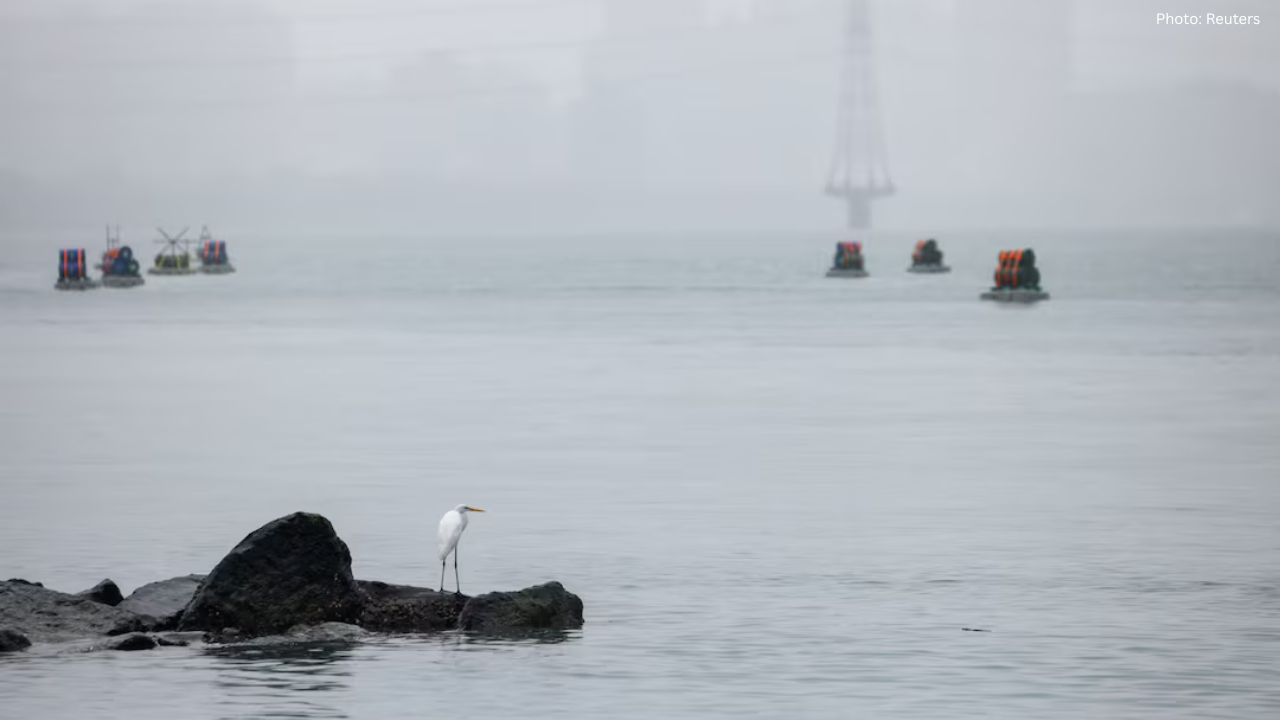
In light of China's recent military exercises near its shores, Taiwan has reiterated its commitment to defending its sovereignty and enhancing its military capabilities. China conducted significant drills, including the launch of numerous rockets and the deployment of various military assets, demonstrating its power.
During a live New Year’s address from Taipei, President Lai Ching-te affirmed Taiwan's resolve to safeguard its nation, stating, “My approach as president has been clear: we will firmly defend our sovereignty and bolster our national defenses.” He flagged that the Chinese maneuvers seemed targeted at disrupting Taiwan’s new military capabilities, emphasizing the urgent need to enhance the island's readiness.
President Lai called on opposition lawmakers to support his initiative aimed at augmenting Taiwan's defense budget by $40 billion. This funding proposal faces delays owing to standoffs within the opposition-led assembly. He noted that 2026 would mark a pivotal year for Taiwan, urging preparation for the worst while hoping for favorable outcomes.
Despite rising tensions, Lai indicated a willingness to engage in discussions with China, provided there is mutual respect for Taiwan's sovereignty and democratic principles. “We are open to negotiations and collaborations with China, focused on equality and dignity, fostering a harmonious environment across the strait,” he stated.
China's response was quick and critical; a representative from China's Taiwan Affairs Office condemned Lai's comments as “filled with falsehoods,” accusing Taiwan of attempting to deceive the global audience.
The military drills, dubbed “Justice Mission 2025,” represented the largest display of force near Taiwan in recent history. These activities prompted Taiwan to cancel many domestic flights and mobilize its own military aircraft and vessels for surveillance. These actions followed the United States' announcement of a substantial $11.1 billion arms package for Taiwan, with China asserting that its drills were aimed at thwarting foreign interference and emphasizing that the “reunification” with Taiwan is inevitable.
The international reaction has been one of apprehension, with entities such as the European Commission and the United Kingdom expressing concerns regarding the exercises, labeling them a threat to regional stability. Analysts indicate that this scenario accentuates the increasing tensions in the Taiwan Strait and underscores the pressing necessity for clear defense strategies and diplomatic initiatives to avert conflict.
Amid these dynamics, Taiwan is committed to bolstering its defenses while seeking peaceful engagement options, even as China persists in its assertion over the territory. President Lai’s declaration encapsulates the determination of the Taiwanese populace to defend their democratic way of life against escalating pressures from Beijing.