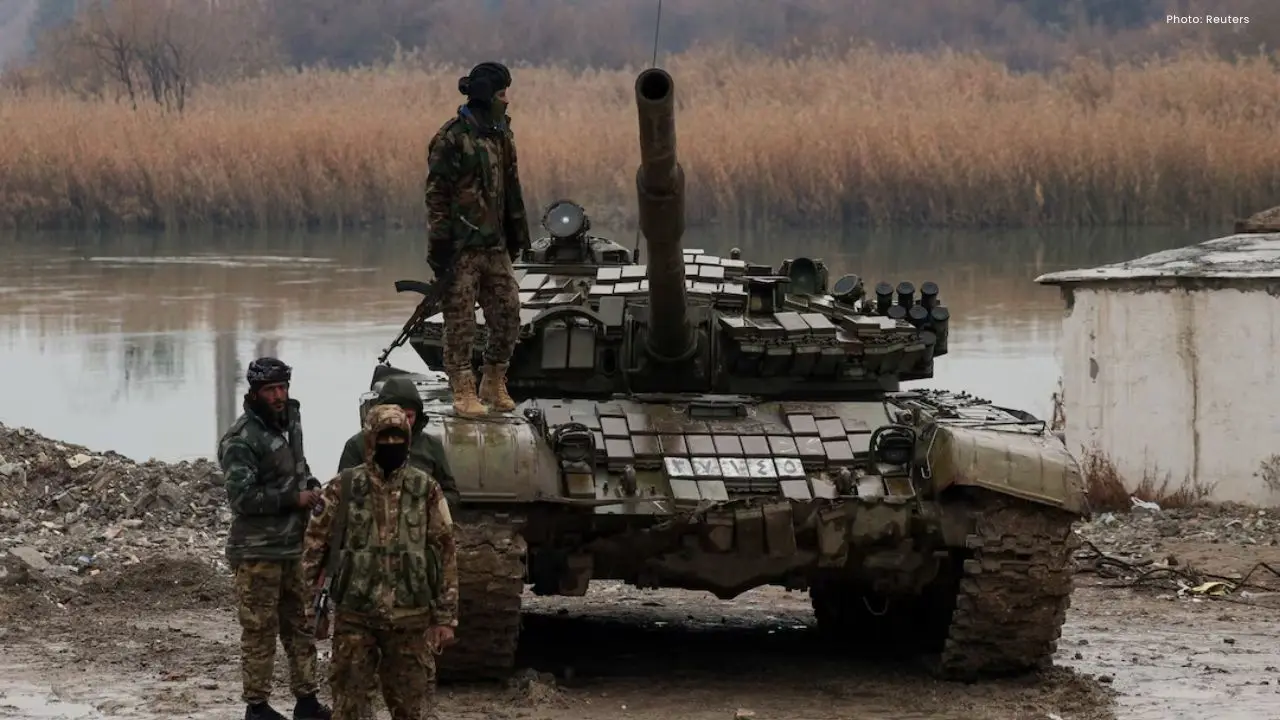
In a pivotal moment for Syria, the government and Kurdish-led Syrian Democratic Forces (SDF) have formalized a comprehensive agreement, potentially altering the nation's trajectory. Signed on Sunday, this accord seeks to unify Kurdish military and civilian authorities under central government oversight, ending ongoing hostilities and concluding a prolonged phase of semi-autonomy in the northeast.
This breakthrough follows a series of intense skirmishes as government forces advanced into areas historically governed by the SDF. The contested regions, including Deir al-Zor—Syria's top oil and wheat-producing area—and Raqqa, home to vital dams for electricity and water, hold strategic significance for Damascus. Securing these territories reinforces the government's influence over the country's economy and infrastructure.
For over a decade, the SDF managed a semi-autonomous region in northeastern Syria, supported by the United States in its campaign against the Islamic State, culminating in 2017. However, the political landscape shifted after the fall of former President Bashar al-Assad in late 2024, leading to a new Islamist-led government under President Ahmed al-Sharaa.
Negotiations between Damascus and the SDF spanned several months, with a vision for complete integration by late 2025. As the deadline lapsed without a resolution, tensions escalated, culminating in hostilities as government troops swiftly progressed into Kurdish-held domains. This agreement stems as much from military pressures as it does from diplomatic discussions.
The 14-point agreement stipulates that SDF fighters will be integrated into Syria’s defense and interior ministries individually, rather than as distinct Kurdish groups—a significant demand from the Syrian government and a noteworthy concession from the SDF. Additionally, the pact entails the transfer of border crossings, oilfields, gas resources, and facilities housing Islamic State detainees and their families.
This agreement indicates a definitive shift of power towards Damascus, a challenging compromise for Kurdish leaders. SDF chief Mazloum Abdi admitted the SDF's withdrawal from Deir al-Zor and Raqqa, predominantly Arab-province regions, describing the recent conflict as one thrust upon them, emphasizing their attempts to avoid confrontation.
Nevertheless, the deal offers the SDF a mechanism to propose Kurdish representatives for top military and civilian positions within the central government. It also ensures that Hasakeh province, a Kurdish stronghold, will appoint a governor through mutual agreement. These provisions indicate a potential effort to safeguard Kurdish political clout in a unified Syria.
A contentious aspect of the agreement involves the pledge to remove all foreign members associated with the PKK, a group Turkey deems terrorist, which has previously been accused of influencing SDF decisions. By addressing these concerns, Damascus may alleviate Turkish pressures and enhance relations within the region.
The international response underscores the complexities of this situation. The United States finds itself navigating a delicate balance, having long considered the SDF a key ally against the Islamic State while now supporting President Sharaa’s objective of nationwide reunification. U.S. envoy Tom Barrack termed the agreement a “pivotal inflection point,” expressing caution regarding the numerous unresolved details.
Turkey has reacted positively, expressing hope that the agreement will usher in peace and stability across Syria and the broader region. Ankara's stance emphasizes the desire from regional actors for a cessation of armed factions beyond state control.
Despite the deal's announcement, the ground situation remains tenuous. Isolated clashes indicate that not all sides have fully accepted the ceasefire. The upcoming 24 to 48 hours, in anticipation of the territorial handovers, will be critical. The effectiveness of this transition will be a measure of the commitment from both the Syrian government and the SDF.
Deep-seated anxieties persist among the Kurdish population regarding their future under the revitalized government, especially in light of last year’s sectarian turmoil resulting in thousands of casualties among Alawites and Druze. This history casts doubt on whether Damascus can genuinely assure the safety and unity of Syria’s diverse communities.
While this agreement may signal the conclusion of one conflict stage, it does not resolve Syria's enduring quest for peace. This deal, molded by coercion and exhaustion after protracted strife, will determine whether it fosters genuine unity or simply replaces one form of dominance with another in the upcoming weeks and months.
Syria finds itself at a critical junction. Although the fire may have subsided, the arduous journey of fostering trust, equity, and stability in a fragmented nation has merely begun.