The Supreme Court of the United States has temporarily blocked former President Donald Trump from sending National Guard troops to the Chicago area. This ruling presents a significant legal challenge for Trump and prompts a discussion about the extent of a president's authority to utilize military forces domestically.
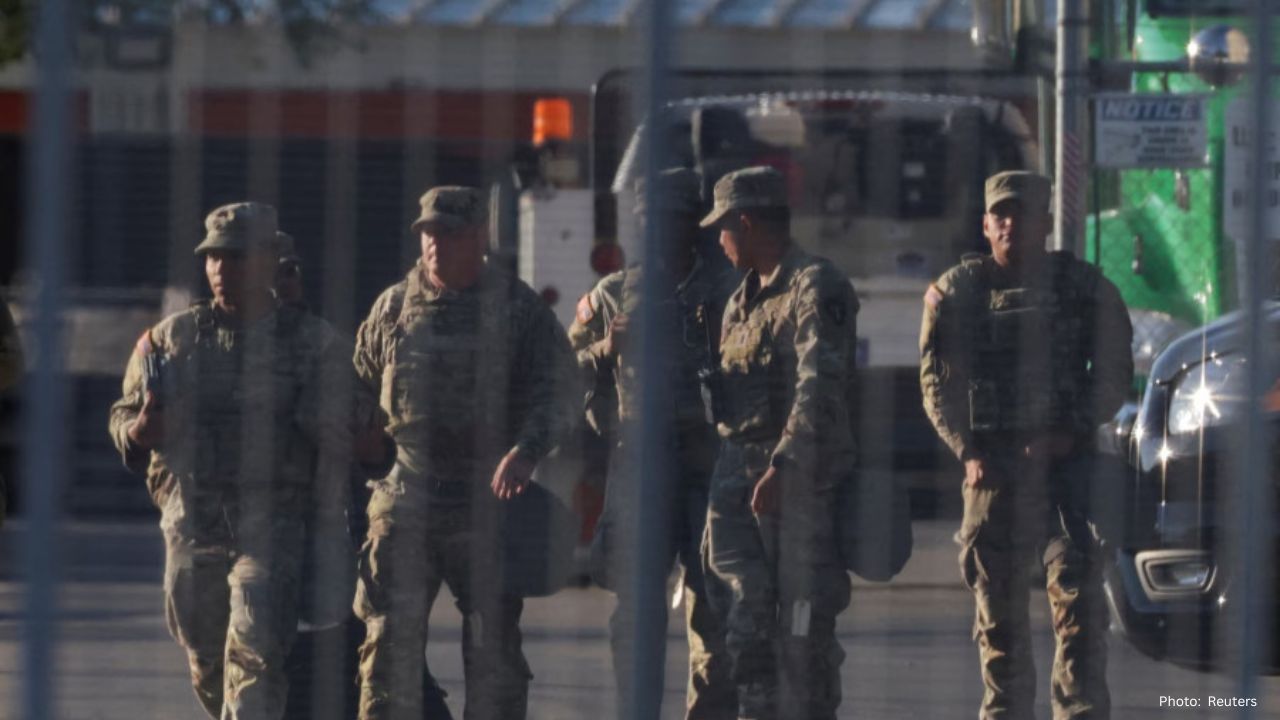
The controversy emerged when Trump called for the deployment of hundreds of National Guard members to Chicago, citing the need for control over violent protests stemming from his stringent immigration policies. In response, officials in Illinois and city leaders asserted that the demonstrations were largely peaceful and that local police were more than capable of managing any unrest.
Initially, a federal judge in Illinois issued a prohibition against the deployment, stating there was insufficient evidence of rebellion, invasion, or widespread violence that would justify the military's intervention. When the Trump administration sought the Supreme Court's assistance to override this ruling, the court opted not to intervene, thereby upholding the lower court's decision as the legal process unfolds.
The unsigned order from the Supreme Court indicated that the government did not adequately clarify the president's authority in this scenario. The justices emphasized that a president's ability to take command of state National Guard units is reserved for extremely rare circumstances, which they determined were not present in this case.
While three conservative justices expressed dissent in the ruling, the majority opinion countered the administration's stance. This is particularly noteworthy, given the Supreme Court's conservative tilt, which has frequently aligned with Trump's executive actions.
Illinois Governor JB Pritzker applauded the decision, highlighting it as a crucial move against what he termed an abuse of presidential power. He cautioned that deploying troops into cities led by political adversaries could undermine democracy and threaten the right to peaceful assembly.
Trump's administration justified the deployment, claiming the need for guard assistance to protect federal properties and personnel, particularly at an immigration detention facility near Chicago. Officials argued that federal employees were facing continuous threats. Nevertheless, the judicial body noted that local authorities characterized the protests as limited, calm, and manageable.
Furthermore, the courts raised concerns regarding Trump’s invocation of an antiquated law permitting troop mobilization when a president is unable to enforce the law with “regular forces.” Justices remarked that Trump did not explore other avenues prior to this decision, and that the law did not convincingly support his actions.
This ruling has broader implications beyond Chicago. It delineates boundaries on the military's use within the United States, asserting that military personnel should be deployed at home only during acute emergencies rather than amidst political strife.
Currently, the Supreme Court's ruling conveys a definitive message: presidential authority is not absolute, and peaceful protests do not warrant military intervention. It also highlights the judiciary's vital role in safeguarding democratic liberties amid political upheaval.