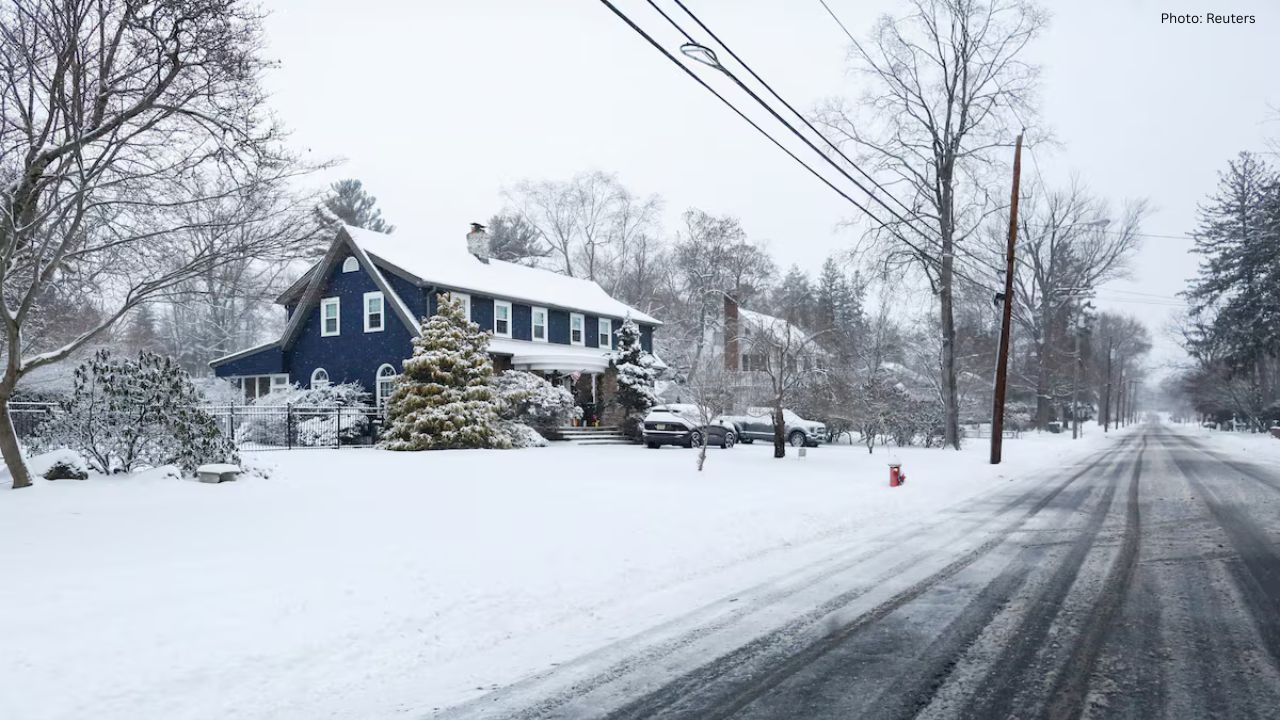
Severe disruptions to travel across the United States have occurred due to Winter Storm Ezra, particularly affecting the Northeast, Midwest, and Great Lakes regions during the holiday season. For the third consecutive day, airlines, roadway users, and emergency services faced challenges as heavy snowfall, gusty winds, ice, and dramatic temperature fluctuations upended daily routines.
By Monday afternoon, flight tracking data showed nearly 6,000 delays and over 750 cancellations. Since Friday, weather-related issues have impacted more than 30,000 flights nationwide. Many passengers found themselves stranded at airports, dealing with lengthy waits, limited options to rebook, and difficulties securing accommodations amid the busy travel timeframe.
Meteorologists have cautioned that conditions may worsen as the storm morphs into a “bomb cyclone.” This phenomenon occurs when air pressure decreases sharply, resulting in fierce winds, heavy snow accumulation, and torrential rain. Forecasts indicated blizzard-like conditions and hazardous icing stretching from Wisconsin to Maine, with powerful winds threatening to cause outages and hazardous travel circumstances.
The storm has also introduced dramatic temperature shifts. In cities like Philadelphia, warm temperatures nearing 60 degrees Fahrenheit are expected to rapidly decline into the 20s overnight as Arctic air moves in. These abrupt changes heighten the risk of icy roads and frozen infrastructures, further endangering travelers.
Airports regionally were forced to limit or suspend operations, with the Federal Aviation Administration imposing ground stops at key hubs including Washington Dulles, Detroit, Boston, and Newark due to high winds and visibility issues. Snow and ice accumulation required ground crews to take additional time for aircraft clearance, leading to further delays.
Delta Air Lines has faced the greatest impact, recording the highest number of cancellations and delays. The airline's stock price fell nearly 3% as investors reacted to the operational turmoil. Other significant airlines such as United, American, and Alaska Airlines also experienced drops in their stock prices due to the storm's strain on operations.
Road travel posed similar risks, with authorities reporting hazardous visibility, icy routes, and wind-driven snow causing multiple vehicle incidents. Emergency officials advised the public to refrain from unnecessary travel and warned that conditions might remain perilous into early Tuesday.
To assist stranded passengers, airlines have waived change fees and permitted flexible rebooking for those affected by the storm. However, airline representatives mentioned that cancellations could result in aircraft and crews being misplaced, complicating the return to regular schedules.
As celebrations for the New Year draw near, Winter Storm Ezra highlights the swift impact severe weather can have on contemporary travel. With the threat of a bomb cyclone lingering, travelers across the U.S. are advised to monitor flight statuses, allocate additional time, and prioritize safety as the storm evolves.