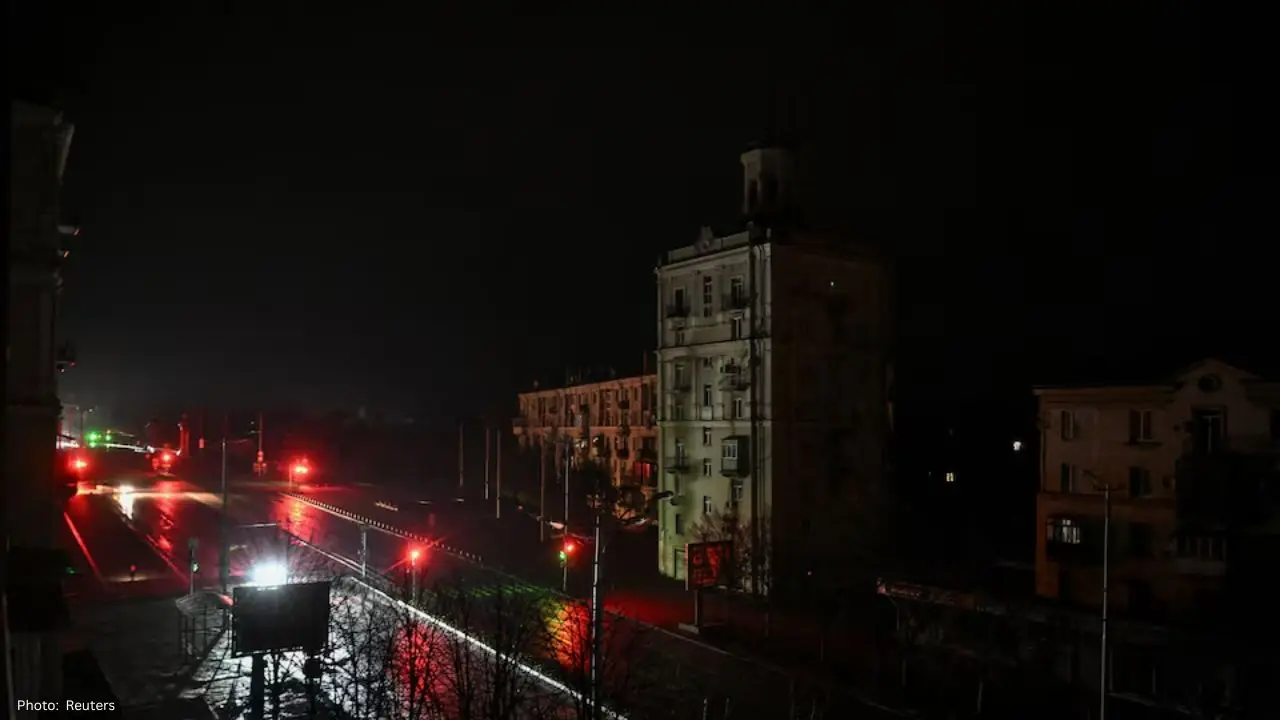
Significant power outages in southeastern Ukraine have resulted from Russian air and drone strikes, exacerbating the struggle of millions during the frigid winter months. The Ukrainian energy ministry reported that late Wednesday's assaults rendered the Dnipropetrovsk and Zaporizhzhia regions almost entirely without electricity.
According to local authorities, critical services like hospitals and water supply systems have begun operating on backup power. Emergency repair teams labored throughout the night to restore electricity, heating, and water as temperatures continued to plummet. In certain areas, nighttime lows are projected to dip to minus 20 degrees Celsius, heightening the risks for the populace.
The energy ministry noted that vital infrastructure was functioning solely on reserve capabilities. Deputy Prime Minister Oleksiy Kuleba mentioned that repair operations in Dnipropetrovsk were ongoing at an accelerated pace, yet the safety of the crews was a major concern amid persistent threats. In Zaporizhzhia, officials turned to alternative energy sources to maintain water supply.
Although Russian assaults on Ukraine's energy framework have become commonplace since the war's inception, officials report that these attacks have escalated in frequency and intensity in recent months. The strikes aim to undermine daily life and pressure civilians, particularly during the winter when the need for electricity and heat is critical.
Prime Minister Yulia Svyrydenko cautioned that severe snowfall and extreme cold would complicate repairs, exerting additional stress on already compromised systems. She commended energy workers for their efforts to maintain light and warmth for citizens in perilous conditions, while also warning that deteriorating weather adds further strain on the fragile infrastructure.
In Dnipro, the power cuts caused a halt to metro services. Some schools were forced to close for an additional two days due to inadequate heating in their buildings. Regional officials stated that it was still uncertain when full power would be reinstated.
In Kryvyi Rih, President Volodymyr Zelenskiy’s hometown, conditions were particularly dire in two districts. Local officials urged citizens and organizations to utilize generators wherever possible. Ukrainian Railways indicated that in the impacted regions, trains and signaling equipment had switched to backup systems, with many stations relying on generators.
The power outage also posed a public safety threat in Zaporizhzhia. Governor Ivan Fedorov reported that due to the blackout, air raid sirens were rendered inaudible, putting civilians in jeopardy. While electricity was restored to certain essential facilities, residents were advised to limit mobile phone usage as communication networks were functioning in emergency mode.
These power cuts underscore the ongoing challenges Ukraine faces amid the war. Beyond the combat zone, assaults on energy systems disrupt daily living, placing civilians at risk in severe weather conditions. As winter deepens, the need to restore and safeguard energy infrastructure remains one of Ukraine's most pressing priorities.