At least 30 people were killed in a Pakistan airstrike in Khyber Pakhtunkhwa's Tirah Valley, with reports indicating both militants and civilians among the dead. Conflicting accounts continue to emerge about the true cause of the blast, which devastated several homes and left entire families mourning.
Conflicting Reports on the Blast
According to local police and administration officials, the explosion occurred when Tehreek-e-Taliban Pakistan (TTP) fighters were storing bomb-making materials inside a compound in the Matra Dara area of Tirah Valley. Authorities say the unstable stockpile accidentally detonated, killing 14 militants and 10 civilians, including women and children.
However, multiple residents and opposition political leaders have disputed this account. They allege the deadly incident was caused by Pakistan Air Force jets carrying out airstrikes in the area. Some opposition figures claimed as many as eight bombs were dropped, destroying several homes and leaving only rubble behind.
Civilian Casualties Raise Alarming Questions
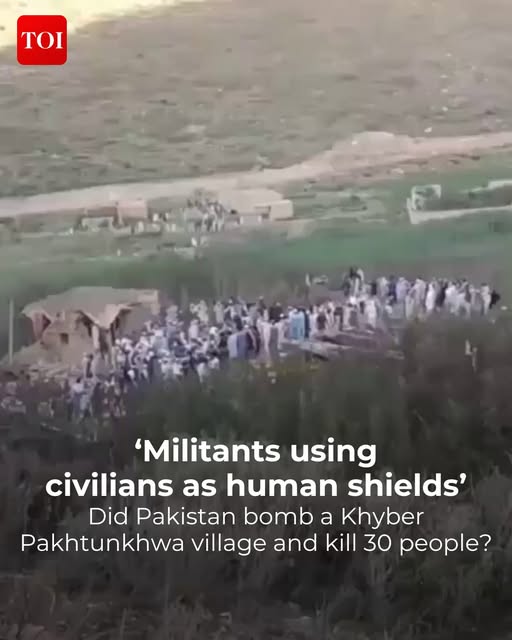
Eyewitnesses from the valley reported scenes of devastation, including collapsed houses, injured children, and funerals of entire families. With the Pakistan airstrike in Khyber being blamed, the question of civilian protection has come under sharp focus. Opposition leaders have accused the government of targeting populated villages under the guise of counter-terrorism operations.
Pakistan Tehreek-e-Insaf’s (PTI) Khyber Pakhtunkhwa chapter released statements condemning what they described as a massacre. They alleged that the operation was deliberately concealed and called for an independent investigation. Social media platforms were filled with images purportedly showing destruction in Matra Dara, though independent verification remains difficult due to limited media access.
Military’s Silence and Political Reactions
As of now, the Pakistan military has not publicly confirmed conducting an airstrike in Tirah Valley. The Inter-Services Public Relations (ISPR), responsible for official military communications, has yet to release a statement clarifying whether Pakistan Air Force jets were active in the area at the time of the blast.
Political opposition parties have seized on the ambiguity, demanding transparency. Human rights groups within Pakistan have also called for answers. The Human Rights Commission of Pakistan (HRCP) urged the government to launch an impartial investigation, stressing that civilian lives cannot be treated as collateral damage in counter-terrorism campaigns.
Tirah Valley: A History of Conflict
The Tirah Valley, located in the Khyber district of Pakistan’s northwestern province, has long been a hotspot of insurgent activity. Rugged terrain and proximity to the Afghanistan border have made it a stronghold for the TTP and affiliated militant groups. Pakistan’s military has conducted repeated operations in the valley over the past two decades, aiming to dismantle militant infrastructure.
Despite these efforts, insurgents continue to operate, often using civilian populations as shields. Locals have repeatedly complained of being caught between militants and the military, suffering losses on both sides. The latest incident has revived painful memories of past clashes in Khyber Pakhtunkhwa.
Regional and International Implications
The timing of the Pakistan airstrike in Khyber is significant. Pakistan is already under pressure to maintain internal security as cross-border militant activity rises. Analysts suggest that if the explosion was indeed caused by an airstrike, it could strain relations with local communities and complicate counterinsurgency efforts.
International observers are closely watching the situation. With civilian casualties reported, rights groups such as Amnesty International and Human Rights Watch may call for accountability. However, as of now, no independent international investigation has been launched.
Eyewitness Accounts
Residents of Tirah Valley shared harrowing stories. One survivor said, “We were sleeping when the blast shook the entire valley. My neighbor’s house collapsed, and we pulled bodies from the rubble.” Another villager claimed they heard the sound of jets overhead before the explosions, contradicting official statements that blamed stored explosives.
The lack of independent verification has fueled speculation. Tribal elders in Khyber are demanding that both militants and the military keep civilian areas out of their battles. The blast has reignited debates about accountability in Pakistan’s long fight against insurgency.
Humanitarian Concerns
Beyond the political dispute, the humanitarian toll is immense. Families have lost breadwinners, children, and homes. The sudden deaths have created urgent needs for food, shelter, and medical care. Local hospitals reported being overwhelmed with the injured, while families rushed to bury their dead in mass funerals.
The government has not yet announced compensation for victims. Opposition leaders argue that ignoring these civilian deaths will deepen resentment in a region already distrustful of central authorities.
Call for Transparency
The HRCP, joined by opposition parties, has urged the Supreme Court of Pakistan to take suo moto notice of the tragedy. They argue that whether the blast was caused by an airstrike or militant stockpiles, citizens deserve the truth. Demands for an independent parliamentary commission are growing louder.
For now, the tragedy in Khyber Pakhtunkhwa remains clouded by conflicting narratives. Was it an internal detonation at a TTP bomb factory, or was it the result of a deliberate military airstrike? Until a transparent investigation is conducted, suspicions and mistrust will only deepen.
Linking Broader Regional Coverage
For readers interested in deeper coverage of Middle Eastern and South Asian conflict dynamics, the cninews provides continuous reporting and analysis.
The Pakistan airstrike in Khyber has left at least 30 people dead, many of them civilians, and raised critical questions about the protection of non-combatants in conflict zones. With competing claims about the cause of the blast, the truth remains obscured. Until independent investigators are allowed access, accountability and justice will remain elusive for the people of Tirah Valley.


