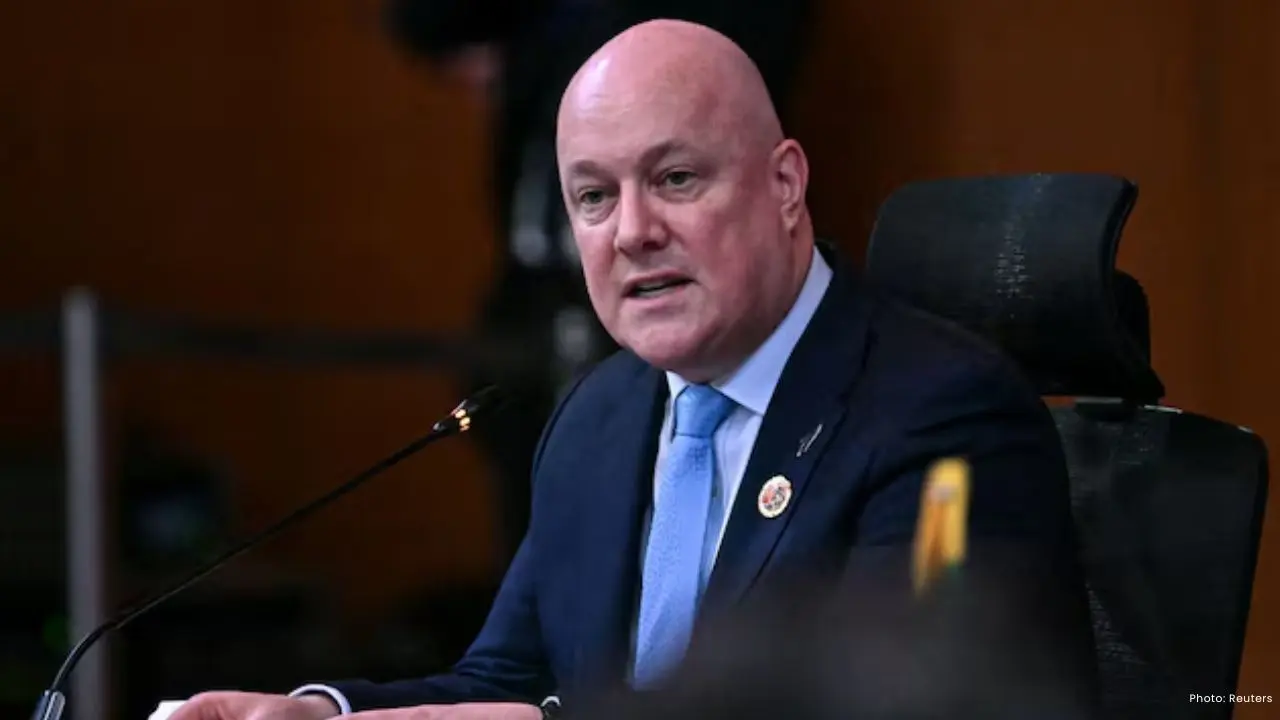
Prime Minister Christopher Luxon of New Zealand has declared that the next general election will take place on November 7. This announcement marks the beginning of his campaign for a second term, urging voters to embrace stability and place their confidence in his government’s strategy to bolster the economy in these turbulent global times.
Leading a conservative coalition comprised of the National Party, New Zealand First, and the ACT Party, Luxon’s government has remained in power since the 2023 elections. Addressing journalists in Wellington, Luxon highlighted the crucial decision voters must make regarding who is best equipped to steer the country through ongoing economic challenges and global unrest.
The Prime Minister emphasized the administration's commitment to nurturing a robust economy through prudent spending, reduced taxes, and creating more opportunities for families. He cautioned that a change in leadership at this time could jeopardize the country's recovery efforts. While open to collaborating with New Zealand First and ACT post-election, Luxon seeks a solid mandate for the National Party.
However, Luxon’s approval ratings have dipped over the past year as New Zealand faces economic slowdowns, rising unemployment exceeding 5%, and mounting pressures from increased living costs. Critics have raised concerns about some of his policy actions, particularly the closure of a dedicated health authority for Indigenous Māori and minimal funding increases for frontline public workers.
Polling indicates a competitive race ahead, with neither the ruling coalition nor the opposition Labour Party currently commanding a clear majority. The Labour Party, led by former Prime Minister Chris Hipkins, has accused Luxon’s government of service cuts and fostering division. Hipkins promises a more unifying and optimistic vision should Labour regain power.
New Zealand's political landscape often gives rise to coalition governments. Since implementing a mixed-member proportional voting system in 1996, no party has maintained a solo governance. Consequently, smaller factions will again be pivotal in determining the composition of the next administration.
The upcoming election will be held under new regulations introduced last year, which bar electoral enrollment on election day and prohibit incarcerated individuals from voting. Critics warn these restrictions may diminish voter turnout, particularly among demographics inclined to support left-wing parties.
Economic themes are expected to dominate campaign discussions. Despite a decrease in inflation, many citizens continue to grapple with rising local taxes and housing costs. Home values remain significantly lower than their 2021 highs, and economic advancement has been modest over the past two years. The government is hopeful that recent signs of improvement, including quarterly growth, will reassure voters ahead of November.
International dynamics might also sway election outcomes. As a small, trade-sensitive nation, New Zealand is vulnerable to global economic shifts and geopolitical tensions. Analysts caution that fluctuations in U.S. politics and international trade may impact New Zealand’s economy and public sentiment.
As the campaign unfolds, New Zealand voters are presented with a crucial choice: whether to continue with Luxon’s pledge for stable leadership and economic recovery or to seek a new direction under the opposition. With the election just months away and significant competition between the major parties, the November 7 vote is anticipated to be one of the most closely monitored in recent memory.