Mukesh Awasti, a 22-year-old aspiring civil engineer, was on the brink of starting a new life in Australia when everything changed. Instead of taking a flight, he became involved in Nepal's youth-driven protests against corruption—an involvement that cost him his leg and, ultimately, his belief in the change he once hoped for.
Awasti was shot during chaotic protests in Kathmandu on September 8 and now finds himself recovering at the National Trauma Center, where he underwent an amputation. From his hospital bed, he expresses frustration over the sacrifices made by him and others, seeing little reward for their bravery.
“I regret participating in the protests,” he lamented. “There have been no significant changes. Corruption persists, and those who shot at demonstrators remain unpunished.”
The demonstrations, spurred by Gen Z activists, resulted in over 76 fatalities and more than 2,300 injuries. The tumultuous events led to swift political change, culminating in the appointment of Nepal’s first female prime minister, Sushila Karki, on September 12, who pledged to hold new parliamentary elections in March.
However, several months have passed, and discontent is brewing among the very protesters who catalyzed the transitional government.
So far, Nepal’s anti-corruption agency has initiated just a single significant case, which notably excludes senior political figures. Meanwhile, the politicians called out by protesters are preparing for upcoming elections, while accountability remains elusive for those responsible during the violent crackdown.
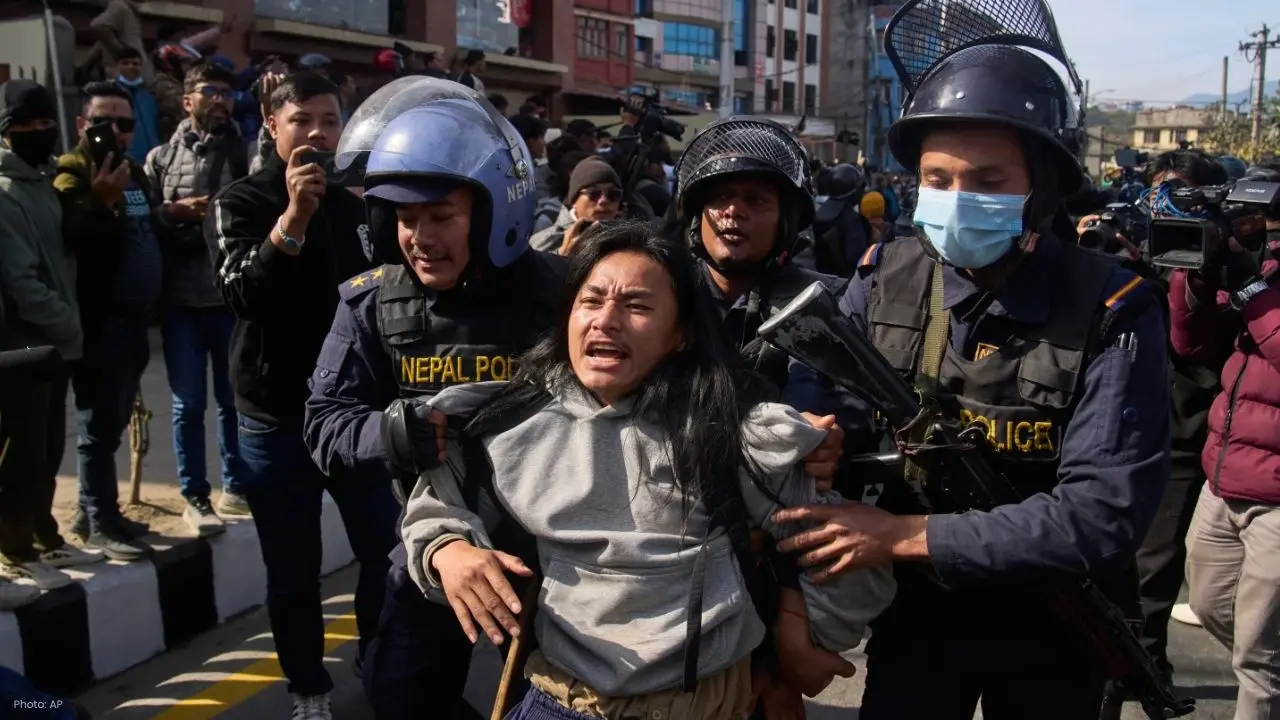
In recent weeks, numerous injured protesters and victims' families have taken to the streets again, staging demonstrations outside the prime minister’s office—many of which faced police intervention.
“We are back on the streets because the government has let us down,” stated Suman Bohara, who now navigates life on crutches after sustaining a fractured foot during the uprising. “Families have lost their loved ones, many are wounded, and yet nothing has changed.”
The protests erupted over rampant corruption, high unemployment, ineffective governance, and social media restrictions. When demonstrators attempted to breach parliament, they encountered gunfire. The unrest quickly turned national, with enraged crowds setting fire to government facilities, forcing top officials to flee via military helicopters.
The army eventually restored calm, paving the way for negotiations that birthed the interim government, whose main responsibility is to oversee elections.
Prime Minister Karki has reaffirmed her commitment to conducting polls on March 5, emphasizing: “We are nearing completion of our preparations, and the security situation has greatly improved.”
Yet, divisions within the protest movement linger. Some factions call for immediate action, demanding the arrest of all corrupt politicians and the revocation of the constitution, while others advocate that elections are the sole way forward.
Experts suggest the lack of a cohesive vision among Gen Z protesters has undermined their efforts.
“The difficulties arise from ambiguous demands and uncertainties surrounding the formation of the interim government,” noted Abeeral Thapa, principal of Polygon College of Journalism in Kathmandu. He remarked that clarity regarding interim governance is lacking in Nepal’s constitution, complicating an already complex scenario.
As doubts grow about the feasibility of holding elections as planned, analysts argue that polls are still the best remaining option, even while public trust seems to be diminishing.