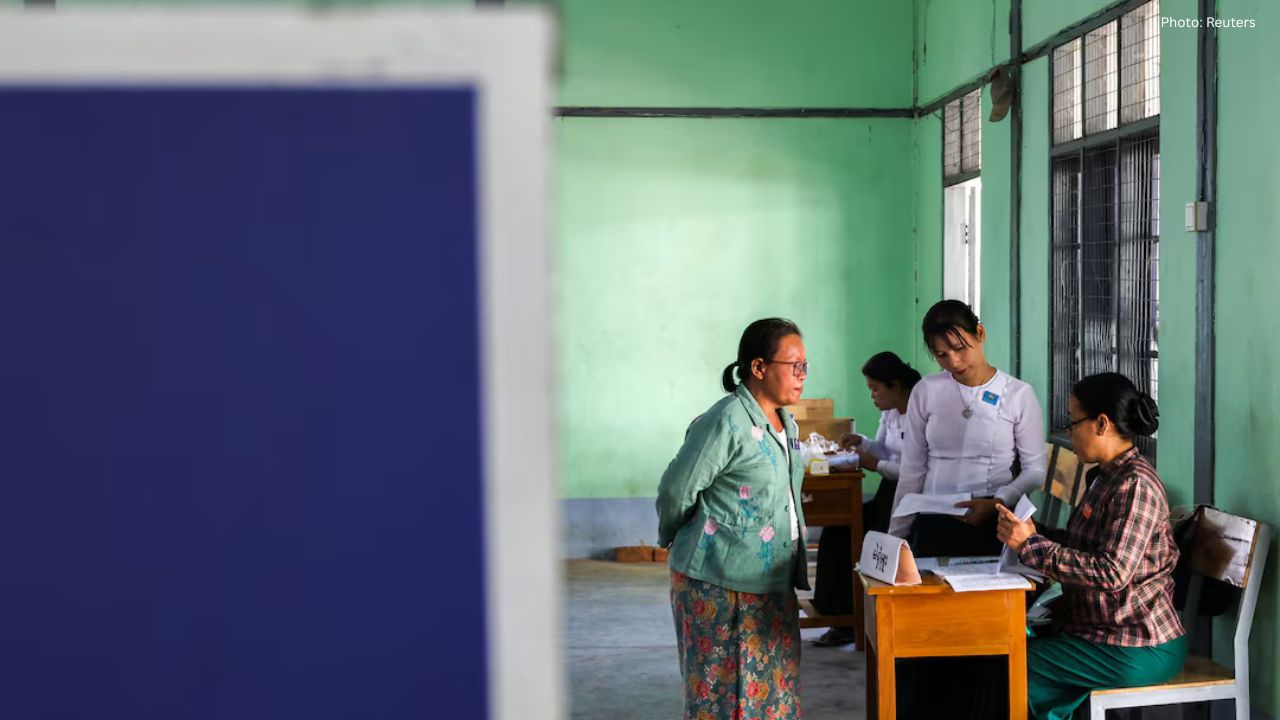
On Sunday, Myanmar cast its votes while grappling with a severe civil war and escalating humanitarian crises. Millions are caught in the grip of violence, starvation, and displacement as a result of the military coup in 2021 that ousted the democratically elected government led by Nobel Laureate Aung San Suu Kyi.
The ongoing conflict has wreaked havoc nationwide. Clashes between the military and resistance forces have devastated communities, upended daily routines, and led countless families to flee. The United Nations estimates that over 3.6 million individuals have been forcibly displaced, with more than 6,800 civilian lives lost since the conflict erupted.
Myanmar’s humanitarian situation is among the most severe in Asia. Years of conflict, compounded by recurring natural disasters, including a devastating earthquake earlier this year, have plunged millions into poverty. Around 20 million people—nearly half the nation—are in urgent need of humanitarian assistance, as skyrocketing prices and a declining currency make food and essentials unaffordable for many households.
Hunger is escalating rapidly; the World Food Programme warns that over 16 million individuals are confronting critical food shortages. Next year, it is anticipated that more than 12 million will experience acute hunger, with approximately 1 million requiring immediate, life-saving aid. Children are among the hardest hit, with over 540,000 facing severe malnutrition this year. One in three children under five shows signs of stunted growth, which can have lifelong health impacts.
Efforts to provide aid are faltering due to insufficient funding. To date, only about 12% of the required humanitarian relief funding for Myanmar has been secured. Cuts in international support, including from the United States, have further diminished aid for those in need. Simultaneously, restrictions on journalists and humanitarian workers complicate efforts to report on and alleviate the crisis.
The economy has suffered severely as well. Once viewed as an emerging economy in Southeast Asia, Myanmar now faces rampant inflation, inadequate electricity supply, and sluggish growth. Frequent power outages have led households and businesses to increasingly rely on solar energy solutions. Nonetheless, the World Bank forecasts a modest economic growth of around 3% next year, primarily driven by reconstruction efforts post-earthquake and limited support for the hardest-hit regions.
Myanmar’s military leadership has also sought closer ties with Russia, with a newly signed investment accord potentially allowing Russian energy companies to enhance their operations within the country—a move that may provide some economic activity but raises concerns about long-term dependence.
As voters approach the polls, Myanmar finds itself at a challenging crossroads. The elections are overshadowed by ongoing conflict, hunger, and economic distress, leaving the potential for stability and relief uncertain for millions enduring hardship across the nation.