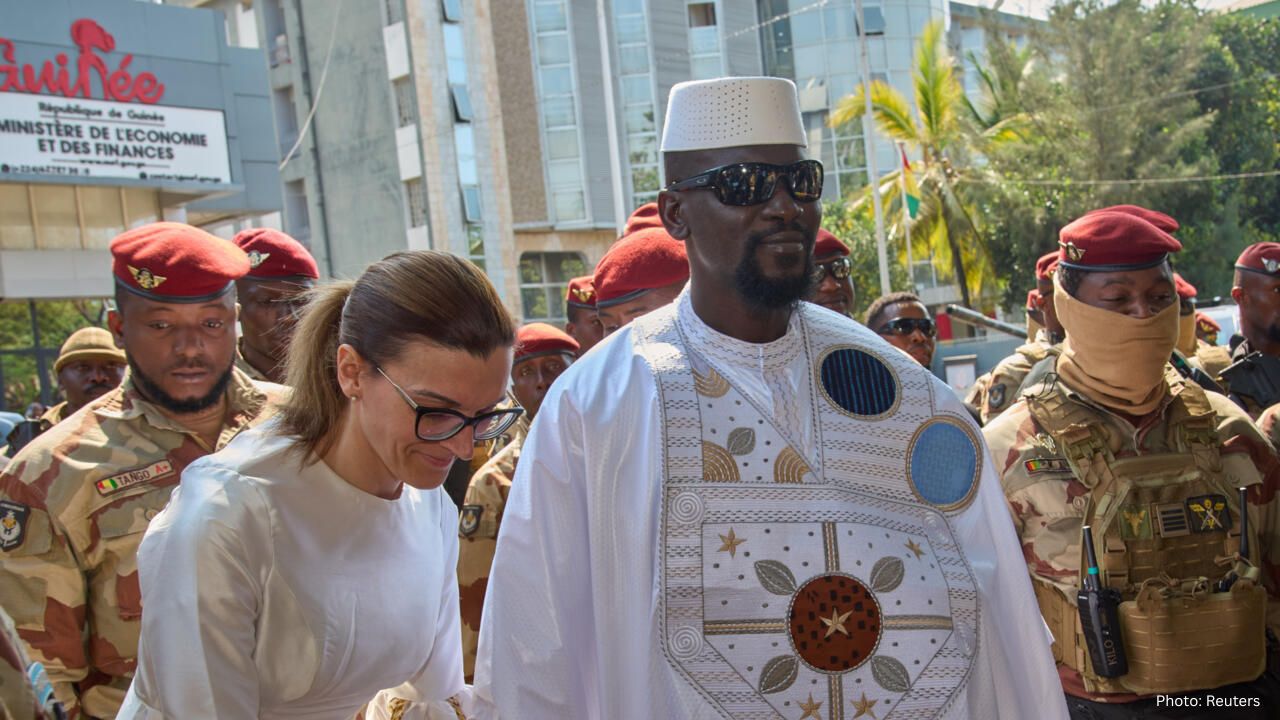
According to provisional results from election officials, Mamady Doumbouya, Guinea’s military chief, has been announced as the victor of the presidential election. This marks a crucial political development for the West African nation, which has experienced military governance since Doumbouya's coup in 2021.
Doumbouya, a former special forces leader, garnered 86.72% of the votes in the election held on December 28. This decisive victory means there will be no need for a runoff. Should the Supreme Court validate the results, Doumbouya will embark on a seven-year presidential term, with the court having eight days to address any potential legal objections.
He rose to power four years ago after ousting President Alpha Condé, who held the presidency since 2010. Initially, Doumbouya promised a transition to democratic governance and pledged that military officials would not participate in subsequent elections. However, this commitment was later retracted. A newly ratified constitution in September eliminated restrictions on junta leaders running for office, thus allowing Doumbouya to compete.
His win was largely anticipated. Many prominent political figures, including the former president Condé and long-time opposition leader Cellou Dalein Diallo, have fled into exile, leaving Doumbouya to contend with a field of lesser-known candidates, which diluted the opposition vote. Election officials reported an impressive voter turnout of approximately 81%, though opposition factions challenged this figure, especially in light of low participation in certain areas of the capital, Conakry.
Guinea's abundant natural resources have significantly boosted Doumbouya's popularity. The nation possesses the largest bauxite reserves globally and recently launched the massive Simandou iron ore project, which commenced operations last month after lengthy delays. Doumbouya has received credit for advancing this project and for implementing policies aimed at optimizing state benefits from natural resources. His administration's robust stance against foreign mining corporations reflects a rising trend of resource nationalism in some West African regions.
Supporters assert that Doumbouya's youth and strong grip on the government resonate with the young populace, with a median age of just 19 in Guinea. Nevertheless, critics express grave concerns regarding political freedoms. Civil society organizations and opposition leaders report that protests are repressed, media outlets face significant pressures, and political adversaries are often suppressed.
Concerns have also been raised by the United Nations, whose human rights chief indicated that the electoral campaign faced severe curtailments, including intimidation, forced disappearances, and restrictions on press freedom. Opposition candidates have claimed extensive electoral fraud and reported that election observers were obstructed from overseeing the vote.
As Guinea progresses, Doumbouya’s election signifies the conclusion of one phase of military governance but introduces another fraught with uncertainties. While many Guineans hope for stability and economic expansion, others remain wary that genuine democracy and open political discourse may still be elusive.