Photo:AP
A Bold Defence Pledge on Eve of Bastille Day
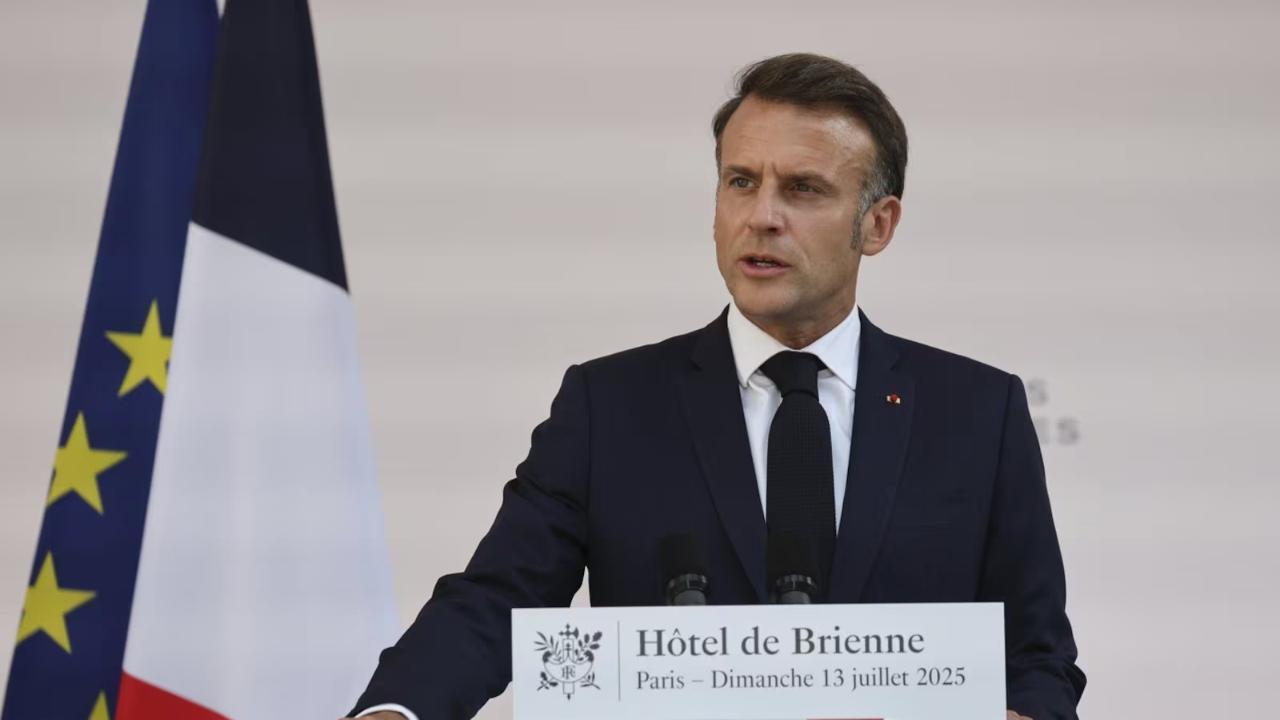
In a pivotal address ahead of Bastille Day, President Emmanuel Macron declared France’s most ambitious military spending initiative in decades. Speaking from the Hôtel de Brienne, Macron laid out a bold new financial trajectory, announcing an additional €6.5 billion in defence expenditures over the next two years—€3.5 billion allocated to 2026 and €3 billion for 2027. This injection of funds will bring France’s annual defence budget to €64 billion by 2027, a landmark figure that doubles what the country spent in 2017.
Macron’s announcement is more than a mere fiscal update. It marks a recalibration of France’s role on the international stage, underscoring a growing consensus among European leaders that national security, military preparedness, and strategic autonomy can no longer rely on transatlantic dependencies. This decision pushes France closer to becoming one of the leading military powers in Europe in both capability and political will.
An Era of Global Instability Fuels Urgency
The timing of this announcement is no accident. Macron’s speech came amid a backdrop of growing international volatility. From the ongoing war in Ukraine to rising tensions in the Indo-Pacific, threats from cyber warfare, terrorism, and state-sponsored disinformation are becoming increasingly sophisticated and interconnected. In Macron’s words, “Never since 1945 has our freedom been so threatened, and never have the risks been so multifaceted.”
He pointed to an evolving geopolitical order where traditional alliances are strained and new power blocs are emerging. Russia’s aggressive posture in Eastern Europe, China’s assertiveness in Asia, the resurgence of authoritarian regimes, and regional unrest in Africa and the Middle East collectively form a matrix of danger that Macron argues necessitates proactive, rather than reactive, defence strategies.
Fiscal Implications and Budget Mechanics
The €6.5 billion boost to the military budget is not merely an increase in line items—it signals a fundamental shift in government priorities. Macron stressed that the new funding will not come from new taxes but from anticipated economic growth, efficient spending, and better fiscal management. He pledged that the increase would be implemented without exacerbating France’s already high public debt, which currently stands at approximately 113% of GDP.
Nevertheless, economic analysts have warned that relying on optimistic growth forecasts may present challenges. As inflation, global supply chain disruptions, and energy market fluctuations persist, the government may find itself in a delicate balancing act between meeting its military ambitions and maintaining economic stability.
Strategic Investment Areas Identified
Macron’s plan details strategic investment in several key domains:
-
Cybersecurity – A robust increase in funding for cyber warfare units to counteract foreign attacks on French infrastructure, financial systems, and electoral integrity.
-
Artificial Intelligence and Quantum Computing – Accelerated R&D programs to keep pace with global leaders in emerging technologies critical for modern warfare.
-
Space Defence – Expansion of satellite networks, anti-satellite weaponry, and surveillance capabilities to strengthen France’s position in the militarization of space.
-
Naval and Air Force Modernization – Upgrades to France’s fleet of submarines, fighter jets, and surveillance aircraft to ensure operational superiority and global reach.
-
Ground-to-Air Systems and Missile Defence – Strengthening France’s anti-aircraft and missile shield capabilities in the face of advanced aerial threats from state and non-state actors.
International Reaction and NATO Dynamics
France’s new defence strategy has been welcomed by some of its NATO allies, particularly those advocating for greater burden-sharing. With the U.S. taking a more transactional view of defence cooperation in recent years, European nations are under pressure to become more self-reliant. Macron’s plan is seen as a potential blueprint for others in the EU.
However, not all responses have been positive. Critics argue that Macron’s approach risks undermining the collective defence ethos of NATO by promoting European strategic autonomy at the expense of alliance cohesion. Within the EU, Germany has expressed cautious support but is urging for joint procurement initiatives to avoid fragmentation of military capabilities.
The Domestic Political Landscape
Domestically, the move has sparked a flurry of political debate. Macron’s centrist coalition has supported the initiative, portraying it as a long-overdue response to rising global dangers. Right-wing parties, including Marine Le Pen’s National Rally, have largely applauded the plan, albeit with calls for even more aggressive rearmament.
Left-wing parties, however, have criticized the reallocation of resources away from social services, education, and climate-related programs. Jean-Luc Mélenchon of La France Insoumise labeled the increase “a dangerous prioritization of militarism over humanity,” calling for transparency in how funds will be managed and what safeguards are in place to prevent corruption or misuse.
Public Sentiment and Youth Perspectives
French public opinion remains divided. While a majority acknowledge the need for stronger defence capabilities, especially in light of recent international conflicts, there is a growing concern among younger generations about the militarization of society. Youth-led activist groups have expressed fears that increased defence spending could lead to mandatory national service or conscription.
Macron has attempted to preempt these concerns by introducing new voluntary service programs tied to military and civil training, education, and community development. He argues that national security and civic responsibility are not mutually exclusive, and that a well-trained citizenry is a national asset.
European Security Architecture and Strategic Autonomy
The announcement also plays into Macron’s long-standing vision for European strategic autonomy. He has advocated for a unified European military force, common procurement strategies, and shared intelligence infrastructure. France, with its nuclear arsenal and global military presence, is uniquely positioned to lead such efforts.
Macron proposed a new EU-level defence council to coordinate cross-border strategies, manage joint deployments, and oversee technology development. While some EU nations remain skeptical, fearing loss of sovereignty, others like Italy and Spain have voiced early support for deeper military integration.
Military Readiness and Force Modernization
The increased budget is also intended to modernize and expand France’s active-duty forces. Key initiatives include:
-
Recruitment Drives – Targeting technical and cyber specialists, engineers, and foreign language experts.
-
Reserve Force Expansion – Building a larger, better-trained reserve corps to support rapid deployment needs.
-
Base Infrastructure Upgrades – Renovating military bases and training centers to meet modern standards.
Additionally, Macron emphasized the need for interoperability with EU and NATO partners, ensuring French forces can integrate seamlessly into joint operations and multinational missions.
Long-Term Strategic Vision: France in 2030 and Beyond
Looking further ahead, Macron envisions France as a pivotal power in shaping global security policy. He has outlined a series of goals to be met by 2030:
-
Becoming the leading military power in the EU
-
Establishing a French-led European Rapid Response Force
-
Building a domestic defence industry capable of full-spectrum weapons development
-
Launching a European cyber shield coordinated across capitals
-
Developing a space defence command rivaling those of global superpowers
To support this vision, he called for stronger collaboration between the public and private sectors, urging defence contractors, research universities, and tech startups to contribute to the national effort.
Education, Innovation, and Workforce Development
Recognizing the need for a talent pipeline, Macron announced new scholarship programs, vocational tracks, and university partnerships aimed at producing the next generation of defence scientists, strategists, and leaders. These programs will prioritize STEM disciplines and national security policy, positioning France as a hub for global defence education.
Conclusion: Towards a New Era of French Defence Doctrine
President Macron’s announcement is more than a fiscal maneuver; it is a declaration of France’s intent to lead. In an increasingly uncertain world, where alliances shift and threats multiply, France seeks to redefine itself—not as a dependent ally, but as an autonomous actor capable of shaping the future of global security.
By placing military investment at the heart of national policy, Macron challenges France to rise to the occasion, to innovate, to prepare, and to lead. Whether this ambitious agenda will deliver its intended results remains to be seen, but one thing is certain: France has entered a new era, where its commitment to defence is matched only by its vision for sovereignty.