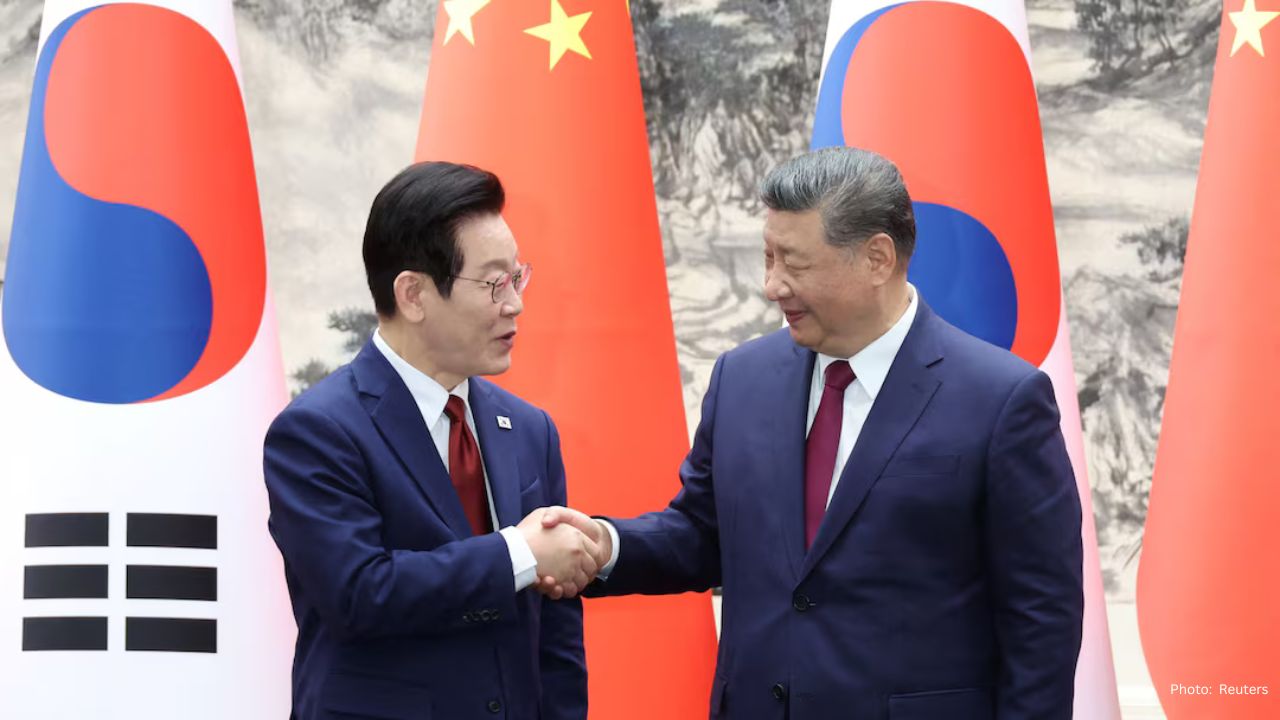
During his inaugural visit to Beijing since taking office, South Korean President Lee Jae Myung expressed his intention to usher in a new era in Sino-Korean relations, projecting 2026 as the year ties could be fully restored.
Meeting with Chinese President Xi Jinping at the Great Hall of the People, the two leaders convened for the second time within two months, signaling strong mutual interest in enhancing collaboration across trade, tourism, and regional security.
President Lee highlighted the summit as an opportunity to rebuild mutual trust and advance their partnership, emphasizing the necessity for a resilient and enduring strategic alliance, rather than one that is merely temporary. He believes that enhanced cooperation will be mutually beneficial and will play a crucial role in promoting regional harmony.
Xi reaffirmed the importance of close collaboration, underscoring that both nations have a pivotal role in maintaining regional peace. He also encouraged South Korea to make “correct strategic choices,” which analysts interpret as a call for Seoul to consider Beijing’s positions on sensitive topics, such as Taiwan and the recent actions of the U.S. regarding Venezuela.
The discussions occurred amidst heightened regional tensions; mere hours before Lee's arrival in Beijing, North Korea launched two ballistic missiles, marking its first test in two months, with Kim Jong Un stating that this was aimed at bolstering the nation’s nuclear deterrent. Nevertheless, the focus of the China–South Korea discussions remained on promoting cooperation and stability, steering clear of conflict.
Economic cooperation took center stage during the summit, with 15 agreements signed that included trade, technology, and investment sectors. Notably, nine of these accords directly involved companies from both countries, including major players like Alibaba International, Lenovo, and South Korea’s Shinsegae.
Accompanying President Lee were over 200 South Korean business leaders, including executives from prominent firms like Samsung Electronics, SK Group, and Hyundai Motor Group. Their participation signifies a robust business interest in fostering deeper ties with China, South Korea’s largest trade partner.
Lee urged for expanded collaboration in burgeoning sectors such as artificial intelligence and the digital economy, while also identifying prospects in consumer goods, beauty products, food, and cultural exports—including films, music, and sports.
However, challenges persist, with South Korean officials acknowledging that China is unlikely to ease its unofficial restrictions on Korean cultural exports anytime soon. Such limitations have hampered the spread of Korean entertainment, including music and dramas, within China for years.
Despite these challenges, both sides seem committed to progressing. Faced with rising regional tensions and uncertain global economic conditions, the visit to Beijing reflected a shared ambition to stabilize and enhance one of Asia’s critical partnerships.
Should the initiatives discussed during this visit proceed, 2026 could indeed mark a pivotal point in China-South Korea relations, fostering renewed collaboration and strengthening ties after a period of strain.