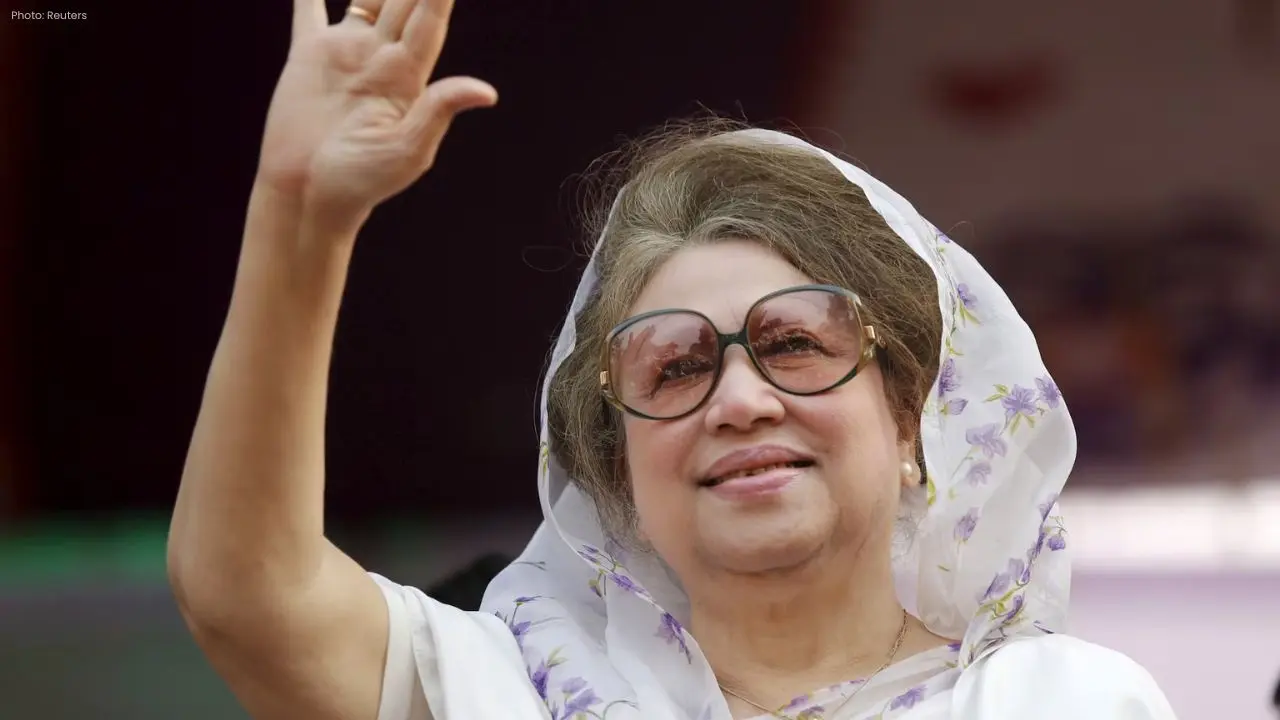
Khaleda Zia, a towering figure in Bangladesh's political landscape and its first female prime minister, has died at the age of 80 after a lengthy illness. Following complications from kidney failure, heart disease, and pneumonia, she had been in critical condition despite extensive medical support.
Zia's entry into politics was marked by tragedy, as she took the helm of the Bangladesh Nationalist Party (BNP) after her husband, President Ziaur Rahman, was assassinated during a military coup in 1981. Once known primarily as the wife of a president, she quickly emerged as a powerful political leader in her own right.
In 1991, she made history by becoming the nation's first female prime minister, following her party's success in the country's first democratic election in two decades. This achievement not only marked a significant milestone for women's representation in Bangladesh but also played a critical role in the restoration of parliamentary democracy.
Khaleda Zia's political journey was closely associated with her rival, Sheikh Hasina, head of the Awami League. The rivalry between the two leaders shaped the political dynamics of Bangladesh for many years, frequently resulting in alternating governments and influencing the multi-party system.
During her tenure, Zia prioritized initiatives aimed at enhancing women's education and improving social development. Her administration was marked by significant efforts to strengthen democratic governance through bipartisan collaboration and constitutional reforms, thus providing much-needed stability after a series of military regimes.
However, Zia's career was not devoid of challenges. Her second term, which lasted only weeks in 1996, was marred by allegations of electoral misconduct. Additionally, her government faced corruption allegations that she consistently argued were politically motivated.
Despite ongoing health battles and legal troubles, Zia remained a key figure in Bangladesh's opposition landscape. Her enduring presence galvanized supporters and sustained the BNP's political relevance.
Recently, her son, Tarique Rahman, who had been out of the country for nearly two decades, made his return to Bangladesh, bringing fresh energy to the BNP's aspirations to reclaim power.
In her final days, Khaleda Zia was surrounded by family, including her son, his wife, and daughter. Tributes have poured in, recognizing her as a pioneering leader and a staunch advocate for democracy within Bangladesh.
Political figures and citizens nationwide are paying their respects, honoring Khaleda Zia as a "great guardian" of democracy and a shaper of the nation’s political framework.