The U.S. military has announced a successful airstrike against Islamic State militants in northwest Nigeria, illustrating an important leap in security collaborations with Abuja. Initiated upon Nigeria’s request, the strike took aim at suspected ISIS camps in Sokoto state, resulting in multiple militant casualties, as reported by officials from both the U.S. and Nigeria.
President Donald Trump disclosed the operation on Thursday, emphasizing its goal was to confront Islamic State fighters notorious for their violent attacks in the area. In a strong statement, Trump condemned the militants for targeting civilians, particularly within Christian communities. He characterized the strike as potent and decisive, executed under his command as the nation's leader.
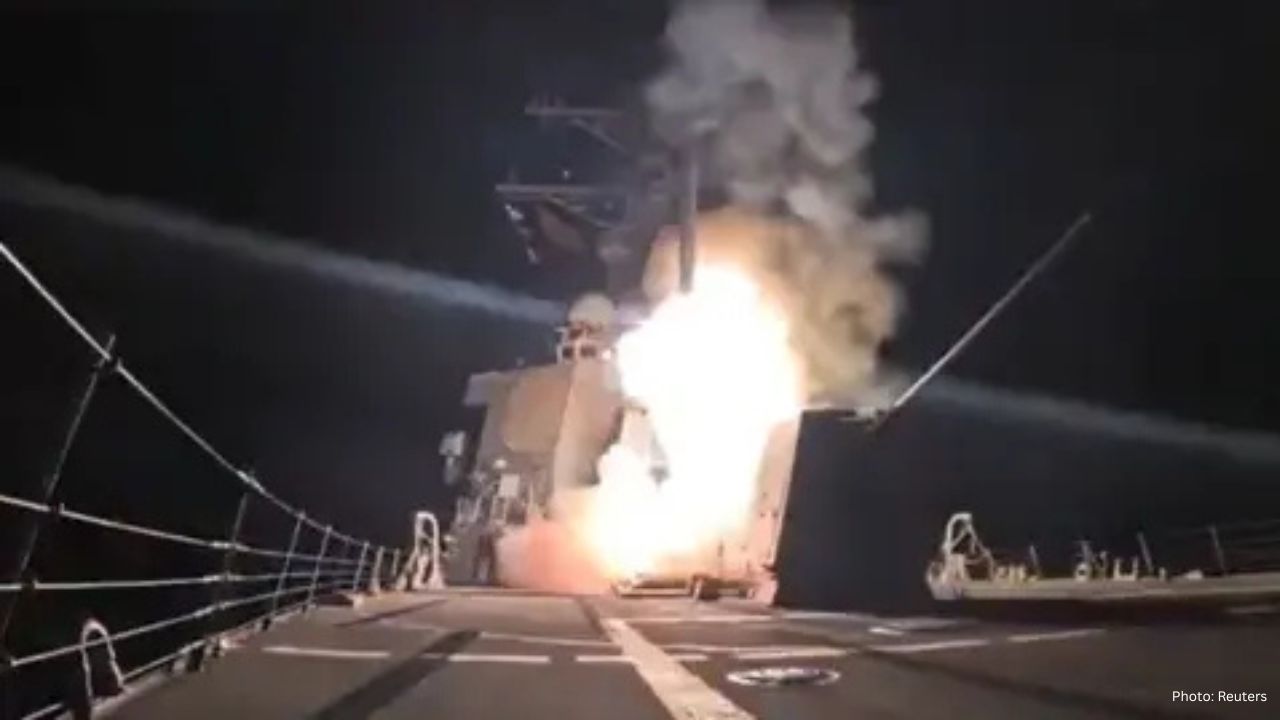
The African Command of the U.S. military later corroborated that the operation was in concert with Nigerian forces. Officials noted that it was based on combined intelligence and diligent planning, effectively hitting established ISIS locations. A video released by the Pentagon displayed missiles launched from a U.S. naval vessel, without revealing the specific launch site.
Nigeria’s authorities underscored that this action was a collaborative endeavor aimed solely at combating terrorism, dissociating it from any particular faith. Foreign Minister Yusuf Maitama Tuggar stated the strike was against terrorists who jeopardize national security, reinforcing that both Muslims and Christians have been victims of such violence, urging the issue not to be viewed through a religious lens.
Tuggar also indicated that the operation had been in motion for some time, utilizing intelligence from Nigerian agencies. He mentioned that future joint strikes are a possibility, dependent on decisions made by leaders from both countries.
This assault follows a period of intensified U.S. scrutiny regarding Nigeria’s security issues, with Trump previously expressing concerns about rising violence in various regions and its impact on Christian communities. Recent reports revealed U.S. surveillance flights had been active over Nigeria since late November.
Nigeria’s foreign ministry stated that this airstrike is part of ongoing strategic cooperation with the United States, encompassing intelligence sharing and operational coordination. Such collaborations have reportedly enhanced the effectiveness of military responses against extremist factions in isolated areas.
U.S. Defense Secretary Pete Hegseth publicly expressed gratitude towards Nigeria for its support, suggesting that additional actions might be forthcoming as part of a wider strategy to diminish extremist networks throughout West Africa.
The week was notably tense for Nigeria as other security threats loomed. On the same day as the strike, police reported a suspected suicide bombing at a mosque in the northeast, resulting in at least five fatalities and numerous injuries, highlighting the pervasive nature of extremist violence.
Nigerian President Bola Tinubu, in a Christmas statement, urged peace and unity among different religious communities, reaffirming his dedication to safeguarding all Nigerians, irrespective of their faith, and promoting religious freedom nationwide.
This U.S. operation in Nigeria continues a pattern of American strikes against ISIS positions in Syria, reflecting a broader U.S. initiative to combat the group globally. While the long-term outcomes of this strike remain uncertain, both governments have stated their commitment to addressing terrorism and restoring regional security.
As Nigeria faces ongoing insurgency and instability, this recent strike highlights the growing significance of international partnerships in tackling intricate security hurdles. The trajectory of future joint military actions will hinge on developments on the ground and the responses of leadership in both nations.