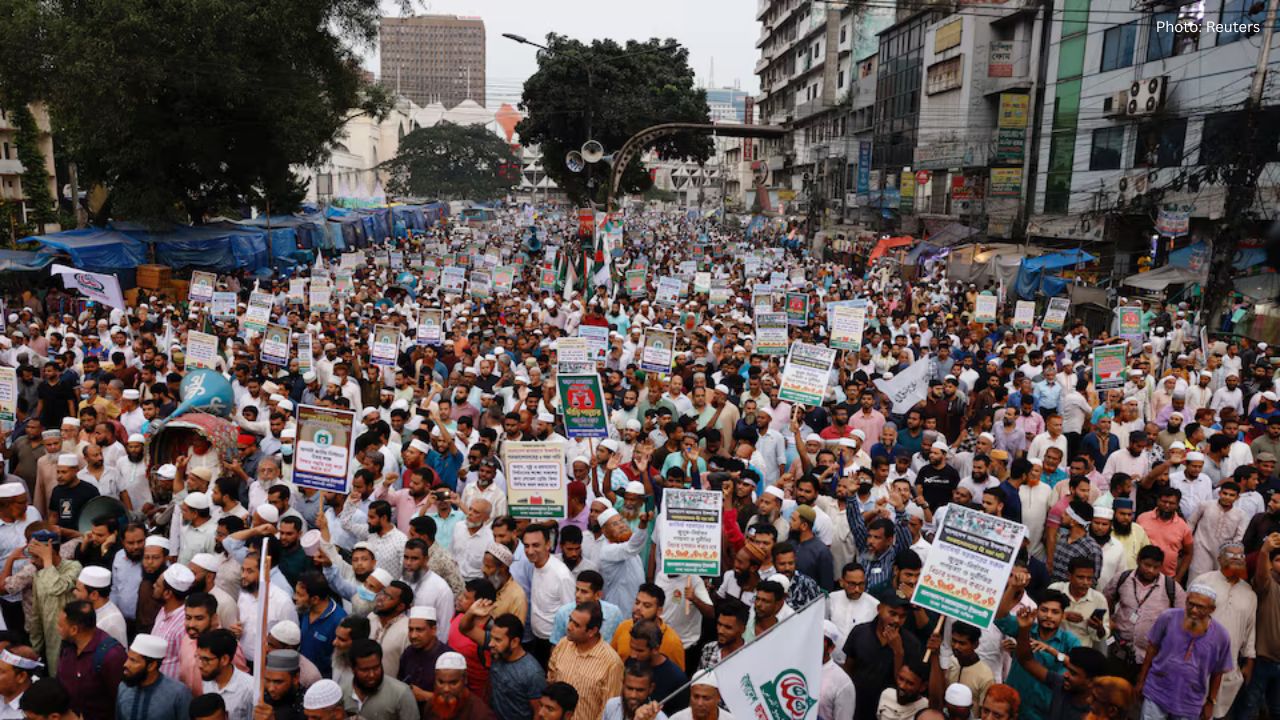
As Bangladesh gears up for a pivotal parliamentary election on February 12, a significant shift is occurring with the return of Jamaat-e-Islami, an Islamist party previously banned from electoral participation. The party now indicates its openness to being part of a unity government following the elections.
In a recent discussion with Reuters, Shafiqur Rahman, the leader of Jamaat-e-Islami, highlighted the necessity for stability over the next five years and the importance of collaboration among different political factions. Rahman advocated for unity in addressing common challenges, suggesting that aligned efforts could lead to effective governance.
Polls indicate that Jamaat-e-Islami may secure the second position in the upcoming election, just trailing the Bangladesh Nationalist Party (BNP). This marks the party's significant re-entry into national politics, nearly 17 years after its last participation in a general vote in the predominantly Muslim nation of approximately 175 million residents.
Previously, Jamaat partnered with the BNP from 2001 to 2006, and Rahman has expressed a willingness to collaborate with the BNP once again. Nevertheless, he emphasized that a unity government must prioritize addressing corruption, which he claims is a pressing demand from the populace.
Rahman also mentioned that the prime ministerial candidate would be determined by the party attaining the most seats. Should Jamaat-e-Islami come out on top, the party will deliberate on who the prime minister candidate would be, with Rahman himself as a potential contender.
This resurgence comes in light of substantial political upheaval in Bangladesh. Following a youth-led revolution, long-serving Prime Minister Sheikh Hasina was ousted in August 2024, and her Awami League party is now disqualified from participating in the election. Hasina, a longtime adversary of Jamaat, oversaw trials resulting in death penalties for several party leaders linked to the 1971 independence conflict.
Jamaat-e-Islami faced a ban on elections since 2013 after a judicial ruling stated its charter contradicted Bangladesh’s secular framework. This prohibition was lifted by an interim government led by Nobel laureate Muhammad Yunus in August 2024, allowing Jamaat to reenter the political arena.
Foreign policy also remains a focal point for Jamaat. Rahman asserted that maintaining balanced relationships with all nations, including both India and Pakistan, is essential for Bangladesh. He acknowledged an earlier meeting with an Indian diplomat and advocated for open, transparent international relations. Rahman clarified that Jamaat does not intend to favor any particular country but rather seeks to cultivate respectful, balanced ties across the globe.
Furthermore, Rahman indicated discomfort in working alongside the current President Mohammed Shahabuddin, who gained his position with Awami League support. The president has suggested he might resign before the conclusion of his term.
As the February elections draw near, the renewed involvement of Jamaat-e-Islami underscores the significant changes in Bangladesh's political scene. Regardless of whether they participate in a unity government or remain in opposition, the party's resurgence is likely to influence the future trajectory of Bangladesh's governance.