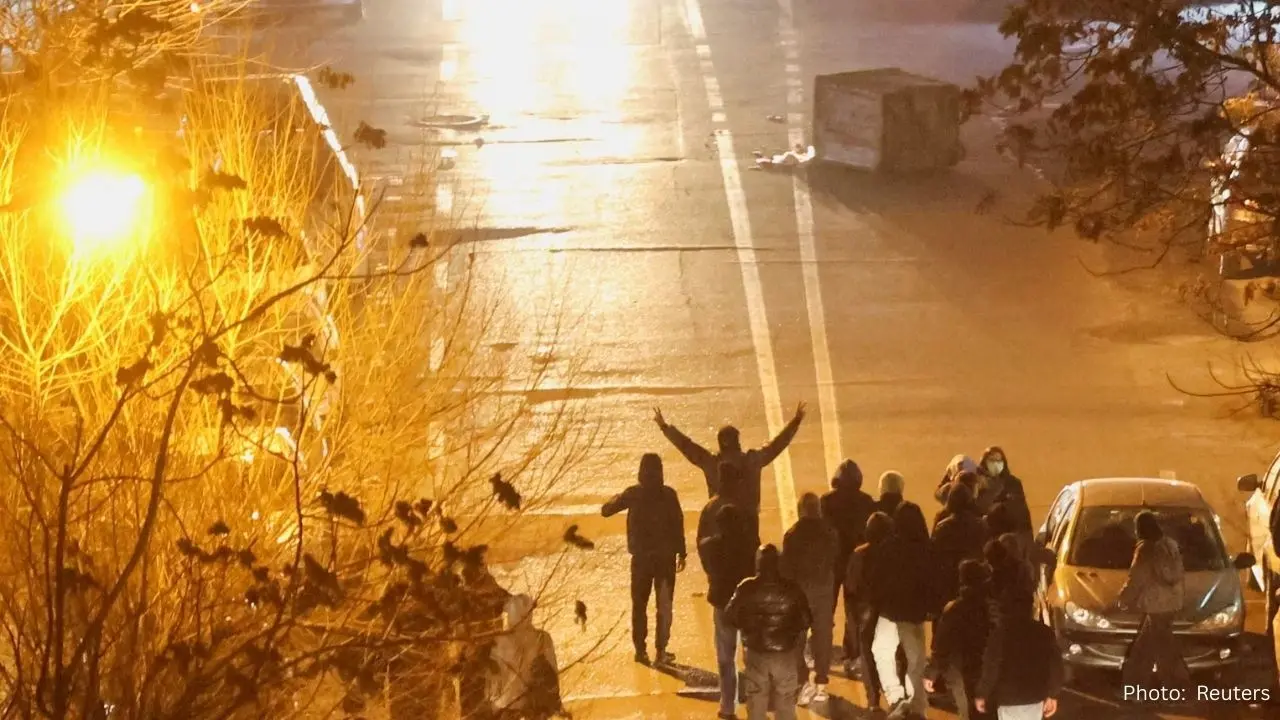
Widespread protests in Iran have been ignited by soaring prices and a plummeting currency, leading to angry citizens flooding city streets to demand fundamental change. However, despite several weeks of demonstrations, brutal crackdowns, and mounting foreign pressure, the country’s clerical leadership remains unyielding.
Experts argue that the key reason for this resilience is the formidable unity of the nation’s security apparatus. The Iranian leadership is supported by powerful entities like the Revolutionary Guards and the Basij militia, with a combined membership nearing one million. These highly organized and fervently loyal groups are dispersed throughout the nation, making it exceptionally challenging for protests to unseat the government.
A source speaking to Reuters indicated that approximately 2,000 individuals have lost their lives amid the turmoil, although human rights organizations cite lower estimates. Additionally, thousands have been detained. The fierce government response has deterred many from joining the protests, even as discontent brews underneath.
Analysts note that uprisings typically succeed when segments of the state begin to fracture. In Iran's scenario, there is still a lack of clear signs that military, intelligence, or political elites are defecting. As long as this structural integrity remains, the regime can withstand pressure, even in a weakened state.
Ayatollah Ali Khamenei, now at 86, has survived through multiple waves of dissent since 2009. This marks the fifth significant uprising during his leadership. Each time, the regime has demonstrated its capacity to regroup and maintain authority, even as public confidence diminishes.
The stakes are heightened by international pressure. U.S. President Donald Trump has explicitly cautioned Iran regarding its response to the protests, emphasizing that military options are still viable. These threats follow last year's Israeli and U.S. attacks on Iran's nuclear capabilities and key officials. Nonetheless, analysts contend that foreign threats alone are unlikely to disrupt the leadership unless they incite rifts within the state.
Iran’s crises extend far beyond the protests themselves. Economic sanctions have severely impacted the economy, leaving minimal prospects for swift recovery. Regional allies, formerly part of the “Axis of Resistance,” have been destabilized by ongoing conflicts in Lebanon, Syria, and Gaza. Moreover, Iran’s nuclear ambitions have encountered setbacks.
Despite this, ongoing survival does not equate to stability. Numerous experts believe that Iran is grappling with one of its gravest crises since the revolution of 1979. Trust among the populace is rapidly eroding, and frustration remains palpable. What began as an economic outcry has swiftly transformed into outright rejection of the clerical regime.
For the time being, the leadership holds firm as it continues to command the military, judiciary, and vital institutions of authority. Until this power dynamic shifts, Iran’s rulers are likely to persevere amid a backdrop of deep national discord and ongoing pressure.