The hills of the occupied West Bank have recently gained global scrutiny. A latest investigation by Reuters highlights how small outposts by Israeli settlers, perched atop hills, are gradually usurping land and displacing Palestinian families. What might appear as temporary structures may soon evolve into permanent settlements, altering lives and borders significantly.
One notable outpost is Or Meir, situated near the Palestinian village of Deir Dibwan. Initially, it comprised simple prefabricated structures on a hillside along a main thoroughfare. Over the years, comparable outposts throughout the West Bank have developed into substantial housing complexes. Israeli authorities have acknowledged that these expansions aim to obstruct the establishment of a future Palestinian state.
The situation has been marred by violence. Palestinian families and United Nations records indicate a sharp increase in settler attacks against Palestinians. In the year 2025 alone, the UN logged over 750 injuries related to settler violence. Instances of arson, livestock harassment, and forced displacement from land that has been in families for generations have been reported.
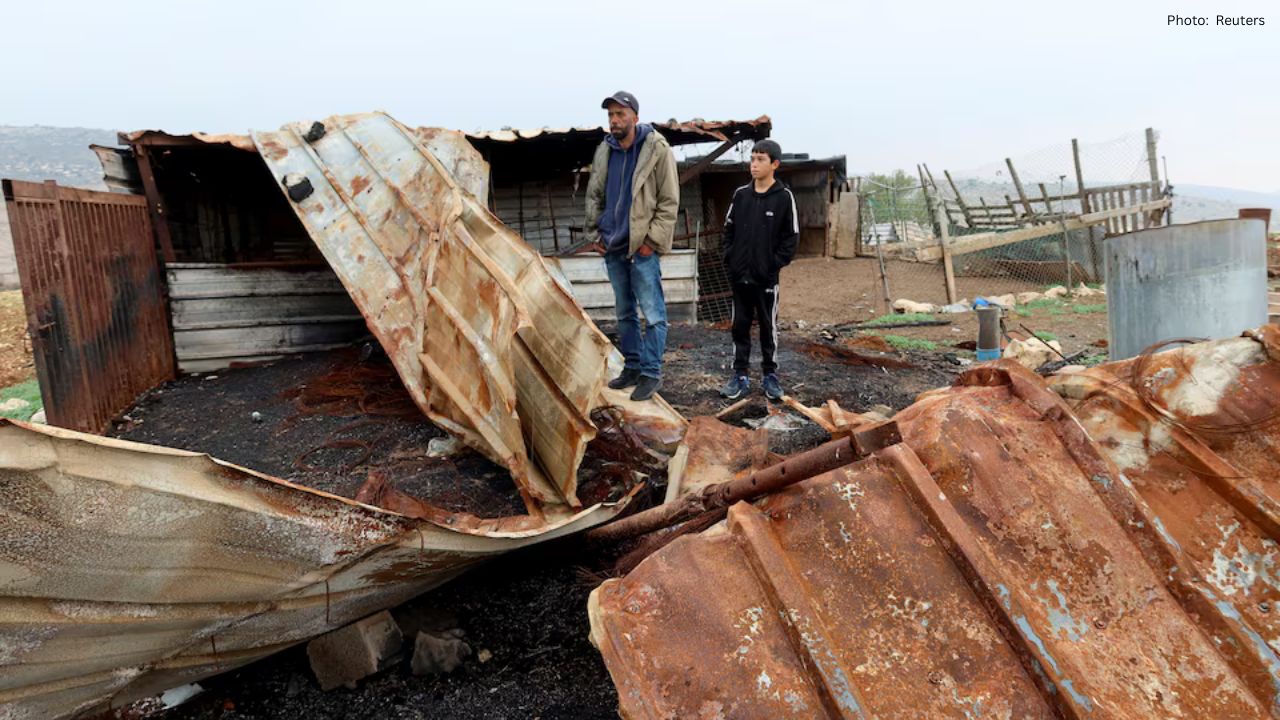
The Musabah family, a Bedouin group, recounted being attacked at night as settlers descended from the Or Meir outpost. Both their home and barn were set ablaze. Currently, they reside in a nearby village, living in fear that they may never return to their stolen land. The charred remains of their property linger, a stark reminder of their loss.
Social media platforms have influenced this trend significantly. Communications shared via Telegram and WhatsApp groups affiliated with settler outposts openly boast about expelling Palestinian herders. Some postings even provide maps signifying lands that settlers now claim as their own. Human rights organizations assert that this indicates a deliberate strategy rather than spontaneous violent acts.
The Israeli peace organization Peace Now noted that 80 new outposts were established in 2025, marking the highest annual figure since records began in 1991. In December of that year, Israel’s cabinet sanctioned 19 additional settlements, which included former outposts. Finance Minister Bezalel Smotrich has been clear in stating that the expansion of these settlements is designed to obstruct Palestinian self-determination.
Globally, much of the international community views Israeli settlements in the West Bank as illegal under global law, a stance that Israel contests. Israeli officials often characterize violent settlers as a “fringe minority” while asserting that incidents of Palestinian violence against Israelis receive less scrutiny. However, the Israeli monitoring organization Yesh Din reports that only 2% of settler violence cases lead to legal repercussions.
Journalists and aid workers have also faced threats. For instance, Reuters reporters were injured during a settler incursion while Palestinians were gathering olives near Beita. Such events illustrate the heightened risks surrounding daily life in the region.
For Palestinians like farmer Samer Younes Ali Bani Shamsah, abandoning their land isn’t an option despite ongoing threats. “This is my home,” he expressed. “Where would I go?” His statement underscores the profound connection many Palestinians have to their land, even as the pressures intensify.
As the settlements grow and violence escalates, the future of the West Bank lies shrouded in uncertainty. The developments on these hilltops transcend mere territorial disputes; they are entwined with identity, survival, and the diminishing prospect of peace.