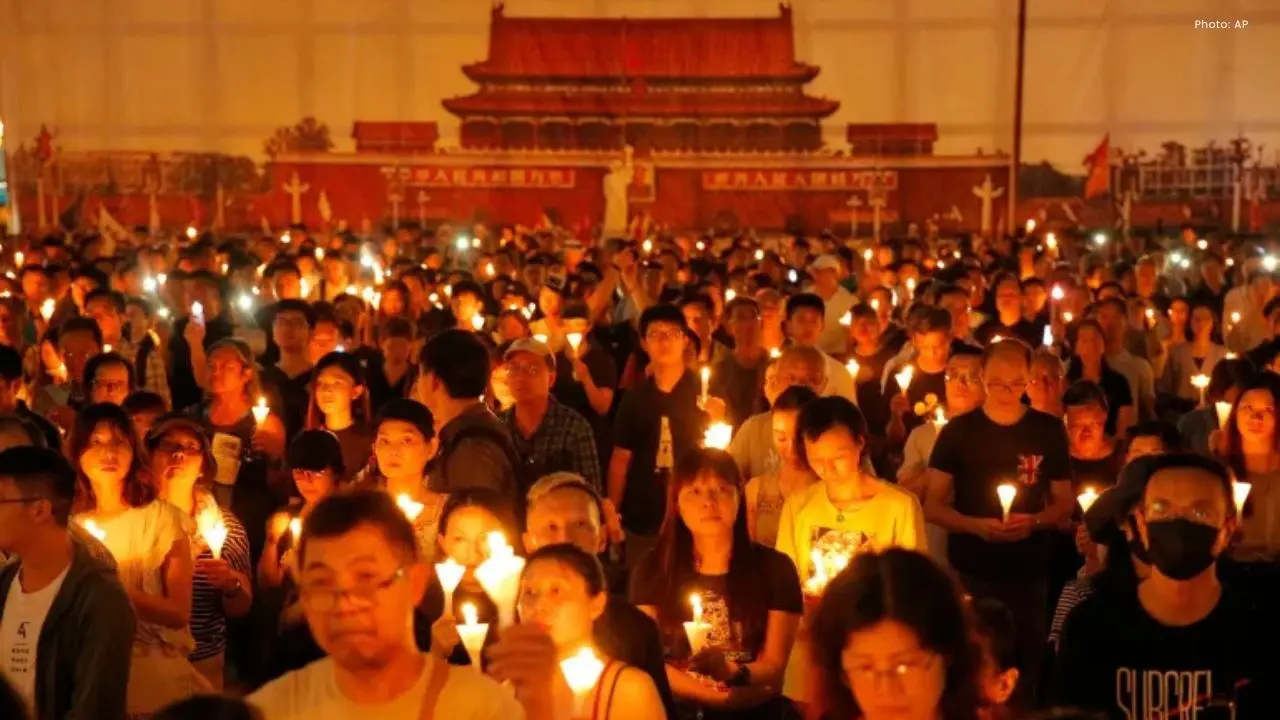
Hong Kong has initiated a significant national security trial against activists associated with the annual candlelight vigils honoring the victims of the 1989 Tiananmen Square incident. This case is capturing widespread attention both locally and globally, as it delves into themes of free speech, historical memory, and the evolving legal landscape in Hong Kong.
The defendants include former leaders of the Hong Kong Alliance, a collective that held peaceful commemorative events for over three decades on June 4. These vigils stood as a potent representation of Hong Kong's freedoms, especially as any public memory of Tiananmen is prohibited in mainland China.
In the courtroom, two individuals declared not guilty to accusations of inciting subversion of state power, while another admitted guilt. Prosecutors argue that the group's slogans and actions surpassed mere remembrance, entering the realm of political activism aimed at contesting the Chinese government. Should they be found guilty, the defendants could face substantial prison sentences.
The trial will be conducted by judges appointed under the national security statute, lacking a jury. Prosecutors are expected to utilize previous speeches, writings, and advocacy efforts synonymous with the group as evidence. The legal proceedings are anticipated to last several weeks.
Outside the courthouse, a modest gathering of supporters stood silently in solidarity. Numerous human rights organizations contend that the trial forms part of a wider initiative to suppress dissent and obliterate public discourse surrounding delicate historical topics. They believe that commemorating Tiananmen and advocating for democracy should not equate to criminal behavior.
Authorities in Hong Kong hold a contrasting stance. Officials maintain that the national security law is critical for safeguarding stability and mitigating threats to the nation. They assert that the law is directed solely at grave offenses and does not impinge upon everyday liberties.
Since the enforcement of this law in 2020, Hong Kong has undergone significant transformations. Numerous pro-democracy organizations have disbanded, public demonstrations have diminished, and several activists have faced incarceration or have fled the region. Critics argue these shifts have undermined the city's distinctive identity and promised freedoms under its governing framework.
This trial marks a pivotal moment, as its result may dictate the future handling of history, expression, and activism in Hong Kong. For many residents, the implications extend beyond the fate of a few activists; it encompasses the broader question of whether open discourse about the past remains viable.